
Video Interview Software: Complete 2026 Guide To Automated Candidate Screening

Introduction to Video Interview Software
Modern recruitment demands speed, efficiency, and precision. As organizations compete for top talent in an increasingly competitive labor market, video interview software has emerged as an essential tool for recruiting professionals seeking to streamline their candidate screening processes. According to data from the Bureau of Labor Statistics Job Openings & Recruiting Trends, companies face unprecedented hiring volumes, making efficient screening technologies more critical than ever.
Video interview software enables recruiters to conduct asynchronous candidate evaluations, allowing hiring teams to assess applicants on their own schedules while maintaining consistency and reducing time-to-hire. For Heads of Talent, Recruiting Leads, and People Operations Managers working in fast-paced environments, these platforms offer a competitive advantage by automating repetitive screening tasks while improving the overall candidate experience.
This comprehensive guide explores everything recruiting professionals need to know about video interview software in 2026, from core features and implementation strategies to selecting the right platform for your organization's unique needs.
What Is Video Interview Software?
Video interview software is a specialized recruiting technology that facilitates remote candidate assessments through recorded or live video interactions. Unlike traditional phone screens or in-person interviews, these platforms allow recruiters to evaluate candidates' communication skills, technical competencies, and cultural fit through structured video responses.
The technology typically operates in two primary modes: one-way asynchronous interviews where candidates record responses to predetermined questions, and live video interviews that function similarly to video conferencing but with enhanced recruiting-specific features like automated scoring, interview guides, and candidate evaluation tools.
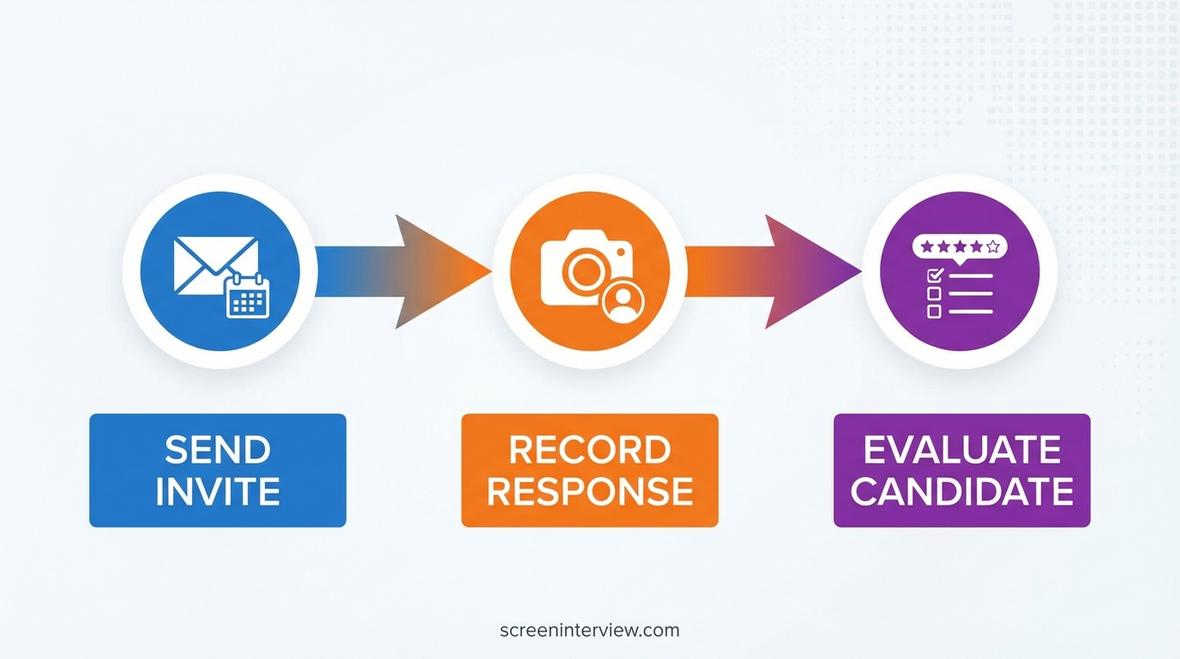
Modern on-demand interview platforms have evolved beyond simple video recording to include sophisticated features like AI-powered analysis, automated scheduling, proctoring capabilities, and seamless integration with existing Applicant Tracking Systems (ATS).
Key Benefits for Recruiting Professionals
Implementing video interview software delivers measurable advantages across the entire recruitment lifecycle. Research from LinkedIn Talent Solutions Research & Recruiting Benchmarks demonstrates that organizations utilizing video screening technology report higher hiring manager satisfaction and improved candidate screening efficiency.
Reduced Time-to-Hire
Traditional interview scheduling often involves multiple email exchanges, calendar conflicts, and coordination challenges. Video interview software eliminates these bottlenecks by allowing candidates to complete interviews at their convenience while recruiters review responses asynchronously. This acceleration can reduce time-to-hire by 40-60% compared to traditional screening methods.
Improved Candidate Experience
Today's candidates expect flexibility and transparency throughout the hiring process. Video interview platforms provide applicants with the convenience of completing assessments on their own schedules, often resulting in higher completion rates and more positive employer brand perceptions. Candidates appreciate the ability to present their best selves without the pressure of coordinating schedules or commuting for initial screenings.
Enhanced Collaboration Among Hiring Teams
Video interview software enables distributed hiring teams to evaluate candidates collaboratively. Multiple stakeholders can review the same recorded interviews, provide feedback using standardized rubrics, and make data-driven hiring decisions without scheduling conflicts. This democratization of the interview process leads to more comprehensive candidate evaluations and better hiring outcomes.
Scalability for High-Volume Recruitment
Organizations conducting high-volume recruiting campaigns benefit tremendously from video interview automation. Rather than conducting hundreds of individual phone screens, recruiters can send standardized video interview invitations to entire candidate pools and review responses efficiently, identifying top performers through AI-assisted ranking and filtering.
Essential Features to Look For
Not all video interview software solutions are created equal. When evaluating platforms, recruiting professionals should prioritize features that align with their specific organizational needs and recruitment workflows.
AI-Powered Candidate Evaluation
Advanced AI interview capabilities analyze candidate responses for verbal communication skills, sentiment, confidence levels, and technical competency. These intelligent systems can automatically rank candidates based on customizable criteria, helping recruiters quickly identify top talent from large applicant pools.
Automated Interview Scheduling
Sophisticated intelligent scheduling systems eliminate the back-and-forth communication required for coordinating interviews. Candidates can select from available time slots that sync with interviewer calendars, while automated reminders reduce no-show rates and improve attendance.
Customizable Interview Builder
The best video interview software includes intuitive interview builder tools that allow recruiters to create role-specific question sets, incorporate multimedia elements, set time limits for responses, and establish evaluation criteria. This customization ensures that assessments accurately measure the competencies required for each position.
Interview Proctoring and Security
To maintain assessment integrity, leading platforms incorporate interview proctoring features such as identity verification, browser lockdown, and AI-powered monitoring to detect irregularities. These security measures ensure that the candidate completing the assessment is who they claim to be and that responses represent their authentic capabilities.
Seamless ATS Integration
For tech-savvy recruiting professionals already utilizing Applicant Tracking Systems, seamless integration is non-negotiable. Quality video interview software should sync bidirectionally with existing ATS platforms, automatically updating candidate records, syncing evaluation data, and maintaining a unified recruitment workflow without manual data entry.
Comprehensive Analytics and Reporting
Data-driven recruiting requires robust interview insights and analytics. Look for platforms that provide detailed metrics on candidate performance, interviewer activity, time-to-completion rates, assessment effectiveness, and predictive hiring success indicators that inform continuous process improvement.
Implementation Best Practices
Successfully deploying video interview software requires thoughtful planning and change management. Follow these proven strategies to maximize adoption and ROI.
Start with a Pilot Program
Rather than implementing video interviews across all roles immediately, begin with a pilot program focused on high-volume positions or roles with lengthy time-to-hire metrics. This controlled approach allows your team to refine processes, gather feedback, and demonstrate value before broader deployment.
Develop Standardized Question Libraries
Create role-specific question banks that assess both technical competencies and cultural fit. Standardization ensures consistent candidate evaluation while reducing bias and improving the reliability of hiring decisions. Consider developing questions collaboratively with hiring managers to ensure relevance and buy-in.
Train Interviewers on Video Evaluation
Evaluating video interviews requires different skills than traditional face-to-face assessments. Provide training to hiring managers and interview panel members on how to assess video responses objectively, recognize and mitigate bias, and utilize scoring rubrics effectively.
Communicate Clearly with Candidates
Transparent communication about the video interview process improves candidate experience and completion rates. Provide clear instructions, technical requirements, practice opportunities, and expected timelines. Consider including a brief video tutorial demonstrating what candidates should expect.
Monitor Metrics and Iterate
Track key performance indicators including candidate completion rates, time-to-hire reductions, interviewer satisfaction, and quality-of-hire metrics. Use this data to continuously refine your video interview process, question sets, and evaluation criteria for optimal results.
Addressing Common Concerns
Despite the significant benefits, some organizations hesitate to adopt video interview software due to common misconceptions and concerns.
Concern About Bias
While any interview process can introduce bias, modern video interview platforms actually help reduce unconscious bias through structured assessments, standardized evaluation criteria, and AI-powered bias detection systems. Features like blind screening options and focus on competency-based evaluation promote fairer hiring decisions.
Candidate Technical Difficulties
Quality platforms provide comprehensive technical support, browser-based interfaces requiring no downloads, mobile compatibility, and practice sessions that allow candidates to test their setup before official interviews. These features minimize technical barriers and ensure equitable access.
Loss of Personal Connection
Video interviews don't replace human interaction they enhance efficiency in early screening stages so recruiters can invest more quality time with top candidates during final interviews. The technology handles initial screening logistics while preserving valuable face-to-face time for finalist evaluations.
Comparing Video Interview Software Solutions
The market offers numerous video interview platforms, each with distinct strengths. When comparing solutions, consider factors such as pricing models, feature sets, integration capabilities, customer support quality, and scalability.
Organizations seeking comprehensive comparisons should explore detailed platform evaluations. For instance, recruiters can review comparative analyses of leading solutions to understand how different vendors address specific recruiting challenges and which platforms best align with their organizational requirements.
Integration with Broader Recruitment Technology
Video interview software delivers maximum value when integrated within a comprehensive recruitment technology ecosystem. Modern talent acquisition requires seamless data flow between multiple systems.
ATS Synchronization
Bidirectional integration with your Applicant Tracking System ensures candidate data, interview results, and evaluation scores automatically sync across platforms, eliminating manual data entry and maintaining a single source of truth for all candidate information.
Workflow Automation
Advanced workflow automation capabilities trigger specific actions based on interview outcomes automatically advancing qualified candidates to the next stage, sending personalized rejection emails, or scheduling follow-up interviews based on performance thresholds.
Assessment and Skills Testing
Combining video interviews with technical assessments provides holistic candidate evaluation. Many platforms integrate with online exam platforms to deliver comprehensive screening that evaluates both soft skills through video and hard skills through practical testing.
Future Trends in Video Interview Technology
The video interview software landscape continues evolving rapidly, with several emerging trends shaping the future of candidate screening.
Advanced AI Capabilities
Next-generation platforms leverage sophisticated AI models to provide increasingly nuanced candidate analysis, including emotional intelligence assessment, leadership potential indicators, and predictive performance modeling based on interview responses.
Virtual Reality Integration
As VR technology becomes more accessible, some organizations experiment with immersive interview experiences that simulate actual work environments, allowing candidates to demonstrate skills in realistic scenarios rather than traditional question-and-answer formats.
Enhanced Candidate Personalization
AI-driven personalization tailors interview experiences to individual candidates based on their backgrounds, the specific role requirements, and organizational culture, creating more engaging and relevant assessment experiences that improve both candidate satisfaction and predictive validity.
Selecting the Right Platform for Your Organization
Choosing the optimal video interview software requires careful evaluation of your organization's specific needs, existing technology infrastructure, budget constraints, and long-term recruitment strategy.
Key Assessment Criteria
- Scalability: Can the platform grow with your organization's hiring needs?
- User Experience: Is the interface intuitive for both recruiters and candidates?
- Technical Support: Does the vendor provide responsive customer support and training resources?
- Security and Compliance: Does the platform meet data privacy regulations relevant to your industry and geography?
- Pricing Transparency: Are costs clearly defined with predictable pricing models?
- Integration Capabilities: Does it connect seamlessly with your existing recruitment technology stack?
Request Demos and Trials
Before committing to any platform, request comprehensive product demonstrations and, when possible, trial periods that allow your team to evaluate the software hands-on. Involve key stakeholders including recruiters, hiring managers, and IT personnel in the evaluation process to ensure the solution meets diverse organizational needs.
Measuring ROI and Success
Demonstrating the value of video interview software requires tracking relevant metrics and calculating return on investment.
Quantitative Metrics
- Time-to-Hire Reduction: Measure the decrease in days from application to offer acceptance
- Cost-per-Hire Savings: Calculate reductions in interviewer time, scheduling coordination, and travel expenses
- Candidate Volume Capacity: Track increases in the number of candidates your team can effectively screen
- Interview Completion Rates: Monitor the percentage of invited candidates who complete video assessments
- Quality-of-Hire Improvements: Assess whether video-interviewed hires demonstrate better performance and retention
Qualitative Indicators
- Hiring Manager Satisfaction: Survey hiring managers about interview quality and candidate preparedness
- Candidate Feedback: Collect candidate experience ratings and testimonials
- Recruiter Efficiency: Assess recruiter sentiment regarding workload management and process improvements
- Employer Brand Impact: Monitor changes in employer review site ratings and application volumes
Frequently Asked Questions
How much does video interview software typically cost?
Pricing varies significantly based on features, user volume, and deployment models. Entry-level platforms may start around $100-300 monthly for small teams, while enterprise solutions with advanced AI capabilities can range from $500-2000+ monthly. Many vendors offer tiered pricing based on interview volume or per-user licensing models.
Can video interview software integrate with our existing ATS?
Most modern video interview platforms offer integration capabilities with popular ATS systems through APIs, native integrations, or middleware solutions. During vendor evaluation, confirm specific integration availability with your existing ATS to ensure seamless data synchronization.
How do we ensure video interviews don't introduce bias?
Implement structured interview questions, standardized evaluation rubrics, diverse interview panels, and leverage AI-powered bias detection features. Additionally, consider blind review options that hide demographic information and focus solely on response content and competency demonstration.
What technical requirements do candidates need?
Most platforms require only a stable internet connection, modern web browser, webcam, and microphone. Quality solutions offer mobile compatibility and provide technical check tools that allow candidates to verify their setup before official interviews, minimizing technical barriers.
How long should video interview assessments be?
Optimal length depends on the role and interview stage. Initial screening interviews typically range from 10-20 minutes with 3-5 questions, while more comprehensive assessments for advanced stages might extend to 30-45 minutes. Balance thoroughness with candidate experience longer assessments may reduce completion rates.
What happens if a candidate experiences technical difficulties?
Reputable platforms provide technical support resources, allow multiple attempt opportunities, and offer alternative completion methods when necessary. Establish clear policies for technical difficulty scenarios and communicate these to candidates upfront to manage expectations.
Conclusion
Video interview software represents a transformative technology for modern recruiting professionals seeking to improve efficiency, enhance candidate experience, and make data-driven hiring decisions. By implementing the right platform with thoughtful planning and continuous optimization, organizations can significantly reduce time-to-hire while identifying top talent more effectively. As the recruitment landscape continues evolving, video interview technology will remain an essential component of competitive talent acquisition strategies, enabling recruiting teams to meet growing demands while maintaining quality and fairness throughout the hiring process. The key to success lies in selecting a solution that aligns with your organizational needs, integrating it seamlessly with existing workflows, and maintaining focus on both efficiency gains and candidate experience excellence.
Ready to Transform Your Interview Process?
See how ScreenInterview can help you automate phone screens, reduce bias, and hire better candidates faster.