
Sapia AI Interview: Complete 2026 Guide To Alternative Platforms And Modern Recruitment

The evolution of recruitment technology has introduced numerous AI-powered interview platforms designed to transform how organizations screen and evaluate candidates. Among these solutions, Sapia AI interview technology has gained attention for its approach to candidate assessment. However, as the recruitment landscape continues to evolve in 2026, talent acquisition professionals are actively exploring comprehensive alternatives that offer enhanced features, better integration capabilities, and superior candidate experiences.
This guide provides an in-depth analysis of Sapia AI interview platforms, examines their core functionalities, and presents modern alternatives that address the evolving needs of today's recruiting professionals. Whether you're a Head of Talent, Recruiting Lead, or People Operations Manager, understanding the full spectrum of AI interview solutions will empower you to make informed decisions that accelerate your hiring process while maintaining quality and fairness.
Understanding Sapia AI Interview Technology
Sapia AI interview platforms utilize artificial intelligence to conduct text-based conversational assessments with candidates. The technology focuses primarily on evaluating soft skills, personality traits, and cultural fit through chat-based interactions. Candidates respond to questions via text, and the AI analyzes their responses to generate insights about their potential job performance and organizational alignment.
The platform's methodology centers on behavioral science and psychometric assessment principles. By analyzing language patterns, response styles, and communication approaches, Sapia AI interview systems aim to predict candidate success and reduce unconscious bias in the screening process. This approach represents a departure from traditional resume-based screening and structured phone interviews.
Core Features of Sapia Interview Platforms
Sapia AI interview technology typically includes several key features designed to streamline early-stage candidate screening. The platform offers chat-based assessments that candidates can complete on their own schedule, eliminating the need for coordinated interview times during initial screening phases. This asynchronous approach allows recruiters to evaluate more candidates in less time.
The system generates behavioral insights based on candidate responses, providing recruiters with data-driven profiles that highlight strengths, potential concerns, and alignment with role requirements. Integration with applicant tracking systems enables seamless workflow incorporation, though the depth and flexibility of these integrations vary compared to more comprehensive AI interview platforms.
Limitations of Traditional AI Interview Approaches
While Sapia AI interview platforms offer certain advantages, they also present limitations that modern recruiting professionals must consider. The text-based chat format, while convenient, lacks the depth of evaluation possible through voice or video interactions. Technical roles, customer-facing positions, and leadership opportunities often require assessment of communication styles, presentation skills, and interpersonal dynamics that text-based platforms cannot fully capture.
According to World Economic Forum Future of Jobs data on AI adoption in HR, organizations are increasingly seeking multi-modal assessment capabilities that evaluate candidates through various interaction types. Text-only platforms may miss critical evaluation dimensions that voice tone, video presence, and real-time problem-solving can reveal.
Additionally, candidate experience considerations have become paramount in competitive talent markets. The Gallup research on candidate and employee experience drivers demonstrates that interview experience quality directly impacts employer brand perception and candidate acceptance rates. Text-based assessments, while efficient, may not provide the engaging, personalized experience that top candidates expect in 2026.
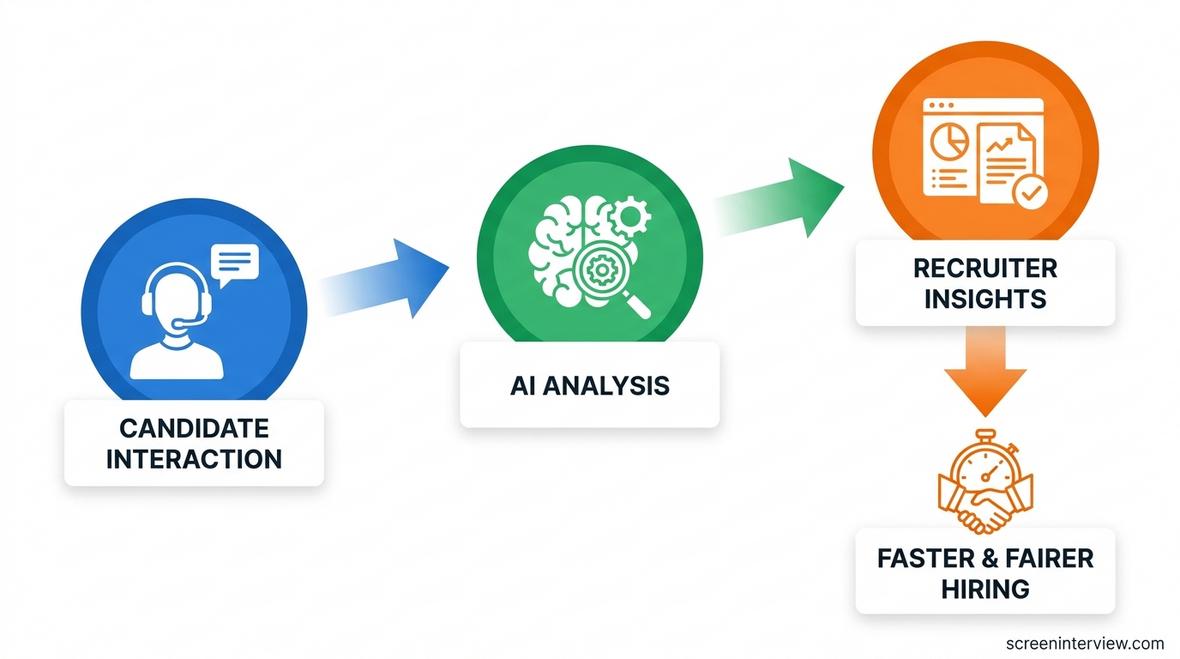
ScreenInterview: A Comprehensive Alternative to Sapia AI Interview Platforms
For recruiting professionals seeking more robust and versatile AI interview solutions, ScreenInterview offers a comprehensive platform that addresses the limitations of single-modality assessment tools. Unlike Sapia AI interview systems that focus exclusively on text-based chat interactions, ScreenInterview provides multi-modal assessment capabilities including voice interviews, video evaluations, and technical screening all within a unified platform.
The platform's architecture supports diverse hiring scenarios, from high-volume hourly recruitment to specialized technical positions requiring code evaluation. This flexibility ensures that organizations can maintain consistency in their assessment approach while tailoring specific interview formats to role requirements.
Advanced AI Capabilities Beyond Text Analysis
ScreenInterview's AI interviewer technology extends beyond simple text parsing to incorporate natural language understanding, contextual follow-up questioning, and adaptive assessment pathways. The system conducts dynamic conversations that adjust based on candidate responses, creating more engaging and comprehensive evaluations.
For technical roles, the platform integrates code assessment capabilities that allow candidates to demonstrate practical skills rather than simply describing their experience. This hands-on evaluation approach provides recruiting teams with concrete evidence of candidate abilities, reducing the risk of mis-hires and accelerating the identification of truly qualified talent.
Multi-Format Interview Options
While Sapia AI interview platforms limit assessments to text-based chat, ScreenInterview supports multiple interview formats to match organizational needs and candidate preferences. The platform offers on-demand interviews where candidates record video responses to pre-set questions, enabling asynchronous screening with the added dimension of visual and verbal communication assessment.
For roles requiring real-time interaction evaluation, the platform supports live AI-conducted interviews that simulate actual conversation dynamics. This approach provides insights into candidate thinking processes, communication clarity, and problem-solving approaches that text-based assessments cannot capture. Organizations can also implement telephone screening workflows for scenarios where voice-only assessment is preferred.
Key Differentiators for Modern Recruiting Professionals
When evaluating AI interview platforms, recruiting professionals should consider several critical factors that distinguish basic chat-based solutions from comprehensive recruitment technology ecosystems. These differentiators directly impact hiring velocity, candidate quality, and overall recruitment ROI.
Integration and Workflow Automation
The workflow automation capabilities of modern AI interview platforms significantly impact operational efficiency. While Sapia AI interview technology offers basic ATS integration, comprehensive platforms like ScreenInterview provide deep workflow connections that automate candidate progression, trigger follow-up actions, and synchronize data across recruitment systems without manual intervention.
These automation capabilities become particularly valuable when scaling recruitment operations. The U.S. Bureau of Labor Statistics JOLTS data to benchmark hiring velocity shows that organizations face persistent talent competition across sectors, making recruitment speed a competitive advantage. Platforms that eliminate manual steps and accelerate candidate progression help organizations secure top talent before competitors.
Intelligent Scheduling and Coordination
One often-overlooked advantage of comprehensive AI interview platforms is their intelligent scheduling functionality. While Sapia AI interview assessments are asynchronous by design, complete recruitment workflows require coordination of subsequent interview stages with hiring managers and panel members.
Advanced platforms automatically coordinate calendars, send reminders, handle rescheduling requests, and ensure smooth candidate progression through multi-stage interview processes. This capability reduces recruiter administrative burden and prevents candidate drop-off due to scheduling friction a common problem that costs organizations qualified talent.
Technical Role Assessment Capabilities
For organizations hiring software engineers, data scientists, and other technical professionals, assessment depth becomes critical. Sapia AI interview platforms focus on soft skills and behavioral assessment, providing limited value for technical screening. Modern recruiting demands platforms that evaluate both technical competency and cultural fit within integrated workflows.
ScreenInterview addresses this need through specialized technical interview capabilities for roles including software engineer, data scientist, and DevOps engineer positions. The platform enables candidates to write and execute code, solve algorithmic problems, and demonstrate practical skills in realistic scenarios.
This integrated approach eliminates the need for multiple disconnected screening tools one for behavioral assessment and another for technical evaluation. Consolidation reduces vendor management complexity, lowers costs, and creates seamless candidate experiences that reflect positively on employer brand.
Bias Reduction and Fair Evaluation
Both Sapia AI interview technology and comprehensive alternatives like ScreenInterview emphasize bias reduction and fair candidate evaluation. However, the mechanisms and transparency of these approaches differ significantly, impacting both effectiveness and regulatory compliance.
Text-based platforms reduce certain bias vectors by eliminating visual cues related to candidate appearance, age, and other protected characteristics. However, they may introduce different bias forms through language analysis algorithms that inadvertently favor certain communication styles or educational backgrounds. Modern recruiting professionals must evaluate not just whether platforms claim to reduce bias, but how transparently they document their methodologies and validation processes.
ScreenInterview implements multi-layered bias mitigation strategies including structured evaluation criteria, standardized question sets, and blind review options that hide candidate identifying information during initial screening. The platform's interview insights provide transparent scoring explanations, enabling recruiting teams to understand and validate AI-generated recommendations rather than accepting them as opaque black-box decisions.
Candidate Experience and Employer Brand Impact
In competitive talent markets, candidate experience directly influences acceptance rates, employer brand perception, and long-term talent pipeline quality. While Sapia AI interview platforms offer convenient asynchronous assessment, they may feel impersonal or transactional to candidates accustomed to more engaging interview experiences.
Modern AI interview platforms balance efficiency with engagement by offering personalized interactions, clear communication about process expectations, and professional presentation that reflects organizational culture. Video-based and voice-based assessments create more human connections than text-only interactions, particularly for candidates evaluating multiple opportunities simultaneously.
The platform's mobile-responsive design and intuitive interfaces ensure candidates can complete assessments conveniently without technical friction. These seemingly minor details significantly impact completion rates and candidate perception, ultimately affecting hiring funnel conversion and cost-per-hire metrics.
Compliance and Security Considerations
As AI adoption in recruitment accelerates, regulatory scrutiny increases correspondingly. Organizations must ensure their AI interview platforms comply with employment law, data privacy regulations, and emerging AI governance frameworks. Sapia AI interview systems and alternative platforms each approach these requirements differently, with implications for risk management and legal exposure.
Comprehensive platforms provide detailed documentation of algorithmic decision-making processes, enabling organizations to demonstrate compliance with regulations requiring transparency and explainability in automated employment decisions. The AI proctor functionality in advanced platforms also addresses assessment integrity concerns, ensuring candidate responses authentically represent their capabilities.
Data security protections must meet enterprise standards, with encryption, access controls, and audit logging that satisfy both internal security teams and external compliance auditors. When evaluating AI interview platforms, recruiting professionals should request detailed security documentation and compliance certifications rather than accepting general assurances.
Implementation and Adoption Considerations
Selecting an AI interview platform represents just the first step in successful recruitment technology transformation. Implementation complexity, user adoption challenges, and change management requirements significantly impact realized value and return on investment.
Platforms like ScreenInterview provide comprehensive implementation support including workflow design consultation, integration configuration, and team training that accelerates time-to-value. The platform's intuitive interface minimizes learning curves for both recruiters and candidates, reducing adoption friction that often undermines technology initiatives.
Organizations should evaluate not just platform capabilities but also vendor support quality, documentation comprehensiveness, and customer success resources. The difference between successful implementation and abandoned technology often comes down to these seemingly secondary factors.
Cost and Value Comparison
While specific pricing varies based on organizational size and usage volume, comprehensive AI interview platforms typically offer better value than point solutions like Sapia AI interview technology when evaluated on total cost of ownership. Consolidated platforms eliminate multiple vendor relationships, reduce integration complexity, and provide unified data insights that improve recruiting strategy.
Organizations should evaluate costs holistically, considering not just license fees but also implementation expenses, ongoing support costs, and internal resource requirements. Platforms that reduce recruiter time spent on administrative tasks and accelerate time-to-hire deliver quantifiable ROI that justifies higher upfront investment.
The detailed comparison between ScreenInterview and Sapia highlights specific capability and value differences, enabling informed decision-making based on organizational priorities and constraints.
Making Informed Platform Decisions
Selecting the right AI interview platform requires careful evaluation of current recruitment challenges, future scalability needs, and organizational technology ecosystem. While Sapia AI interview technology addresses certain screening requirements, comprehensive alternatives provide broader capabilities that support diverse hiring scenarios and evolving recruitment strategies.
Recruiting professionals should conduct thorough vendor evaluations including product demonstrations, reference checks with similar organizations, and pilot implementations that test platforms with real recruitment workflows. This due diligence investment prevents costly mistakes and ensures selected technology aligns with both immediate needs and long-term talent acquisition vision.
Frequently Asked Questions
What makes Sapia AI interview platforms different from traditional screening methods?
Sapia AI interview technology uses chat-based conversational AI to assess candidates through text interactions, analyzing language patterns and response styles to evaluate soft skills and cultural fit. This differs from traditional phone screens or resume reviews by providing standardized, data-driven insights that reduce certain forms of unconscious bias.
Can AI interview platforms evaluate technical skills effectively?
While Sapia AI interview platforms focus primarily on behavioral assessment, comprehensive alternatives like ScreenInterview include technical evaluation capabilities for coding, problem-solving, and domain-specific knowledge assessment. These integrated platforms provide both technical and soft skills evaluation within unified workflows.
How do candidates typically respond to AI-conducted interviews?
Candidate reception varies based on implementation quality and communication clarity. Well-designed AI interview experiences that clearly explain the process, provide responsive interfaces, and offer reasonable completion timeframes generally receive positive feedback. Text-only assessments may feel less engaging than video or voice-based alternatives, potentially impacting candidate perception and completion rates.
What integration capabilities should I prioritize when selecting an AI interview platform?
Priority integrations include your applicant tracking system, calendar systems for interview scheduling, communication platforms for candidate outreach, and HR information systems for new hire onboarding. Deep, bidirectional integrations that automatically sync data and trigger workflow actions provide significantly more value than basic one-way data exports.
How can organizations ensure AI interview platforms promote fair, unbiased evaluation?
Select platforms that provide transparency into their assessment methodologies, conduct regular bias audits, and enable human review of AI-generated recommendations. Implement structured evaluation criteria, use diverse validation datasets, and monitor outcomes across demographic groups to identify and address potential disparities.
Conclusion
Sapia AI interview technology represents one approach to recruitment automation, offering text-based behavioral assessment that addresses certain screening challenges. However, modern recruiting professionals require comprehensive platforms that support diverse interview formats, technical skill evaluation, and seamless workflow integration. ScreenInterview provides these capabilities within a unified ecosystem designed for the evolving demands of talent acquisition in 2026. By carefully evaluating platform capabilities against organizational needs, recruiting leaders can select solutions that accelerate hiring velocity, improve candidate quality, and enhance overall recruitment effectiveness while maintaining fairness and compliance throughout the process.
Ready to Transform Your Interview Process?
See how ScreenInterview can help you automate phone screens, reduce bias, and hire better candidates faster.