
Interview Questions For Communications Director: A Complete 2026 Hiring Guide

Understanding the Communications Director Role in 2026
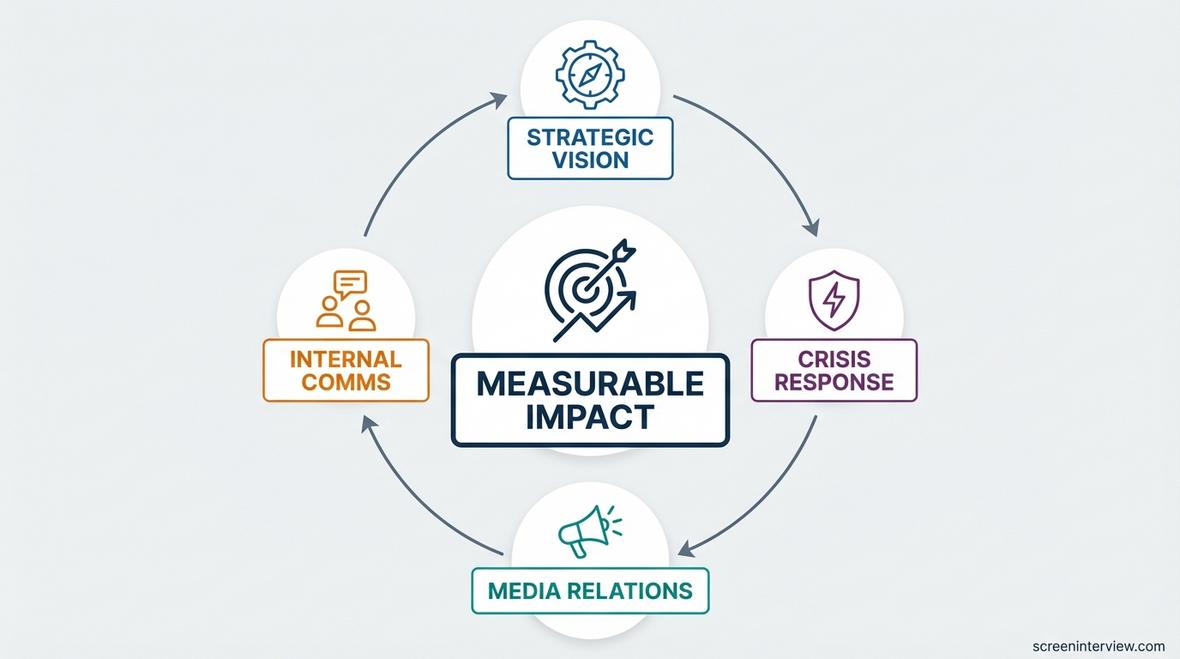
The Communications Director role has evolved dramatically in recent years, becoming one of the most strategically critical positions in modern organizations. These professionals are responsible for crafting the organization's narrative across multiple channels, managing crisis communications, building media relationships, and ensuring consistent internal messaging. For recruiting professionals screening candidates for this pivotal role, understanding the multifaceted nature of communications leadership is essential to identifying top-tier talent.
A Communications Director must possess a unique blend of strategic thinking, creative execution, media savvy, and crisis management capabilities. They serve as the voice of the organization, translating complex business objectives into compelling stories that resonate with diverse stakeholders. According to IBM Smarter Workforce Institute: Bias Reduction and Interview Standardization, structured interviewing practices for communications directors show a direct correlation with post-hire performance outcomes and significant reduction in unconscious bias during the selection process.
Modern recruiting professionals face the challenge of efficiently screening high volumes of candidates while ensuring a fair, unbiased evaluation process. This is where AI-powered interview solutions become invaluable, allowing talent teams to standardize their assessment approach while reducing time-to-hire for critical communications leadership roles.
Strategic Vision and Planning Questions
When evaluating interview questions for communications director candidates, strategic thinking should be your primary assessment focus. These leaders must demonstrate the ability to align communications strategies with broader business objectives while anticipating market shifts and stakeholder needs.
Core Strategic Planning Questions
- Describe your process for developing a comprehensive communications strategy for a new product launch or major organizational initiative. This question reveals how candidates approach strategic planning, stakeholder mapping, and channel selection.
- How do you measure the ROI and effectiveness of communications campaigns? Top candidates will discuss both quantitative metrics (media impressions, engagement rates, sentiment analysis) and qualitative outcomes (reputation enhancement, stakeholder trust).
- Tell me about a time when you had to pivot your communications strategy due to unexpected market conditions or organizational changes. This behavioral question assesses adaptability and strategic agility.
- How do you prioritize competing communications demands when resources are limited? Effective Communications Directors must demonstrate resource allocation skills and the ability to identify high-impact opportunities.
Research from Capgemini Research: Digital Transformation in Talent Acquisition indicates that organizations implementing structured, competency-based assessments for communications roles see a 34% improvement in candidate quality and a 28% reduction in time-to-hire when using automated preliminary assessments.
Digital Transformation and Innovation
In 2026, Communications Directors must be digital-native leaders who understand emerging platforms, technologies, and content formats. Consider these evaluation points:
- How have you leveraged emerging technologies (AI, data analytics, automation) to enhance communications effectiveness?
- Describe your approach to building and maintaining a strong social media presence across multiple platforms.
- What is your philosophy on balancing traditional media relations with digital-first communications strategies?
Using structured interview builders helps recruiting professionals create consistent evaluation frameworks that assess both traditional communications competencies and digital innovation capabilities.
Crisis Management and Response Evaluation
Crisis communications capabilities separate exceptional Communications Directors from average performers. During high-pressure situations, these leaders must demonstrate composure, strategic thinking, and rapid decision-making abilities.
Essential Crisis Management Questions
When developing interview questions for communications director roles, crisis management scenarios should feature prominently in your assessment process:
- Walk me through your crisis communications protocol. What are the first three actions you take when a potential crisis emerges? Strong candidates will outline stakeholder notification processes, holding statement development, and situation assessment frameworks.
- Describe a significant crisis you managed. What was your approach, and what would you do differently in retrospect? This reveals self-awareness, learning orientation, and crisis management experience.
- How do you balance transparency with legal and business considerations during sensitive situations? This question assesses judgment, ethical reasoning, and cross-functional collaboration skills.
- What systems do you implement to monitor potential issues before they escalate into full crises? Proactive Communications Directors establish early warning systems and stakeholder listening programs.
Leveraging AI interviewer technology allows recruiting teams to present standardized crisis scenarios to all candidates, ensuring fair evaluation while capturing nuanced responses for detailed analysis.
Media Relations and Stakeholder Engagement
Communications Directors must excel at building and maintaining relationships with journalists, influencers, industry analysts, and other key stakeholders. These relationships form the foundation of effective external communications programs.
Media Relations Assessment Questions
- How do you build and maintain relationships with journalists and media outlets? Look for candidates who discuss personalized outreach, value creation, and long-term relationship building rather than transactional pitching.
- Describe your approach to preparing executives for media interviews and public appearances. Effective Communications Directors serve as trusted advisors who enhance executive presence and message discipline.
- Tell me about a time when you secured significant media coverage for your organization. What was your strategy? This reveals creativity, persistence, and understanding of media dynamics.
- How do you handle negative media coverage or inaccurate reporting? Strong candidates balance assertive correction with relationship preservation.
Modern recruiting professionals can utilize on-demand interview platforms to assess candidates' communication style, media presence, and executive presentation skills through video responses to standardized prompts.
Internal Communications and Organizational Culture
While external communications often receive more attention, exceptional Communications Directors recognize that internal stakeholders are equally critical. Employee engagement, cultural alignment, and internal transparency directly impact organizational performance and external reputation.
Internal Communications Evaluation
When crafting interview questions for communications director candidates, assess their internal communications philosophy and capabilities:
- How do you ensure consistent messaging across all organizational levels? This reveals cascade communication strategies and leadership engagement approaches.
- Describe your approach to communicating difficult or unpopular organizational decisions. Strong candidates demonstrate empathy, transparency, and change management expertise.
- What metrics do you use to assess internal communications effectiveness? Look for candidates who discuss employee feedback mechanisms, engagement surveys, and behavioral indicators.
- How do you tailor communications for diverse employee populations (remote workers, frontline staff, executives)? This assesses audience segmentation skills and inclusive communication practices.
Implementing workflow automation in your screening process ensures that all candidates are evaluated against consistent internal communications competencies while reducing administrative burden on your talent team.
Team Leadership and Development
Communications Directors typically lead teams of varied sizes and specializations, from content creators and social media managers to media relations specialists and graphic designers. Leadership capabilities are essential for building high-performing communications functions.
Leadership Competency Questions
- Describe your leadership philosophy and how you build high-performing communications teams. This reveals management style, talent development approach, and team culture creation.
- How do you handle performance issues within your team while maintaining morale and productivity? Strong leaders demonstrate both accountability and supportiveness.
- Tell me about a time when you had to manage competing priorities across your team. How did you allocate resources and ensure successful outcomes? This assesses project management, delegation, and strategic prioritization skills.
- What is your approach to professional development for communications professionals? Top candidates invest in team growth through training, mentorship, and skill expansion opportunities.
For organizations screening communications leadership candidates, AI-powered leadership assessments can provide standardized evaluation of management competencies while identifying potential red flags early in the screening process.
Budget Management and Resource Allocation
Communications Directors must operate as business leaders who understand financial management, ROI optimization, and strategic resource allocation. Budget management questions reveal financial acumen and strategic thinking.
Financial and Resource Questions
- Describe your experience managing communications budgets. How do you prioritize spending across different channels and initiatives?
- How do you make the business case for increased communications investment to senior leadership?
- Tell me about a time when you achieved significant results with limited resources. What was your approach?
- What is your philosophy on balancing in-house capabilities versus external agency partnerships?
Measurement, Analytics, and Data-Driven Decision Making
Modern Communications Directors must be comfortable with data analysis, performance metrics, and evidence-based strategy development. The ability to translate communications activities into measurable business outcomes is increasingly critical.
Analytics and Measurement Questions
- What key performance indicators do you track to assess communications effectiveness? Strong candidates discuss both output metrics (media placements, content production) and outcome metrics (reputation scores, stakeholder sentiment, business impact).
- Describe how you use data and analytics to inform communications strategy and tactical decisions.
- How do you demonstrate the business value of communications to skeptical executives or board members?
- What tools and platforms do you use for media monitoring, social listening, and communications analytics?
Recruiting professionals can leverage interview insights technology to analyze candidate responses, identify top performers, and make data-driven hiring decisions with greater confidence and reduced bias.
Behavioral and Situational Assessment Scenarios
Beyond direct questions, effective communications director screening should include behavioral and situational assessments that reveal how candidates approach complex, ambiguous challenges.
Effective Scenario-Based Questions
- Scenario: Your CEO wants to make a controversial public statement on a divisive social issue. Some executives support the statement while others have concerns. How do you navigate this situation? This assesses political savvy, stakeholder management, and ethical reasoning.
- Scenario: A major competitor has just launched a negative campaign targeting your organization's reputation. What is your response strategy? This reveals competitive intelligence, strategic response planning, and crisis management capabilities.
- Scenario: Your organization is undergoing a significant transformation (merger, restructuring, cultural change). How do you develop and execute the communications strategy? This assesses change management expertise and strategic communications planning.
For organizations conducting high-volume screening, automated telephone screening can efficiently assess baseline qualifications before advancing candidates to more comprehensive evaluations.
Technical Skills and Platform Knowledge
While strategic thinking and leadership are paramount, Communications Directors must also possess practical expertise with communications tools, platforms, and technologies.
Technical Knowledge Questions
- What communications management platforms and tools have you used? Which do you find most effective and why?
- Describe your experience with content management systems, email marketing platforms, and social media management tools.
- How do you stay current with emerging communications technologies and platform changes?
- What is your approach to selecting and implementing new communications technology?
Red Flags and Warning Signs During Screening
Experienced recruiting professionals should watch for specific warning signs when evaluating communications director candidates:
- Inability to provide specific examples: Candidates who speak only in generalities without concrete examples may lack genuine experience.
- Blame-oriented responses: Communications Directors who consistently attribute failures to others demonstrate poor accountability.
- Lack of metrics orientation: Inability to discuss measurement and ROI suggests strategic weakness.
- Poor listening skills: Communications Directors must be exceptional listeners; candidates who interrupt or fail to address questions directly raise concerns.
- Overly reactive mindset: Strong Communications Directors are proactive and strategic rather than purely reactive.
Streamlining Your Communications Director Screening Process
For modern recruiting professionals managing high-volume candidate pipelines, efficiency without sacrificing quality is essential. Traditional interview processes for senior communications roles can be time-consuming and resource-intensive, often requiring multiple rounds of interviews with various stakeholders.
Implementing AI-powered screening solutions allows talent teams to standardize their evaluation approach, reduce unconscious bias, and accelerate time-to-hire while ensuring comprehensive assessment of critical competencies. These platforms enable recruiting professionals to focus their time on the most promising candidates while ensuring fair, consistent evaluation across all applicants.
By combining structured interview questions for communications director roles with modern assessment technology, organizations can build more effective, efficient, and equitable hiring processes that consistently identify top-tier communications leadership talent.
Conclusion
Hiring an exceptional Communications Director requires a comprehensive, structured approach that assesses strategic thinking, crisis management capabilities, media relations expertise, internal communications skills, and leadership competencies. By implementing the interview questions and evaluation frameworks outlined in this guide, recruiting professionals can significantly improve their ability to identify top-tier communications talent. Leveraging AI-powered screening technology further enhances this process by standardizing assessments, reducing bias, and accelerating time-to-hire. As organizations continue to recognize communications as a strategic business function rather than a support service, investing in rigorous, data-driven hiring processes for communications leadership becomes increasingly critical to organizational success.
Ready to Transform Your Interview Process?
See how ScreenInterview can help you automate phone screens, reduce bias, and hire better candidates faster.