
Hire AI: The Complete 2026 Guide To AI-Powered Recruitment Technology

The recruitment landscape has fundamentally transformed in recent years, with artificial intelligence emerging as the cornerstone of modern talent acquisition. As organizations face unprecedented hiring volumes and intensifying competition for top talent, the decision to hire AI solutions has shifted from optional innovation to operational necessity. For recruiting professionals managing hundreds of applications weekly, AI-powered screening technology offers a strategic advantage that traditional methods simply cannot match.
Modern recruitment teams are discovering that AI interviewing platforms deliver measurable improvements across every hiring metric from time-to-hire reduction to candidate quality enhancement. According to Forrester research on AI versus manual screening efficiency, AI screening cuts unqualified candidates by 75%, compared to just 40% for manual methods, dramatically boosting recruiter productivity. This efficiency gain represents more than just time savings; it fundamentally changes how talent teams allocate their expertise, shifting focus from administrative screening to strategic candidate engagement.
Understanding AI Recruitment Technology
When organizations choose to hire AI for recruitment, they're implementing sophisticated systems that combine natural language processing, machine learning algorithms, and predictive analytics to evaluate candidates at scale. These platforms analyze verbal responses, assess technical competencies, and measure soft skills through structured conversations that maintain consistency across thousands of interviews.
AI recruitment technology operates through several integrated components. The system first ingests job requirements and organizational competency frameworks, then generates customized interview questions aligned with specific role demands. During candidate interactions, the AI conducts real-time conversational assessments, asking follow-up questions based on responses while maintaining natural dialogue flow. Finally, sophisticated scoring algorithms evaluate answers against predefined criteria, generating comparative rankings that highlight top performers.
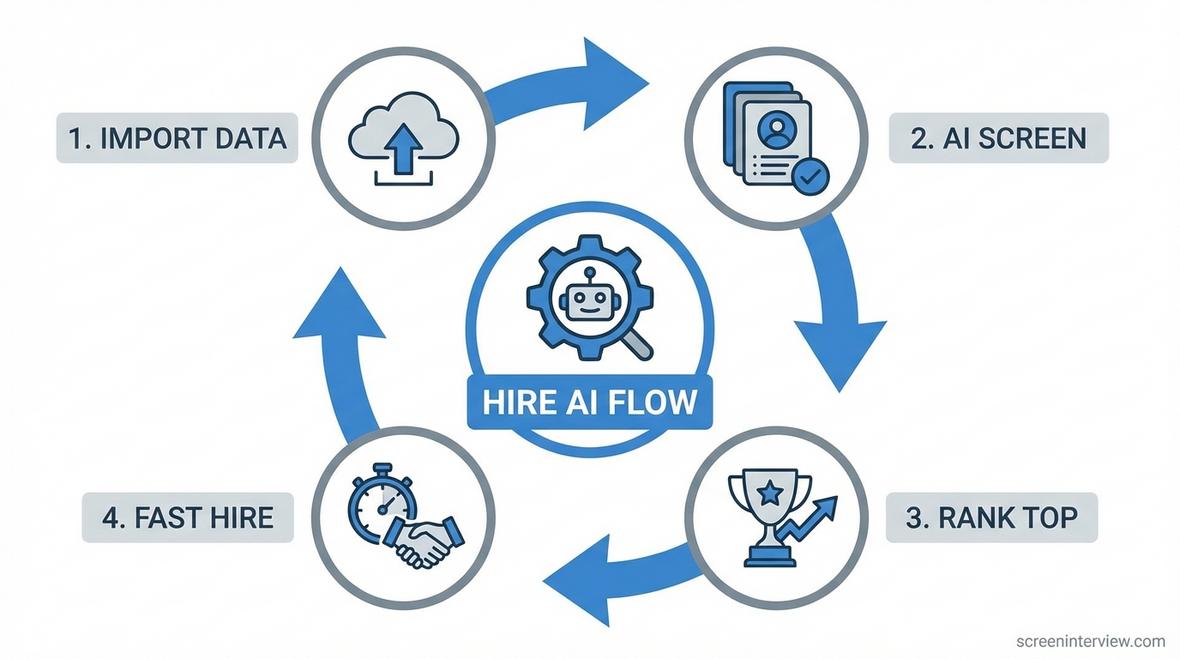
The workflow illustrated above demonstrates the cyclical efficiency of AI-driven recruitment: data import, intelligent screening, candidate ranking, and accelerated hiring decisions. This streamlined process eliminates bottlenecks that traditionally extended time-to-hire by weeks or months.
Why Modern Recruiters Hire AI Solutions
Recruiting professionals face mounting pressure to deliver faster hiring outcomes without compromising candidate quality. Traditional manual screening methods create significant operational constraints a single recruiter can realistically conduct only 8-12 thorough phone screens daily, limiting organizational capacity when facing high-volume hiring needs. When companies hire AI interviewing technology, they remove these capacity constraints entirely.
Operational Efficiency Gains
AI interview platforms like ScreenInterview's AI interview solution enable simultaneous candidate assessments at unprecedented scale. While a human recruiter schedules, conducts, and documents one interview at a time, AI systems process hundreds of candidates concurrently, delivering structured evaluations within hours rather than weeks. This efficiency multiplier proves particularly valuable for organizations hiring across multiple locations or managing seasonal recruitment surges.
The time savings extend beyond initial screening. AI-generated interview transcripts, automated scoring summaries, and comparative candidate rankings eliminate hours of administrative documentation. Recruiters access comprehensive evaluation data instantly, enabling same-day hiring decisions for qualified candidates who might otherwise accept competing offers during prolonged evaluation periods.
Enhanced Quality and Consistency
Human interviewers naturally vary in assessment rigor, question selection, and evaluation criteria even when following structured interview guides. This inconsistency introduces bias and reduces the reliability of hiring decisions. AI systems apply identical evaluation standards to every candidate, ensuring fair comparison across applicants regardless of interview timing, interviewer availability, or external factors affecting human judgment.
Organizations implementing AI interviewer technology report significant improvements in new hire quality metrics. The technology identifies subtle competency indicators that human screeners might overlook during brief phone conversations, surfacing candidates whose capabilities exceed initial resume impressions.
Key Features When You Hire AI Interview Platforms
Not all AI recruitment solutions deliver equivalent value. When evaluating platforms, recruiting leaders should prioritize specific capabilities that directly impact hiring outcomes and operational integration.
Conversational Intelligence Capabilities
Advanced AI interview platforms utilize natural language processing to conduct genuinely conversational assessments rather than rigid question-answer sequences. The system should recognize context from previous responses, ask relevant follow-up questions, and adapt conversation flow based on candidate expertise levels. This conversational sophistication creates more engaging candidate experiences while extracting deeper insights into competencies.
Customization and Flexibility
Generic interview templates rarely align with specific organizational needs. Leading platforms offer extensive customization through interview builder tools that enable recruiters to design role-specific assessment frameworks. Organizations should be able to define custom evaluation criteria, weight competencies according to role importance, and integrate company-specific scenarios into interview flows.
ATS and Workflow Integration
AI interview platforms must seamlessly integrate with existing applicant tracking systems and recruitment workflows. Look for solutions offering API connections to major ATS platforms, automated candidate advancement based on score thresholds, and bi-directional data synchronization that keeps all systems updated without manual intervention. Workflow automation capabilities should extend beyond basic integrations to include conditional logic, multi-stage assessment routing, and customized notification triggers.
Security and Proctoring Features
When organizations hire AI for technical role assessments, maintaining evaluation integrity becomes paramount. Robust AI proctoring capabilities detect potential cheating behaviors, verify candidate identity, and ensure fair assessment conditions. Security features should include browser lockdown functionality through secure browser technology, screen recording with flagging of suspicious activities, and environmental monitoring during assessments.
Best Practices for Implementing AI Recruitment Technology
Successfully deploying AI interview platforms requires strategic planning beyond simple technology adoption. Organizations achieving the highest ROI from AI recruitment investments follow structured implementation approaches.
Start with Targeted Pilot Programs
Rather than organization-wide rollouts, begin with focused pilots targeting high-volume roles or positions with historically problematic time-to-hire metrics. This approach allows recruitment teams to develop AI platform expertise, refine interview templates, and document measurable improvements before scaling deployment. Pilot programs should run for at least two full hiring cycles to generate statistically meaningful comparison data against traditional screening methods.
Comprehensive Stakeholder Training
AI recruitment technology requires behavioral changes from multiple stakeholders recruiters must learn new workflows, hiring managers need training on AI-generated evaluation reports, and candidates benefit from clear communication about the assessment process. Develop role-specific training programs addressing each stakeholder group's unique needs and concerns. Recruiting teams particularly benefit from hands-on training with interview insights dashboards that translate AI scoring into actionable hiring recommendations.
Continuous Bias Monitoring and Calibration
While AI systems dramatically reduce human bias, they require ongoing monitoring to ensure algorithms don't perpetuate historical hiring patterns that disadvantaged certain candidate populations. Establish regular bias audits examining candidate advancement rates across demographic groups, competency score distributions, and correlation between AI assessments and subsequent job performance. Leading organizations conduct quarterly calibration reviews, adjusting evaluation criteria based on new hire success data and emerging competency requirements.
Role-Specific Applications for AI Interviews
Different positions require distinct assessment approaches. Modern AI platforms offer specialized interview frameworks optimized for specific role categories, enabling more accurate candidate evaluation across diverse hiring needs.
Technical and Engineering Positions
Technical hiring presents unique challenges validating coding proficiency, assessing problem-solving approaches, and evaluating system design thinking require specialized questioning techniques. AI interview platforms designed for technical roles incorporate live coding assessments, algorithm problem-solving scenarios, and architecture discussion prompts. Organizations hiring for positions like software engineers, data scientists, or DevOps engineers benefit from these specialized technical assessment capabilities.
Business and Leadership Roles
Non-technical positions demand different evaluation criteria focused on communication skills, strategic thinking, and cultural alignment. AI systems assess these softer competencies through situational judgment scenarios, behavioral question analysis, and leadership philosophy discussions. Platforms like ScreenInterview offer tailored interview frameworks for product managers, sales and marketing professionals, and leadership positions.
Measuring ROI When You Hire AI Solutions
Justifying AI recruitment investments requires demonstrating tangible business impact through quantifiable metrics. Organizations should track multiple performance indicators across efficiency, quality, and cost dimensions.
Time-to-Hire Reduction
Calculate the average duration from requisition opening to offer acceptance before and after AI implementation. Leading organizations report 40-60% reductions in time-to-hire for positions utilizing AI screening, with even greater improvements for high-volume roles. This acceleration translates directly to competitive advantage in talent markets where top candidates receive multiple offers within days of beginning their job search.
Cost-per-Hire Analysis
Comprehensive cost analysis should account for recruiter time savings, reduced reliance on external recruiting agencies, decreased interview coordination overhead, and minimized hiring mistakes requiring replacement recruiting. While AI platforms involve subscription costs, the total cost-per-hire typically decreases by 30-45% when accounting for all efficiency gains and quality improvements.
New Hire Quality Improvements
Track performance review scores, retention rates at 6-month and 12-month intervals, and time-to-productivity metrics for employees hired through AI-assisted processes versus traditional methods. Organizations consistently report higher performing hires when AI screening identifies candidates based on competency demonstration rather than resume credentials alone.
Addressing Common Concerns About AI Recruitment
Despite proven benefits, some organizations hesitate to hire AI solutions due to misconceptions about the technology's limitations or risks. Understanding these concerns and their evidence-based resolutions helps recruiting leaders make informed adoption decisions.
Candidate Experience Implications
Critics worry that AI interviews create impersonal candidate experiences that damage employer brand. Research indicates the opposite candidates appreciate AI interview flexibility, 24/7 availability, and immediate feedback compared to prolonged waits for human recruiter availability. Well-designed AI interview platforms maintain conversational engagement while offering scheduling convenience impossible with human-only processes. Organizations can enhance candidate experience further by clearly communicating the AI assessment process and maintaining human touchpoints for advancing candidates.
Algorithmic Bias Risks
Concerns about AI perpetuating historical hiring biases merit serious consideration. However, properly designed systems actually reduce bias compared to human screening. Transparent AI platforms document their bias testing methodologies, provide demographic impact analyses, and enable continuous monitoring of outcome fairness. When organizations implement bias monitoring protocols and regular algorithm audits, AI recruitment technology demonstrates superior fairness compared to manual screening processes susceptible to unconscious human bias.
The Future of AI in Recruitment
AI recruitment technology continues evolving rapidly, with emerging capabilities promising even greater hiring efficiency and candidate insight. Forward-thinking organizations are already exploring next-generation features that will define competitive recruiting strategies through 2026 and beyond.
Predictive Success Modeling
Advanced AI platforms are incorporating predictive analytics that forecast candidate success probability based on competency profiles, experience patterns, and organizational fit indicators. These models analyze historical performance data from successful employees, identifying patterns that predict long-term contribution potential beyond what traditional interviews reveal.
Multimodal Assessment Integration
Future AI interview platforms will combine verbal conversation analysis with additional assessment modalities written communication evaluation through asynchronous responses, problem-solving demonstration through interactive simulations, and team collaboration assessment through multi-candidate scenario exercises. This comprehensive evaluation approach provides holistic candidate profiles impossible to generate through single-method assessments.
Selecting the Right Platform to Hire AI Technology
The AI recruitment technology market offers numerous solutions with varying capabilities, pricing models, and implementation requirements. Recruiting leaders should evaluate options systematically using structured comparison criteria.
Essential Evaluation Criteria
Beyond core interview functionality, assess platforms on customization flexibility, integration breadth, customer support responsiveness, pricing transparency, and vendor stability. Request demonstration environments allowing hands-on testing with realistic job profiles from your organization. Evaluate candidate-facing interfaces from the applicant perspective, ensuring the experience aligns with your employer brand standards.
Organizations seeking to compare platforms systematically benefit from structured evaluation frameworks that weight criteria according to organizational priorities. Technical organizations might prioritize coding assessment sophistication, while customer-facing businesses may emphasize communication skills evaluation capabilities.
Implementation and Support Services
Technology adoption success depends heavily on vendor support quality during implementation and ongoing operation. Evaluate the comprehensiveness of onboarding programs, availability of technical integration assistance, and responsiveness of customer support channels. Leading vendors provide dedicated implementation managers, customized training programs, and proactive optimization recommendations based on usage analytics.
Frequently Asked Questions
How quickly can organizations implement AI interview platforms?
Implementation timelines vary based on customization requirements and integration complexity. Basic deployments with standard interview templates can launch within 1-2 weeks, while comprehensive implementations including custom competency frameworks, ATS integration, and multi-role assessment libraries typically require 4-6 weeks. Organizations should allocate additional time for pilot testing and recruiter training before full-scale deployment.
Do AI interviews replace human recruiters?
AI interview technology augments rather than replaces human recruiting expertise. The systems handle high-volume initial screening, freeing recruiters to focus on relationship building, candidate engagement, and strategic hiring decisions. Human judgment remains essential for final candidate selection, offer negotiation, and cultural fit assessment AI simply makes these activities more efficient by pre-qualifying candidates.
What candidate volume justifies AI interview investment?
Organizations screening 50+ candidates monthly across multiple roles typically achieve positive ROI from AI interview platforms within the first quarter of implementation. Smaller hiring volumes may still benefit when recruiting for specialized technical roles requiring extensive skill validation or when geographic distribution makes coordinated human screening logistically challenging.
How do AI systems handle diverse accents and language variations?
Modern AI interview platforms utilize advanced natural language processing trained on diverse speech patterns, accents, and linguistic variations. Leading systems achieve 95%+ transcription accuracy across major English variants and increasingly support multilingual assessments. Organizations operating in linguistically diverse markets should specifically evaluate accent handling capabilities during platform selection.
Can candidates cheat during AI interviews?
Comprehensive AI interview platforms incorporate multiple integrity safeguards including identity verification, browser lockdown preventing external resource access, environmental monitoring detecting additional people, and response pattern analysis flagging suspiciously perfect answers. While no system eliminates all cheating possibilities, modern AI proctoring technology makes dishonest behavior significantly more difficult than traditional unmonitored assessments.
Conclusion
The decision to hire AI recruitment technology represents a strategic investment in organizational competitiveness and hiring excellence. As talent markets intensify and candidate expectations evolve, AI-powered screening provides the efficiency, consistency, and insight necessary for modern recruiting success. Organizations implementing these platforms report substantial improvements across every meaningful hiring metric reduced time-to-hire, enhanced candidate quality, decreased recruiting costs, and improved hiring manager satisfaction. For recruiting professionals committed to delivering exceptional talent acquisition outcomes, AI interview technology has transitioned from emerging innovation to essential infrastructure, enabling the scalable, fair, and effective hiring processes that define industry-leading talent organizations in 2026.
Ready to Transform Your Interview Process?
See how ScreenInterview can help you automate phone screens, reduce bias, and hire better candidates faster.