
Conversational AI Recruiting: How Intelligent Automation Streamlines Hiring In 2026

Introduction
Recruitment in 2026 is no longer about manually sifting through hundreds of resumes or coordinating endless interview schedules. Modern talent acquisition teams are embracing conversational AI recruiting to transform how they engage, screen, and evaluate candidates at scale. For Heads of Talent, Recruiting Leads, and People Operations Managers, this technology represents a fundamental shift: moving from reactive, time-intensive processes to proactive, intelligent automation that reduces time-to-hire, enhances candidate experience, and ensures fairer evaluations.
According to research from Aptitude Research, 62% of companies using AI in talent acquisition are leveraging conversational AI systems, though true adoption still lags behind awareness. This article explores what conversational AI recruiting is, how it works, its core benefits, implementation strategies, and how platforms like ScreenInterview are leading this transformation.
What is Conversational AI Recruiting?
Conversational AI recruiting refers to the use of advanced natural language processing (NLP) and machine learning technologies to automate and enhance recruitment interactions through conversational interfaces. Unlike traditional keyword-based chatbots, these systems understand context, intent, and nuance, enabling them to conduct meaningful dialogues with candidates throughout the hiring journey.
These AI-powered systems can handle candidate sourcing, initial screening conversations, interview scheduling, answering frequently asked questions, and even conducting structured interviews. The technology operates across multiple channels web chat, SMS, email, voice calls providing candidates with seamless, 24/7 access to your recruitment process.
Key Components of Conversational AI Recruiting Systems
- Natural Language Understanding (NLU): Interprets candidate responses beyond simple keyword matching, understanding intent and context
- Dialogue Management: Maintains coherent, multi-turn conversations that adapt based on candidate responses
- Integration Capabilities: Connects with existing ATS, HRIS, and calendar systems to streamline workflows
- Multi-modal Interaction: Supports text, voice, and video-based conversations depending on channel and candidate preference
- Learning and Optimization: Continuously improves through machine learning based on interaction outcomes
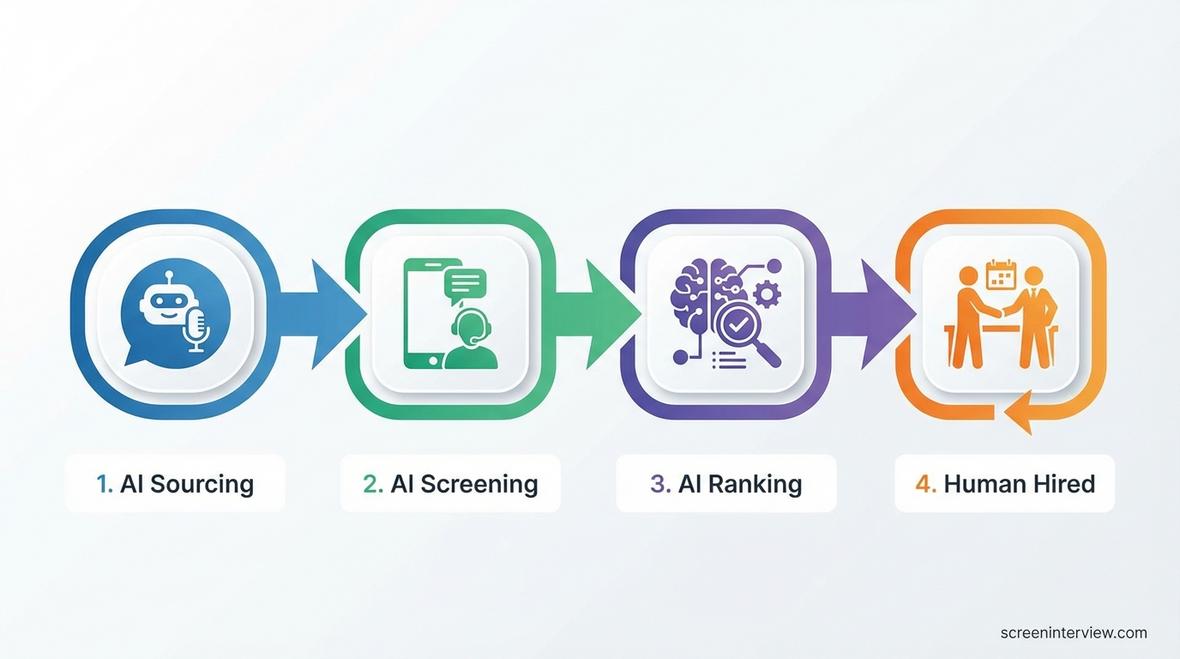
How Conversational AI Transforms the Recruitment Workflow
The traditional recruitment funnel involves multiple touchpoints, many of which are repetitive and time-consuming. Conversational AI recruiting addresses inefficiencies across four critical stages: sourcing, screening, ranking, and final selection.
AI-Powered Sourcing
Conversational AI can engage potential candidates through career sites, social media, and job boards, initiating personalized conversations that qualify interest and fit before a human recruiter gets involved. These systems can answer questions about company culture, benefits, role requirements, and application processes in real-time, capturing candidate interest when engagement is highest.
Modern platforms like AI Interviewer solutions enable this immediate engagement, ensuring no qualified candidate falls through the cracks due to delayed responses.
Intelligent Screening
This is where conversational AI recruiting delivers its most significant impact. Rather than requiring candidates to complete lengthy application forms or wait days for an initial phone screen, AI systems can conduct structured screening conversations that assess:
- Technical qualifications and experience levels
- Cultural fit through behavioral questions
- Availability and salary expectations
- Work authorization and location preferences
- Specific competencies relevant to the role
These conversations feel natural to candidates while collecting standardized data that enables objective comparison. SHRM case studies on conversational AI reducing recruiting inefficiencies demonstrate how organizations have reduced screening time by up to 75% while improving candidate satisfaction scores.
AI-Based Candidate Ranking
After screening conversations, conversational AI systems analyze responses using sophisticated algorithms that evaluate multiple dimensions of candidate fit. Unlike resume parsing that focuses on keywords, these systems assess:
- Response quality and communication skills
- Problem-solving approaches demonstrated in answers
- Alignment with role-specific competencies
- Consistency across multiple evaluation points
Platforms offering interview insights provide recruiting teams with ranked candidate pools based on objective criteria, dramatically reducing bias and accelerating decision-making.
Human-Led Final Selection
Conversational AI recruiting doesn't replace human judgment it enhances it. By handling initial stages efficiently, these systems ensure recruiters spend their time on high-value activities: building relationships with top candidates, conducting in-depth interviews, and making final hiring decisions with comprehensive, standardized data supporting each choice.
Core Benefits for Modern Recruiting Teams
Dramatically Reduced Time-to-Hire
Time-to-hire remains a critical metric for recruiting teams managing high-volume pipelines. Conversational AI recruiting compresses recruitment timelines by eliminating scheduling delays, immediately screening applicants, and providing instant feedback loops. Organizations implementing these systems report reductions in time-to-hire ranging from 40-60%, allowing them to secure top talent before competitors.
Enhanced Candidate Experience
Today's candidates expect consumer-grade experiences in recruitment. Conversational AI delivers immediate responses, transparent communication, and respectful engagement regardless of time zones or business hours. Candidates appreciate the efficiency and clarity these systems provide, leading to higher completion rates and improved employer brand perception.
Solutions like on-demand interviews give candidates flexibility to engage when convenient while maintaining process integrity.
Elimination of Unconscious Bias
One of the most compelling advantages of conversational AI recruiting is its ability to standardize evaluations and reduce human bias. These systems evaluate all candidates using identical criteria, focusing on qualifications and competencies rather than factors like name, age, appearance, or background that can trigger unconscious bias.
Research on eliminating interviewing bias through AI technology shows significant improvements in diversity metrics when organizations implement structured, AI-powered screening.
Scalability Without Quality Compromise
High-volume recruitment scenarios campus hiring, seasonal staffing, rapid expansion traditionally forced trade-offs between speed and quality. Conversational AI recruiting eliminates this constraint, enabling teams to screen thousands of candidates simultaneously while maintaining rigorous evaluation standards.
Data-Driven Recruitment Insights
Every conversation generates valuable data about candidate pools, common qualifications, dropout points in the funnel, and effectiveness of screening questions. Forward-thinking recruiting teams use these insights to continuously optimize their talent acquisition strategies, refine job descriptions, and improve targeting.
Implementing Conversational AI Recruiting: A Strategic Approach
Assessment and Planning
Successful implementation begins with understanding your current recruitment challenges. Map your existing process, identify bottlenecks, and define clear objectives for conversational AI recruiting. Common starting points include:
- High-volume screening for entry-level or technical roles
- Initial qualification conversations for specialized positions
- Scheduling automation for interview coordination
- FAQ handling to reduce recruiter administrative burden
Choosing the Right Platform
Not all conversational AI recruiting platforms offer the same capabilities. Evaluate solutions based on:
- Integration capabilities: Seamless connection with your existing ATS and HRIS
- Customization options: Ability to tailor conversations for different roles and company culture
- Multi-channel support: Coverage across web, mobile, SMS, email, and voice
- Analytics and reporting: Comprehensive insights into recruitment metrics
- Compliance features: GDPR, EEOC, and other regulatory requirement adherence
Platforms like ScreenInterview's AI interview solutions provide comprehensive capabilities designed specifically for modern recruiting teams.
Pilot Programs and Iteration
Rather than organization-wide rollouts, successful teams start with pilot programs targeting specific use cases or roles. This approach allows you to:
- Test technology performance with real candidates
- Gather feedback from recruiters and candidates
- Refine conversation flows and evaluation criteria
- Build internal champions who understand the value
- Demonstrate ROI before broader investment
Change Management and Training
Technology adoption requires people adoption. Invest in training your recruiting team on how conversational AI recruiting enhances rather than replaces their work. Address concerns transparently, demonstrate time savings, and celebrate early wins to build momentum.
Best Practices for Conversational AI Recruiting
Design Conversations for Humans, Not Robots
While the technology is sophisticated, conversations should feel natural and human. Avoid overly formal language, incorporate personality that reflects your employer brand, and design flows that adapt to candidate responses rather than following rigid scripts.
Maintain Transparency with Candidates
Candidates should know when they're interacting with AI systems. Clear disclosure builds trust and sets appropriate expectations. Explain how the technology is used, what data is collected, and how it benefits their experience.
Balance Automation with Human Touch
Conversational AI recruiting works best when combined with strategic human involvement. Use automation for screening and logistics while ensuring qualified candidates receive personalized attention from human recruiters at appropriate stages.
Continuously Optimize Based on Data
Monitor key metrics including candidate completion rates, time-to-screen, quality-of-hire, and candidate satisfaction scores. Use this data to refine conversation flows, adjust evaluation criteria, and improve overall effectiveness.
Ensure Fairness and Compliance
Regularly audit your conversational AI recruiting system for potential bias in questions, evaluation criteria, and outcomes. Work with vendors who prioritize fairness, provide transparency into algorithms, and support compliance with employment regulations.
Organizations focused on candidate screening without bias have developed comprehensive frameworks for ensuring AI systems support rather than undermine diversity goals.
Conversational AI Recruiting Across Different Role Types
Technical and Engineering Roles
For technical positions, conversational AI can conduct initial screening on programming languages, frameworks, project experience, and problem-solving approaches. Advanced systems can even facilitate software engineer AI interviews that assess coding capabilities and technical reasoning.
Business and Operations Roles
Business roles benefit from conversational AI's ability to assess soft skills, situational judgment, and cultural fit through behavioral questions. Systems can evaluate communication skills, problem-solving approaches, and alignment with company values through natural conversation.
High-Volume Hiring
Retail, hospitality, customer service, and other high-volume sectors see tremendous value from conversational AI recruiting. These systems can screen hundreds of candidates daily, ensuring consistent evaluation while dramatically reducing recruiter workload.
Solutions focused on high-volume recruiting with AI interviews are specifically designed for these scenarios.
Specialized and Niche Positions
Even for highly specialized roles, conversational AI adds value by handling qualification verification, initial technical screening, and scheduling, allowing expert recruiters and hiring managers to focus their limited time on candidates who meet baseline requirements.
Integration with Your Recruitment Technology Ecosystem
Conversational AI recruiting delivers maximum value when integrated into your existing technology stack. Modern platforms connect seamlessly with:
- Applicant Tracking Systems (ATS): Automatically updating candidate records, moving candidates through pipeline stages, and syncing all interaction data
- Calendar Systems: Intelligent scheduling that coordinates across multiple interviewers, time zones, and availability constraints
- HRIS Platforms: Passing qualified candidate data directly into onboarding workflows
- Assessment Tools: Triggering technical tests or personality assessments based on screening outcomes
- Communication Platforms: Engaging candidates via their preferred channels including SMS, email, and messaging apps
Platforms offering comprehensive workflow automation ensure conversational AI recruiting enhances rather than complicates your technology landscape.
Measuring Success: Key Metrics and ROI
To demonstrate the value of conversational AI recruiting, track these essential metrics:
- Time-to-Screen: Average time from application to completed initial screening
- Recruiter Hours Saved: Quantify time previously spent on manual screening and scheduling
- Candidate Completion Rates: Percentage of candidates who complete AI-powered screening versus traditional methods
- Quality of Hire: Performance ratings of hires sourced through conversational AI versus traditional channels
- Candidate Satisfaction: Net Promoter Scores and feedback specifically about the AI interaction experience
- Diversity Metrics: Impact on demographic diversity of candidate pools advancing through your funnel
- Cost per Hire: Total recruitment costs divided by number of hires, comparing pre- and post-implementation
Organizations implementing conversational AI recruiting typically see ROI within 3-6 months through reduced recruiter hours, faster hiring cycles, and improved quality of hire.
The Future of Conversational AI Recruiting
As we move deeper into 2026, conversational AI recruiting continues to evolve with emerging capabilities including:
- Multimodal Interactions: Seamlessly combining text, voice, and video in single conversations
- Emotional Intelligence: Systems that detect candidate sentiment and adapt conversation style accordingly
- Predictive Analytics: AI that forecasts candidate success probability and long-term retention likelihood
- Personalized Career Guidance: Systems that recommend roles and provide development advice beyond single job applications
- Proactive Talent Pipeline Building: AI that maintains ongoing relationships with passive candidates, nurturing them for future opportunities
Forward-thinking organizations are already exploring how AI recruiter agents can transform not just individual hiring processes but entire talent acquisition strategies.
Frequently Asked Questions About Conversational AI Recruiting
How much does conversational AI recruiting cost?
Pricing varies significantly based on volume, features, and implementation complexity. Enterprise solutions typically range from $500-$5,000 monthly, with costs scaling based on candidate interactions. Most platforms offer tiered pricing that makes the technology accessible for organizations of all sizes, with ROI typically achieved through recruiter time savings and reduced time-to-hire.
Do candidates respond positively to AI-powered screening?
Research consistently shows that candidates appreciate conversational AI recruiting when implemented thoughtfully. Key success factors include transparency about AI use, immediate response times, natural conversation design, and clear paths to human interaction when needed. Candidate satisfaction scores often exceed traditional screening methods due to convenience and reduced waiting times.
Can conversational AI recruiting introduce bias?
Like any tool, conversational AI can introduce bias if poorly designed or trained on biased data. However, when properly implemented with fairness considerations, these systems typically reduce bias compared to human screening by applying consistent evaluation criteria and removing visual and demographic cues that trigger unconscious bias. Regular auditing and diverse training data are essential for maintaining fairness.
Will conversational AI replace human recruiters?
No. Conversational AI recruiting augments rather than replaces human recruiters. The technology handles repetitive, time-consuming tasks like initial screening, scheduling, and FAQ responses, freeing recruiters to focus on relationship-building, strategic sourcing, stakeholder management, and final candidate evaluation activities requiring human judgment, empathy, and strategic thinking.
How long does implementation take?
Implementation timelines vary based on customization requirements and integration complexity. Basic implementations can be operational within 2-4 weeks, while comprehensive, fully-customized solutions may require 6-12 weeks. The key is starting with focused use cases and expanding progressively rather than attempting complete transformation immediately.
Conclusion
Conversational AI recruiting represents a fundamental evolution in how modern organizations identify, engage, and evaluate talent. For recruiting professionals managing high-volume pipelines and seeking competitive advantage in tight talent markets, these systems deliver measurable improvements in efficiency, candidate experience, and hiring quality. The technology has matured beyond experimental status into proven solutions that integrate seamlessly with existing recruitment workflows. Organizations that embrace conversational AI recruiting position themselves to attract top talent faster, reduce bias, and free their recruiting teams to focus on strategic, high-value activities that truly differentiate their employer brand in 2026's competitive landscape.
Ready to Transform Your Interview Process?
See how ScreenInterview can help you automate phone screens, reduce bias, and hire better candidates faster.