
Candidate Screening Automation: The Complete 2026 Guide For Recruiters

Introduction to Candidate Screening Automation
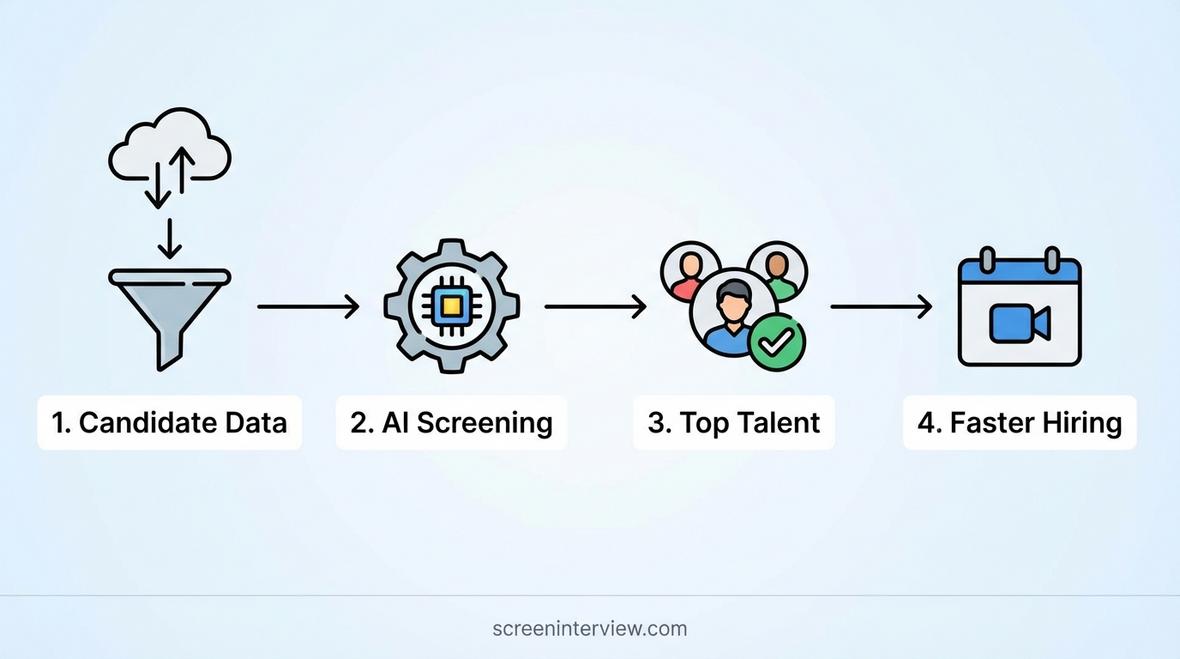
Modern recruiting professionals face an unprecedented challenge: sifting through hundreds or thousands of applications to identify the best candidates quickly and fairly. Candidate screening automation has emerged as the solution that transforms this bottleneck into a streamlined, efficient process. By leveraging artificial intelligence and machine learning, automated screening tools help talent acquisition teams reduce time-to-hire, improve candidate quality, and deliver a better experience for both recruiters and applicants.
The recruitment landscape in 2026 is vastly different from just a few years ago. According to research, 92% of job seekers abandon ATS applications due to lengthy, cumbersome processes, and 88% of employers lose qualified candidates because of ATS-unfriendly resumes. These statistics highlight a critical problem: traditional screening methods are failing both candidates and employers. This comprehensive guide explores how candidate screening automation addresses these challenges, what features matter most, and how to implement these solutions effectively in your hiring workflow.
What is Candidate Screening Automation?
Candidate screening automation refers to the use of technology primarily artificial intelligence, machine learning algorithms, and natural language processing to evaluate job applicants against predetermined criteria without manual intervention. These systems analyze resumes, cover letters, application responses, and even video interviews to assess candidate qualifications, skills, experience, and cultural fit.
Unlike traditional Applicant Tracking Systems that simply organize candidate data, modern candidate screening automation platforms actively evaluate and rank applicants. They can identify relevant keywords, assess skill levels, analyze communication abilities, and even detect personality traits that align with role requirements. This technology doesn't replace human judgment but augments it, allowing recruiters to focus their expertise on the most promising candidates rather than spending hours on initial resume reviews.
Why Candidate Screening Automation Matters in 2026
The Volume Challenge
Today's recruiting teams receive an overwhelming number of applications for each open position. Research indicates that 90% of rejections occur early due to high application volumes, making automation essential as application volumes continue to rise. Manual screening of hundreds of resumes per role is simply not scalable, especially for organizations experiencing rapid growth or seasonal hiring surges.
Speed as a Competitive Advantage
Top candidates are off the market within 10 days. Companies that take weeks to screen applications lose exceptional talent to more agile competitors. Candidate screening automation compresses what used to take days or weeks into hours or even minutes, ensuring your organization reaches qualified candidates before the competition does.
Reducing Unconscious Bias
Human screeners, despite best intentions, bring unconscious biases to their evaluations. Automated screening systems, when properly configured, evaluate candidates based solely on job-relevant criteria. This creates a more equitable hiring process and helps organizations build diverse, high-performing teams. The key is ensuring the AI models themselves are trained on unbiased data and regularly audited for fairness.
Enhanced Candidate Experience
Candidates today expect timely communication and transparency throughout the hiring process. Automation enables immediate acknowledgment of applications, regular status updates, and faster progression through the funnel. This improved experience protects your employer brand and increases offer acceptance rates among top talent.
Key Features of Effective Candidate Screening Automation
Intelligent Resume Parsing
Advanced resume parsing goes beyond simple keyword matching. Modern systems understand context, recognize synonyms and related skills, and extract relevant information even from unconventionally formatted documents. They can identify transferable skills and assess whether a candidate's experience aligns with role requirements, even if job titles don't match exactly.
AI-Powered Video Interviews
Asynchronous video interviews allow candidates to record responses to preset questions at their convenience. AI analyzes not just what candidates say but how they communicate assessing factors like clarity, enthusiasm, and problem-solving approach. This technology provides deeper insights than resumes alone while maintaining efficiency at scale.
Automated Skills Assessments
Technical and soft skills can be evaluated through automated assessments tailored to specific roles. Coding challenges for developers, case studies for analysts, or situational judgment tests for customer-facing roles can be automatically administered and scored, providing objective data points for comparison.
Seamless ATS Integration
The best candidate screening automation tools integrate directly with your existing Applicant Tracking System, eliminating data silos and duplicate entry. Screening results, scores, and AI-generated insights flow directly into your ATS, where hiring managers can review them alongside other candidate information.
Customizable Screening Criteria
Every role has unique requirements, so effective automation platforms allow you to define custom screening criteria. You can weight different qualifications according to importance, set knockout questions for must-have requirements, and adjust scoring algorithms to match your organization's priorities.
Implementing Candidate Screening Automation: Best Practices
Define Clear Job Requirements
Automation is only as good as the criteria you establish. Before implementing any screening system, work with hiring managers to clearly define must-have qualifications, preferred skills, and role-specific competencies. This clarity ensures the automation evaluates candidates against meaningful standards rather than generic criteria.
Start with a Pilot Program
Rather than automating your entire screening process immediately, begin with one or two high-volume roles. This allows you to refine your approach, address technical issues, and demonstrate ROI before expanding to additional positions. Track metrics like time-to-screen, quality of candidates advanced, and hiring manager satisfaction during the pilot phase.
Maintain Human Oversight
While automation handles initial screening efficiently, human judgment remains essential for final hiring decisions. Establish a workflow where automation handles the first pass, advancing top candidates for human review. Recruiters should review AI recommendations, looking for exceptional candidates the system might have missed and ensuring decisions align with organizational values.
Conduct Regular Bias Audits
Even well-designed AI systems can develop biases if not monitored. Regularly analyze screening outcomes across demographic groups to ensure your automation treats all candidates fairly. If disparities emerge, work with your vendor to adjust algorithms and training data accordingly.
Communicate Transparently with Candidates
Inform candidates that automation plays a role in your screening process. Transparency builds trust and demonstrates your commitment to fair, efficient hiring. Provide clear information about how decisions are made and offer avenues for candidates to highlight qualifications the automated system might miss.
The Role of AI Agents in Recruiting
According to Gartner, AI agents reshape recruiting in 2026, with generative AI, interview intelligence, and recruiter AI agents identified as defining trends. These AI agents go beyond simple automation, acting as intelligent assistants that can source candidates, draft communications, schedule interviews, and even conduct preliminary conversations with applicants.
AI agents learn from your hiring patterns and continuously improve their recommendations. They can identify passive candidates who might be open to opportunities, personalize outreach messages based on candidate profiles, and predict which applicants are most likely to accept offers. This represents the next evolution of candidate screening automation—from passive evaluation tools to proactive recruiting partners.
Measuring the Success of Your Automation Initiative
Time-to-Screen Reduction
Track how long it takes from application receipt to screening completion before and after automation. Most organizations see 70-90% reductions in screening time, allowing them to contact qualified candidates within hours rather than days.
Quality of Hire Improvements
Monitor whether candidates sourced through automated screening perform better in their roles. Track metrics like 90-day performance reviews, retention rates, and hiring manager satisfaction scores to assess whether automation is identifying better candidates.
Cost-Per-Hire Savings
Calculate the total cost of your screening process including recruiter time, technology costs, and overhead divided by number of hires. Automation typically reduces cost-per-hire by 30-50% through efficiency gains and reduced time-to-fill.
Candidate Experience Metrics
Survey candidates about their application experience. Measure response times, communication clarity, and overall satisfaction. According to insights from a 2026 Hiring Trends Report from 100+ professionals, candidate experience directly impacts offer acceptance rates and employer brand perception.
Diversity and Inclusion Outcomes
Track the demographic composition of candidates advancing through each screening stage. Effective automation should maintain or improve diversity compared to manual screening, as it evaluates candidates based on qualifications rather than demographic characteristics.
Common Challenges and How to Overcome Them
Addressing False Negatives
No screening system is perfect, and automation can sometimes filter out qualified candidates who don't fit traditional patterns. Combat this by regularly reviewing rejected candidates, incorporating feedback loops where hiring managers can flag missed opportunities, and continuously refining your screening criteria based on successful hires.
Overcoming Technology Resistance
Some team members may resist automation, fearing it will replace human judgment or make hiring feel impersonal. Address these concerns through education about how automation augments rather than replaces human expertise. Share success stories and involve skeptics in the implementation process to build buy-in.
Managing Integration Complexity
Connecting new screening automation tools with existing HR technology stacks can be challenging. Work closely with IT teams and vendors to ensure smooth data flow between systems. Prioritize solutions with robust API capabilities and pre-built integrations with popular ATS platforms.
Maintaining Current Screening Criteria
Job requirements evolve, and your screening automation must adapt accordingly. Establish regular review cycles quarterly or whenever roles change significantly to update screening criteria, adjust scoring weights, and incorporate new competencies that have become important.
Choosing the Right Candidate Screening Automation Platform
When evaluating candidate screening automation solutions, consider these critical factors:
- AI Capabilities: Look for platforms using advanced natural language processing and machine learning models that understand context, not just keywords.
- Customization Options: The best solutions allow you to tailor screening criteria, question sets, and evaluation rubrics to your specific needs.
- Integration Ecosystem: Ensure the platform connects seamlessly with your existing ATS, HRIS, and other recruiting tools.
- Bias Mitigation: Ask vendors about their approach to fairness, what audits they conduct, and how they prevent algorithmic bias.
- Candidate Experience: Evaluate the platform from a candidate perspective is the interface intuitive, mobile-friendly, and respectful of applicants' time?
- Analytics and Reporting: Robust reporting capabilities help you measure ROI and continuously improve your screening process.
- Vendor Support: Implementation support, ongoing training, and responsive customer service are essential for success.
The Future of Candidate Screening Automation
The trajectory of screening automation points toward even more sophisticated, intelligent systems. Emerging trends include:
Predictive Analytics: AI will increasingly predict not just whether candidates can do a job, but whether they'll thrive in your specific organizational culture and how long they're likely to stay.
Continuous Screening: Rather than one-time evaluations, systems will continuously assess candidates as they progress through the hiring funnel, updating recommendations based on interview performance and additional information.
Passive Candidate Intelligence: Automation will extend beyond active applicants to identify and engage passive candidates whose profiles suggest they might be open to new opportunities.
Multi-Modal Assessment: Future systems will integrate data from multiple sources resumes, social profiles, work samples, assessments, and interviews to create comprehensive candidate profiles.
Frequently Asked Questions
How accurate is candidate screening automation compared to human reviewers?
When properly configured, automated screening can match or exceed human accuracy for initial resume review. Studies show AI systems make more consistent evaluations and are less susceptible to fatigue or mood-related inconsistencies. However, human judgment remains essential for final hiring decisions and assessing intangible qualities like cultural fit.
Will automation eliminate the need for recruiters?
No. Candidate screening automation augments rather than replaces recruiters. It handles time-consuming initial screening tasks, freeing recruiters to focus on relationship-building, strategic sourcing, candidate experience, and the nuanced judgment calls that require human insight. The most successful organizations combine automated efficiency with human expertise.
How can I ensure my automated screening is legally compliant?
Work with legal counsel to ensure your screening criteria focus on job-related qualifications and don't inadvertently discriminate against protected classes. Conduct regular adverse impact analyses to identify potential disparities. Choose vendors who prioritize compliance and can provide documentation of their bias mitigation efforts.
What's the typical ROI timeline for screening automation?
Most organizations see positive ROI within 3-6 months of implementation. Time savings materialize immediately, while quality-of-hire improvements become apparent as automated-screened candidates complete onboarding and demonstrate their capabilities. The exact timeline depends on your hiring volume and implementation approach.
Can small companies benefit from screening automation, or is it only for large enterprises?
Companies of all sizes benefit from screening automation, though the specific tools and approaches may differ. Even small teams hiring for a few positions annually can save significant time and improve candidate quality. Many vendors offer scaled pricing and solutions designed specifically for smaller organizations.
Conclusion
Candidate screening automation has transitioned from a competitive advantage to a necessity for modern recruiting teams. By intelligently evaluating applications at scale, these systems enable faster hiring, improved candidate quality, and better experiences for both recruiters and applicants. The key to success lies in thoughtful implementation defining clear criteria, maintaining human oversight, and continuously refining your approach based on outcomes. As AI capabilities continue advancing, screening automation will become even more sophisticated, helping organizations identify and engage exceptional talent in an increasingly competitive market. Organizations that embrace these technologies now position themselves to win the ongoing war for talent in 2026 and beyond.
Ready to Transform Your Interview Process?
See how ScreenInterview can help you automate phone screens, reduce bias, and hire better candidates faster.