
Blind Interview: The Complete Guide To Unbiased Hiring And Fair Candidate Evaluation

In today's competitive talent landscape, organizations are increasingly prioritizing diversity, equity, and inclusion in their recruitment processes. A blind interview has emerged as a powerful methodology to reduce unconscious bias and ensure that hiring decisions are based solely on merit and skills rather than demographic characteristics or personal identifiers. For modern recruiting professionals managing high-volume hiring, implementing blind interview techniques can transform both the quality of hires and the fairness of the evaluation process.
This comprehensive guide explores what blind interviews are, how they work, the research supporting their effectiveness, and practical strategies for integrating them into your recruitment workflow using modern AI-powered tools.
What Is a Blind Interview?
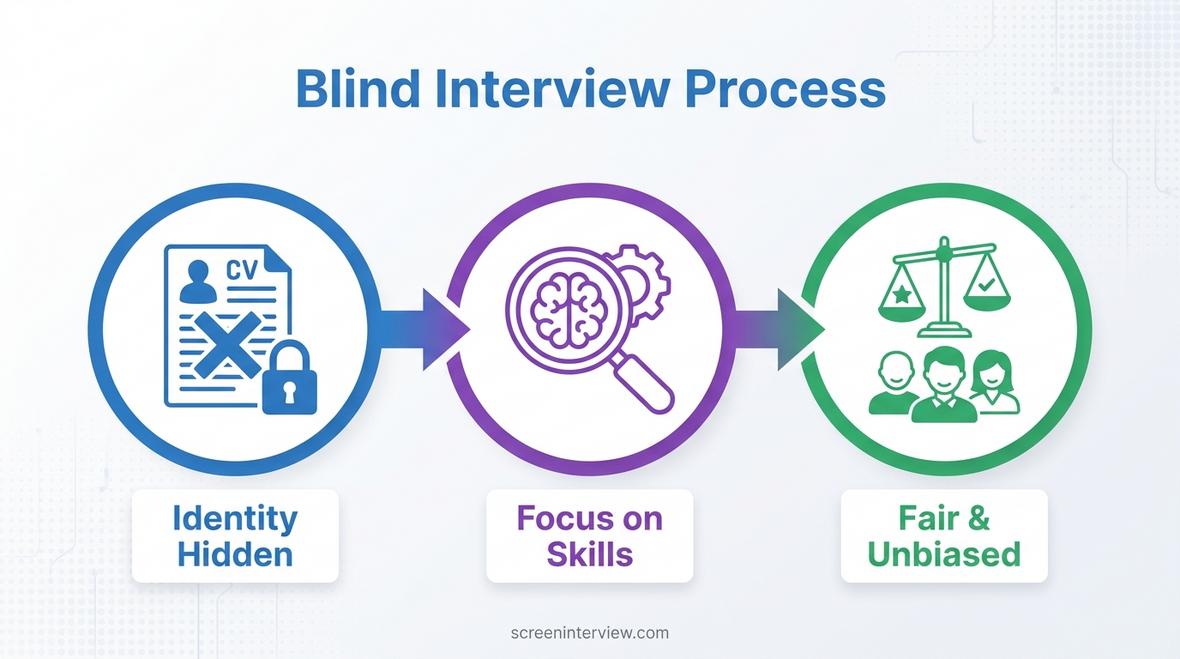
A blind interview is a structured hiring process in which identifying information about candidates such as name, age, gender, ethnicity, educational institution, or even photograph is removed or hidden from evaluators during the initial screening stages. The goal is to focus assessment entirely on job-relevant qualifications, skills, experience, and performance.
Blind interviews can take several forms:
- CV or Resume Blinding: Personal identifiers are redacted from written applications before they reach hiring managers
- Skill-Based Assessments: Candidates complete standardized tests or work samples that are evaluated anonymously
- Voice-Only or Text-Based Screening: Initial interactions occur without video or in-person contact
- Structured Interviews with Standardized Questions: All candidates answer identical questions scored against predefined rubrics, minimizing subjective judgment
The underlying principle is simple: by removing non-job-relevant cues, organizations can mitigate implicit biases that unconsciously influence hiring decisions and create a more equitable candidate experience.
The Science Behind Blind Interviews: Research and Evidence
The effectiveness of blind interview methodologies is supported by decades of peer-reviewed research across multiple disciplines. Understanding this evidence base helps recruiting professionals make data-driven decisions about implementing blind hiring practices.
Orchestra Auditions: The Landmark Study
One of the most frequently cited studies demonstrating the power of blind evaluation comes from symphony orchestras. Orchestra auditions show that blind evaluations significantly increased female musicians' success rates, with research finding that when auditions were conducted behind a screen, the probability that a woman would advance from preliminary rounds increased by approximately 50%. This blind audition process accounted for up to 30% of the increase in female representation in top orchestras, providing compelling evidence that anonymized evaluation can dramatically impact diversity outcomes.
Medical Fellowship Rankings and Minority Representation
Recent research in medical education has reinforced these findings. A gynecologic oncology fellowship study demonstrated that blinding interviewers to written applications increased rankings for underrepresented minority fellowship applicants. While overall rank order did not significantly differ between blinded and non-blinded conditions, blinded interviewers were significantly more likely to rank underrepresented minority (URM) applicants higher (p = 0.04), suggesting that removing identity cues can mitigate implicit bias and improve equity in candidate evaluation.
Gender Bias in Scientific Publishing
The principle extends beyond hiring into peer review and evaluation systems broadly. Studies have shown that double-blind peer review increases representation of female authors in scientific publishing. Journals using double-blind review (where reviewers are blinded to author identities) accepted a higher proportion of papers from female first authors compared with single-blind processes, supporting the broader principle that blinding decision-makers to identity cues can reduce gender bias in evaluative settings analogous to hiring.
Psychological Research on Implicit Bias
The American Psychological Association has compiled extensive research demonstrating that evaluators routinely make different judgments based on race, gender, and other identity cues even when qualifications are identical. Psychological research on implicit bias and the value of structured, standardized evaluation recommends strategies such as structured assessments, standardized criteria, and limiting exposure to non-job-relevant information to mitigate bias principles that directly underpin blind interview methodologies.
Benefits of Blind Interviews for Modern Recruiting Teams
For Heads of Talent, Recruiting Leads, and People Operations Managers working in fast-paced environments, blind interview processes offer multiple strategic advantages beyond simply reducing bias.
Reduced Unconscious Bias and Improved Diversity
The primary benefit is the reduction of unconscious bias in hiring decisions. By removing demographic identifiers, evaluators focus exclusively on skills, experience, and job-relevant qualifications. This leads to more diverse candidate pools advancing through screening stages and ultimately to more diverse hires, which research consistently links to improved innovation, decision-making, and business performance.
Enhanced Candidate Experience and Employer Brand
Candidates increasingly seek employers who demonstrate genuine commitment to fairness and equity. Implementing blind interview processes signals organizational values and commitment to merit-based evaluation, improving candidate perception and strengthening employer brand, particularly among underrepresented talent segments.
Legal Compliance and Risk Mitigation
Structured, blind evaluation processes create defensible, documented hiring decisions that reduce legal risk related to discrimination claims. By standardizing evaluation criteria and removing opportunities for bias, organizations demonstrate good-faith efforts to comply with equal employment opportunity regulations and reduce potential liability.
Efficiency and Reduced Time-to-Hire
When combined with AI-powered screening tools, blind interview methodologies can dramatically reduce the time spent on initial candidate evaluation. AI interview platforms can automatically redact identifying information, administer standardized assessments, and score responses objectively, allowing recruiting teams to focus on high-value activities like candidate engagement and final decision-making.
Implementing Blind Interviews: Practical Strategies for Recruiting Teams
Successfully implementing blind interview processes requires thoughtful planning, technology enablement, and organizational change management. Here are actionable strategies for modern recruiting professionals.
Step 1: Audit Your Current Hiring Process
Begin by mapping your existing recruitment workflow to identify where bias may enter the process. Common bias points include:
- Resume and CV review
- Initial phone screens
- Video interview evaluations
- In-person interview assessments
- Reference checks and background verification
For each stage, determine what information evaluators see and whether that information is truly job-relevant. This audit will reveal opportunities to implement blind evaluation techniques.
Step 2: Define Job-Relevant Evaluation Criteria
Effective blind interviews require clear, predetermined criteria for what constitutes a qualified candidate. Work with hiring managers to develop:
- Technical Competencies: Specific skills, knowledge, and certifications required
- Behavioral Competencies: Problem-solving ability, communication skills, collaboration
- Cultural Alignment: Values and work style preferences that predict success in your organization
Document these criteria in structured interview scorecards that evaluators will use consistently across all candidates.
Step 3: Implement Resume and Application Blinding
Use technology to automatically redact or remove identifying information from resumes and applications before they reach hiring managers. Modern AI-powered screening platforms can automatically extract job-relevant information while hiding names, addresses, graduation dates, and other demographic markers.
For organizations without automated tools, consider having a dedicated recruiter or coordinator manually redact applications before distribution to hiring teams.
Step 4: Deploy Anonymous Skill-Based Assessments
Replace or supplement resume screening with standardized, job-relevant assessments that candidates complete anonymously. These might include:
- Technical Tests: Coding challenges for software engineers, financial modeling exercises for analysts
- Work Samples: Writing assignments for content roles, design projects for creative positions
- Situational Judgment Tests: Scenario-based questions assessing decision-making and problem-solving
Online exam platforms can administer these assessments at scale while maintaining candidate anonymity during initial evaluation.
Step 5: Use Structured, AI-Facilitated Interviews
For initial screening interviews, leverage AI interviewer technology that asks all candidates identical questions and evaluates responses against standardized criteria. This approach offers several advantages:
- Eliminates unconscious bias from the interview process
- Ensures consistent evaluation across all candidates
- Provides objective scoring based on content rather than delivery or personal characteristics
- Generates detailed analytics and insights for hiring decision-making
AI-facilitated interviews can be conducted via text or voice, further anonymizing candidate identity during initial evaluation stages.
Step 6: Train Hiring Teams on Unconscious Bias
While technology can mitigate many sources of bias, human evaluators will still make final hiring decisions in most organizations. Provide comprehensive training on unconscious bias, including:
- Common types of cognitive biases affecting hiring (confirmation bias, affinity bias, halo effect)
- How blind interview processes reduce but do not eliminate bias
- Techniques for recognizing and counteracting bias in real-time
- The business case for diversity and inclusive hiring
Ongoing education ensures that the entire organization understands and supports blind interview initiatives.
Step 7: Measure and Monitor Results
Implement metrics to track the effectiveness of your blind interview process:
- Diversity Metrics: Track representation at each hiring funnel stage and compare to baseline
- Quality of Hire: Monitor performance, retention, and hiring manager satisfaction for candidates hired through blind processes
- Time-to-Fill: Measure efficiency gains from streamlined, automated screening
- Candidate Experience: Survey candidates about their perception of fairness and process quality
Use these metrics to continuously refine your approach and demonstrate ROI to organizational stakeholders.
Challenges and Considerations in Blind Interview Implementation
While blind interviews offer significant benefits, recruiting professionals should be aware of potential challenges and limitations.
Not a Complete Solution to Bias
Blind interviews address bias in initial screening stages but cannot eliminate bias entirely. Final interviews, reference checks, and hiring decisions typically involve un-blinded evaluation. Organizations must implement comprehensive bias-reduction strategies across the entire hiring lifecycle, not just at early stages.
Role-Specific Considerations
Some roles may require evaluation of characteristics that are difficult to assess blindly. For example, customer-facing positions may require assessment of communication style or presentation skills that are harder to evaluate without visual or personal information. Recruiting teams should thoughtfully determine which roles and stages are best suited for blind evaluation.
Technology Implementation Costs
Implementing blind interview technology requires investment in platforms, integration with existing ATS systems, and training. However, modern workflow automation tools are increasingly affordable and offer significant efficiency gains that offset initial costs.
Organizational Change Management
Shifting to blind interview processes requires buy-in from hiring managers, recruiters, and senior leadership. Some stakeholders may resist changes to established processes. Effective change management including clear communication of benefits, stakeholder involvement in design, and visible leadership support is essential for successful implementation.
Technology Enabling Blind Interviews at Scale
Modern AI-powered recruitment technology makes implementing blind interview processes practical and scalable even for organizations hiring hundreds or thousands of candidates annually.
AI-Powered Screening Platforms
Advanced platforms automatically parse resumes, extract job-relevant information, and present it to evaluators without demographic identifiers. These systems use natural language processing and machine learning to assess candidate qualifications objectively based on skills and experience rather than proxies for identity.
Automated Video Interview Assessment
On-demand interview platforms allow candidates to record responses to standardized questions at their convenience. AI evaluates responses based on content and relevance rather than appearance, accent, or other identity markers, creating a more objective initial screening process.
Interview Proctoring for Assessment Integrity
When administering anonymous skill assessments, interview proctoring technology ensures candidate integrity without requiring identity verification that would compromise blind evaluation. Modern proctoring solutions can verify that the same candidate completes all assessments without collecting demographic information.
Intelligent Scheduling and Coordination
Intelligent scheduling systems can coordinate anonymous interview processes, managing candidate communication and interview logistics without exposing identifying information to evaluators until appropriate stages of the hiring funnel.
Case Studies: Blind Interview Success Stories
Organizations across industries have successfully implemented blind interview processes with measurable results.
Technology Sector: Diversity Gains
A mid-sized software company implemented blind resume screening and standardized coding assessments for all engineering candidates. Within one year, the company saw a 40% increase in interview rates for candidates from underrepresented groups and a 25% increase in diverse hires, with no decrease in performance ratings or retention.
Financial Services: Reduced Time-to-Hire
A global financial services firm deployed AI-powered blind screening for entry-level analyst positions, reducing initial resume review time by 60% while increasing the diversity of candidates advancing to final rounds by 35%. The firm also reported improved hiring manager satisfaction with candidate quality.
Healthcare: Improved Compliance and Documentation
A large healthcare system implemented structured, blind interview processes across all clinical and administrative hiring. The standardized approach provided clear documentation of hiring rationale, significantly reducing legal risk while simultaneously improving workforce diversity metrics.
The Future of Blind Interviews: AI and Automation
As artificial intelligence and automation technologies continue to evolve, blind interview capabilities will become increasingly sophisticated and accessible.
Conversational AI for Natural Screening
Next-generation conversational AI recruiting tools will conduct natural, interactive screening conversations with candidates while maintaining anonymity and evaluating responses against job-relevant criteria in real-time.
Predictive Analytics and Bias Detection
Advanced analytics platforms will monitor hiring processes in real-time, automatically detecting patterns that suggest bias and recommending corrective actions to recruiting teams before biased decisions are finalized.
Integration with Enterprise HR Systems
Blind interview capabilities will become standard features in enterprise ATS and HRIS platforms, making implementation seamless and eliminating the need for standalone point solutions or manual processes.
Frequently Asked Questions About Blind Interviews
What information is typically hidden in a blind interview?
In a blind interview, personal identifiers such as name, age, gender, ethnicity, photograph, address, educational institution names, and graduation dates are typically hidden. The focus is exclusively on job-relevant qualifications, skills, experience, and demonstrated competencies.
Do blind interviews eliminate all bias in hiring?
No. Blind interviews significantly reduce bias in early screening stages but cannot eliminate all bias throughout the entire hiring process. Bias can still occur in final interviews, reference checks, and hiring decisions. Organizations should implement comprehensive bias-reduction strategies at all hiring stages.
Are blind interviews suitable for all roles and industries?
Blind interviews are most effective for roles where qualifications can be objectively assessed through skills tests, work samples, or structured questions. They are particularly valuable for high-volume hiring and technical roles. Some positions requiring specific interpersonal or presentation skills may require modified approaches.
How do blind interviews affect candidate experience?
Most candidates view blind interview processes positively, as they signal organizational commitment to fairness and merit-based evaluation. Transparency about the process and clear communication throughout the candidate journey are essential for maintaining positive candidate experience.
What technology is needed to implement blind interviews?
At minimum, organizations need tools to redact identifying information from resumes and standardized assessment platforms. More sophisticated implementations use AI-powered screening, automated interview platforms, and integrated analytics. Many modern recruiting platforms offer these capabilities as standard features.
How do you measure the success of blind interview initiatives?
Key metrics include diversity representation at each hiring funnel stage, quality of hire (performance ratings, retention, hiring manager satisfaction), time-to-fill, candidate experience scores, and legal risk indicators. Comparing these metrics before and after implementation demonstrates ROI.
Conclusion
Blind interview methodologies represent a powerful tool for modern recruiting professionals committed to building diverse, high-performing teams through fair, merit-based evaluation. Supported by decades of research demonstrating the impact of unconscious bias on hiring decisions, blind interviews focus evaluation on what truly matters: candidate skills, experience, and potential to succeed in the role. By leveraging modern AI-powered technology, organizations can implement blind interview processes at scale, reducing bias while simultaneously improving efficiency and candidate experience. As the recruitment landscape continues to evolve, blind interviews will become increasingly central to best-in-class talent acquisition strategies that deliver both business results and organizational values.
Ready to Transform Your Interview Process?
See how ScreenInterview can help you automate phone screens, reduce bias, and hire better candidates faster.