
Best AI Interview Software: Complete 2026 Guide To Automated Recruitment Solutions

Why AI Interview Software is Revolutionizing Modern Recruitment
The recruitment landscape has undergone a seismic transformation. Modern recruiting professionals are no longer sifting through hundreds of resumes manually or scheduling endless phone screens. Instead, they're leveraging the best AI interview software to streamline their hiring processes, reduce time-to-hire, and identify top-tier talent with unprecedented accuracy.
For Heads of Talent, Recruiting Leads, and People Operations Managers working in fast-paced environments, the pressure to screen high volumes of candidates efficiently while maintaining a positive candidate experience has never been greater. According to Forrester's State of AI-Powered Recruiting Report, organizations implementing AI-powered recruiting solutions have seen dramatic improvements in operational efficiency and cost-benefit ratios across their talent acquisition functions.
This comprehensive guide explores everything you need to know about selecting and implementing the best AI interview software for your organization in 2026, from core capabilities to practical implementation strategies.
Understanding AI Interview Software: Core Capabilities and Technologies
The best AI interview software platforms integrate multiple technologies to create a seamless, efficient recruitment experience. These systems go far beyond simple automation they incorporate natural language processing, machine learning algorithms, and sophisticated analytics to evaluate candidates holistically.
Essential Features of Leading AI Interview Platforms
Modern AI interview platforms deliver a comprehensive suite of capabilities designed to address every stage of the candidate screening process:
- Intelligent Question Generation: AI systems automatically create role-specific questions tailored to job requirements, technical skills, and behavioral competencies.
- Automated Scheduling: Candidates can self-schedule interviews based on availability, eliminating the time-consuming back-and-forth communication that plagues traditional recruiting.
- Multi-Modal Assessment: Leading platforms evaluate candidates through video, voice, text responses, and even coding assessments for technical roles.
- Real-Time Transcription and Analysis: Advanced speech recognition converts interviews to text while simultaneously analyzing communication patterns, technical accuracy, and soft skills.
- Bias Mitigation Technology: The best systems incorporate fairness algorithms to ensure equitable evaluation across diverse candidate pools.
The Technology Stack Behind Modern AI Interviewing
Understanding the underlying technologies helps recruiting professionals make informed decisions when evaluating platforms. The best AI interview software typically combines:
Natural Language Processing (NLP): This technology enables systems to understand candidate responses contextually, evaluating not just keywords but the nuanced meaning behind answers. Advanced NLP powers AI interviewer systems that can conduct conversational interviews indistinguishable from human interactions.
Machine Learning Models: These algorithms continuously improve by learning from thousands of interviews, identifying patterns that correlate with successful hires and refining evaluation criteria over time.
Computer Vision: For video interviews, computer vision technology analyzes non-verbal communication cues, engagement levels, and presentation skills without introducing appearance-based bias.
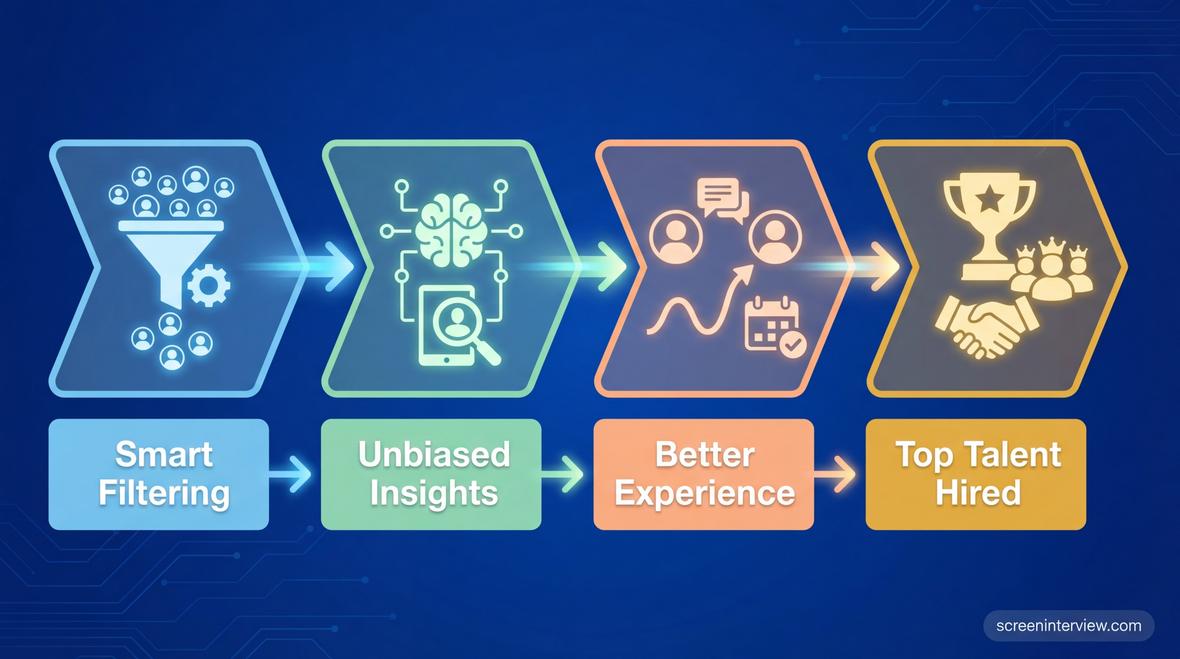
Transformative Benefits for Modern Recruiting Teams
Implementing the best AI interview software delivers measurable improvements across multiple recruiting metrics. Tech-savvy recruiting professionals already utilizing Applicant Tracking Systems find that AI interview platforms integrate seamlessly into existing workflows while amplifying their effectiveness.
Dramatic Time-to-Hire Reduction
The most compelling benefit of AI interview software is the dramatic reduction in screening time. Traditional phone screens consume 15-30 minutes per candidate, plus scheduling overhead. With AI-powered solutions, candidates complete interviews on their own schedules, and AI evaluates responses in seconds rather than hours.
Organizations screening hundreds of candidates monthly can reclaim dozens of recruiter hours weekly. This efficiency gain allows talent teams to focus on high-value activities: engaging top candidates, building relationships with hiring managers, and refining recruitment strategies.
Enhanced Candidate Experience
Contrary to concerns about 'robotic' interactions, the best AI interview software actually improves candidate experience significantly. Candidates appreciate the flexibility to interview at convenient times rather than rearranging schedules for phone screens. Modern on-demand interview platforms provide professional, consistent experiences that reflect well on employer brands.
Additionally, AI systems provide faster feedback loops. Instead of waiting weeks for initial screening results, candidates receive timely updates about their application status, reducing anxiety and improving their perception of the organization.
Fair and Unbiased Evaluation
Unconscious bias remains one of recruiting's most persistent challenges. The best AI interview software addresses this through structured evaluation frameworks that assess all candidates against identical criteria. By focusing on skills, competencies, and job-relevant factors, these platforms help organizations build more diverse teams.
Advanced platforms incorporate bias elimination technology that actively monitors for discriminatory patterns and ensures equitable assessment regardless of demographic factors.
How to Evaluate and Select the Best AI Interview Software
Selecting the right platform requires careful evaluation across multiple dimensions. The best AI interview software for one organization may not suit another's specific needs.
ATS Integration and Technical Compatibility
Seamless integration with your existing Applicant Tracking System is non-negotiable. The best platforms offer native integrations with major ATS providers, enabling automatic candidate data synchronization, interview scheduling triggers, and results reporting without manual data entry.
Evaluate whether the platform supports single sign-on (SSO), API access for custom integrations, and compatibility with your broader HR tech stack.
Customization and Flexibility
Different roles require different evaluation approaches. The best AI interview software offers extensive customization options, allowing you to tailor interview questions, evaluation criteria, and scoring models to specific positions.
Look for platforms with robust interview builder capabilities that enable you to create role-specific assessments for positions ranging from software engineers to sales and marketing professionals.
Security and Compliance Features
With increasing regulatory scrutiny around AI in hiring, security and compliance capabilities are critical. The best platforms provide:
- SOC 2 Type II certification and enterprise-grade data security
- GDPR and EEOC compliance features
- Audit trails documenting all evaluation decisions
- Data residency options for international operations
- Transparent AI decision-making with explainable algorithms
Platforms offering AI proctoring capabilities must balance security with candidate privacy, providing verification without invasive monitoring.
Advanced Analytics and Insights
Data-driven recruiting requires sophisticated analytics. Evaluate platforms based on their ability to provide actionable interview insights including:
- Candidate quality metrics and scoring distributions
- Time-to-hire analytics and bottleneck identification
- Interviewer calibration and consistency metrics
- Predictive analytics on candidate success likelihood
- Diversity and inclusion dashboards
Implementation Best Practices for Maximum ROI
Purchasing the best AI interview software is only the first step. Successful implementation requires thoughtful planning and change management.
Start with a Phased Rollout
Rather than transforming your entire recruitment process overnight, begin with a pilot program focused on high-volume roles or specific departments. This approach allows you to:
- Validate the platform's effectiveness with real-world data
- Identify and address integration challenges in a controlled environment
- Build internal champions who can advocate for broader adoption
- Refine interview templates and evaluation criteria before scaling
Comprehensive Stakeholder Training
Success depends on buy-in from recruiting teams, hiring managers, and candidates. Develop training programs that address each group's specific needs and concerns. Recruiters need technical training on platform operation, while hiring managers require guidance on interpreting AI-generated insights and making final decisions.
Transparent communication with candidates about how AI evaluation works builds trust and improves participation rates.
Continuous Optimization and Calibration
The best AI interview software improves over time, but only with active management. Establish regular calibration sessions where recruiting teams review AI recommendations against actual hiring outcomes, refining algorithms and evaluation criteria based on real performance data.
Monitor key metrics including candidate satisfaction scores, time-to-hire trends, quality-of-hire assessments, and diversity metrics to ensure the platform delivers sustained value.
Role-Specific Applications Across Your Organization
The versatility of modern AI interview platforms extends across virtually every role type. Leading solutions offer specialized assessment modules tailored to specific job families.
Technical and Engineering Positions
For technical hiring, the best AI interview software incorporates coding assessments, algorithm challenges, and technical knowledge verification. Platforms designed for roles like data scientists, DevOps engineers, or machine learning engineers evaluate both theoretical knowledge and practical problem-solving abilities.
Business and Leadership Functions
For non-technical roles, AI interview platforms assess communication skills, strategic thinking, and cultural fit. Specialized modules for positions like product managers or leadership roles incorporate scenario-based questions and behavioral assessments.
Future Trends Shaping AI Interview Technology
The evolution of AI interview software continues accelerating. Forward-thinking recruiting professionals should watch several emerging trends:
Conversational AI Advancements: Next-generation platforms will conduct increasingly natural, dynamic conversations that adapt in real-time to candidate responses, creating experiences virtually indistinguishable from human interviews.
Multimodal Assessment Integration: Future platforms will seamlessly combine video interviews, skills assessments, personality evaluations, and work samples into unified candidate profiles.
Predictive Analytics Enhancement: Machine learning models will provide increasingly accurate predictions about candidate success, tenure, and cultural fit based on comprehensive historical data.
Ethical AI and Transparency: Expect enhanced explainability features that clearly communicate how AI systems reach conclusions, addressing regulatory requirements and candidate expectations for transparency.
Measuring Success: Key Performance Indicators
To justify investment in the best AI interview software, establish clear KPIs before implementation:
- Time-to-Hire Reduction: Measure the decrease in days from application to offer acceptance
- Cost-per-Hire Metrics: Calculate total recruiting costs divided by hires made
- Quality-of-Hire Scores: Track new hire performance ratings and retention rates
- Candidate Satisfaction: Survey applicants about their interview experience
- Diversity Metrics: Monitor demographic representation throughout the hiring funnel
- Recruiter Productivity: Measure candidates screened per recruiter per week
Frequently Asked Questions About AI Interview Software
How accurate is AI interview software compared to human interviewers?
The best AI interview software demonstrates comparable or superior accuracy to human interviewers when evaluating role-specific competencies. These systems eliminate variability caused by interviewer fatigue, mood, or unconscious bias. However, AI works best as part of a hybrid approach where technology handles initial screening and humans make final hiring decisions.
Will candidates have negative reactions to AI interviews?
Research shows that candidates generally respond positively to well-designed AI interview experiences, particularly appreciating scheduling flexibility and consistent evaluation. Transparency about the process and maintaining human touchpoints at critical stages ensure positive candidate experiences.
How much does AI interview software cost?
Pricing varies significantly based on features, interview volume, and customization requirements. Enterprise platforms typically use per-interview or per-hire pricing models. Many organizations find that efficiency gains and quality improvements deliver positive ROI within the first year of implementation.
Can AI interview software integrate with our existing ATS?
Leading AI interview platforms offer native integrations with major ATS systems including Greenhouse, Lever, Workday, and others. Most also provide API access for custom integrations with proprietary systems.
How does AI interview software prevent bias?
The best platforms employ multiple bias mitigation strategies including structured evaluation frameworks, diverse training data, regular algorithmic audits, and features that anonymize demographic information during initial screening stages.
Conclusion
Selecting the best AI interview software represents a strategic investment in your organization's talent acquisition capabilities. For modern recruiting professionals managing high-volume candidate pipelines, these platforms deliver measurable improvements in efficiency, candidate quality, and hiring fairness. The key to success lies in thorough evaluation of your specific requirements, careful platform selection based on integration capabilities and customization options, and thoughtful implementation with continuous optimization. As AI technology continues advancing, early adopters position themselves at the forefront of recruitment innovation, building competitive advantages through superior talent identification and exceptional candidate experiences that attract top-tier professionals.
Ready to Transform Your Interview Process?
See how ScreenInterview can help you automate phone screens, reduce bias, and hire better candidates faster.