
AI Phone Interview Software: The Complete 2026 Guide To Automated Recruitment Screening

Introduction to AI Phone Interview Software
Recruiting professionals are facing unprecedented challenges in 2026. With application volumes skyrocketing and talent markets becoming increasingly competitive, traditional phone screening methods simply cannot keep pace. AI phone interview software has emerged as a transformative solution, enabling talent acquisition teams to automate initial candidate conversations, reduce time-to-hire, and identify top performers with unprecedented efficiency.
For modern recruiting leaders whether you're a Head of Talent, Recruiting Lead, or People Operations Manager the pressure to screen high volumes of candidates while maintaining quality and fairness has never been greater. AI phone interview software addresses these challenges head-on by conducting natural, conversational phone screenings at scale, 24/7, without human intervention. This technology doesn't just save time; it fundamentally transforms how organizations approach the earliest and most time-intensive stage of recruitment.
This comprehensive guide explores everything you need to know about AI phone interview software, from core capabilities and implementation strategies to selection criteria and real-world applications across diverse hiring scenarios.
What Is AI Phone Interview Software?
AI phone interview software is an intelligent recruitment technology that automates initial candidate screening through voice-based conversations. Unlike traditional Interactive Voice Response (IVR) systems that rely on rigid menu options, modern AI interviewer platforms leverage advanced natural language processing, conversational AI, and machine learning to conduct dynamic, human-like phone discussions with candidates.
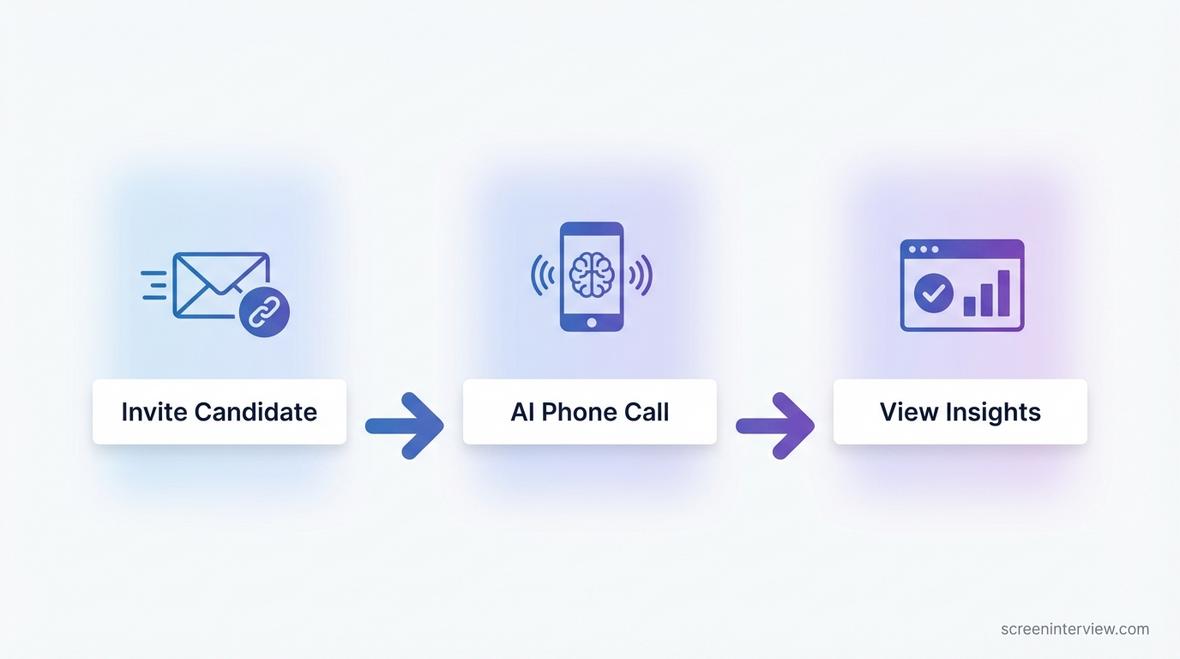
These systems can initiate outbound calls to candidates, ask relevant screening questions based on job requirements, understand and analyze candidate responses in real-time, adapt follow-up questions based on previous answers, and generate detailed evaluation reports with transcripts and insights. Research shows that AI handles accents and variable audio for reliable screening, ensuring that candidates from diverse linguistic backgrounds receive fair evaluations regardless of accent or speaking style.
How the Technology Works
Modern AI phone interview software operates through several integrated components. Speech recognition technology converts candidate voice responses into text with high accuracy, while natural language understanding interprets the meaning and context of responses beyond simple keyword matching. Conversational AI engines generate appropriate follow-up questions and maintain natural dialogue flow, and evaluation algorithms assess responses against predetermined criteria and competency frameworks.
The sophistication of these systems continues to advance rapidly. According to research, AI surveys handle 123 questions in 30 minutes scalably, demonstrating the capacity for comprehensive screening conversations that would typically require significant recruiter time investment.
Key Benefits for Recruiting Professionals
For talent acquisition teams operating in fast-paced environments, AI phone interview software delivers measurable advantages that directly impact recruitment outcomes and operational efficiency.
Dramatic Time Savings and Increased Capacity
The most immediate benefit is time reclamation. Traditional phone screening requires recruiters to schedule calls, conduct conversations, take notes, and evaluate candidates a process that typically consumes 20-30 minutes per candidate when accounting for scheduling coordination. With telephone screening automation, recruiters can simultaneously screen dozens or even hundreds of candidates without additional resource allocation.
This capacity expansion proves particularly valuable during high-volume hiring initiatives, seasonal recruitment surges, or when filling multiple similar roles simultaneously. Teams can maintain screening quality while dramatically increasing throughput, reducing time-to-hire from weeks to days in many scenarios.
Enhanced Candidate Experience
Contrary to initial concerns about automation creating impersonal experiences, well-implemented AI phone interview software often improves candidate satisfaction. Candidates appreciate the flexibility to complete screening interviews at their convenience, without coordinating schedules across time zones or taking time away from current employment. The consistency of questioning ensures every candidate receives the same professional experience, eliminating variability in interviewer preparation or engagement levels.
Additionally, faster processing means candidates receive feedback and progress through hiring pipelines more quickly, reducing the frustration of prolonged recruitment processes that cause top talent to accept competing offers.
Reduction of Unconscious Bias
One of the most significant advantages of AI phone interview software is its potential to reduce unconscious bias in initial screening. By focusing exclusively on response content rather than factors like candidate names, accents, speech patterns, or other demographic indicators, these systems promote more equitable evaluation.
When properly designed and validated, AI screening can help organizations build more diverse talent pipelines by ensuring all candidates are assessed against consistent, job-relevant criteria. This aligns with growing organizational commitments to fair recruitment practices and helps mitigate legal risks associated with discriminatory hiring practices.
Data-Driven Decision Making
Traditional phone screenings often rely on interviewer notes and subjective impressions. AI phone interview software generates structured, quantifiable data for every candidate interaction, including complete transcripts, response time metrics, keyword and competency matching scores, and comparative analytics across candidate pools. This data foundation enables more informed decision-making and creates audit trails for compliance purposes.
Core Capabilities to Evaluate in AI Phone Interview Software
When selecting an AI phone interview software solution, recruiting professionals should assess several critical capabilities that determine both implementation success and long-term value delivery.
Natural Conversation Quality
The quality of conversational AI directly impacts candidate experience and data quality. Leading platforms demonstrate natural speech patterns with appropriate pauses and intonation, contextual understanding that allows candidates to answer questions conversationally, intelligent follow-up questioning based on previous responses, and graceful handling of unclear responses or requests for clarification.
Platforms that create rigid, robotic interactions will negatively impact employer brand and may cause qualified candidates to disengage or withdraw from consideration.
Customization and Flexibility
Every organization has unique hiring requirements and evaluation criteria. Effective interview builder capabilities should allow recruiters to easily create custom question sets for different roles, adjust evaluation criteria and scoring rubrics, incorporate company-specific competency frameworks, and tailor conversation flow based on job level or department.
Solutions that offer only generic, pre-built interview templates will struggle to address the nuanced requirements of specialized roles or unique organizational cultures.
Integration with Existing Systems
AI phone interview software should integrate seamlessly with your existing recruitment technology stack, particularly your Applicant Tracking System (ATS). Look for solutions offering bidirectional ATS integration that automatically syncs candidate data and results, workflow automation that triggers screening interviews at appropriate pipeline stages, calendar system integration for scheduling coordination, and API availability for custom integrations with other HR technologies.
Platforms that operate as isolated silos create administrative burden and reduce adoption rates among recruiting teams.
Multilingual and Accessibility Support
For organizations hiring globally or in diverse markets, multilingual capabilities are essential. Top-tier platforms support multiple languages with native conversational quality, accent handling that accurately interprets diverse speech patterns, and accessibility features for candidates with disabilities.
Analytics and Reporting
Robust interview insights capabilities transform raw interaction data into actionable intelligence. Comprehensive reporting should include individual candidate evaluation reports with transcripts, comparative analytics across candidate pools, quality-of-hire correlations that track screening effectiveness, and bias monitoring tools that identify potential discrimination patterns.
Implementation Best Practices for AI Phone Interview Software
Successful deployment of AI phone interview software requires thoughtful planning and change management beyond simple technology implementation.
Start with Pilot Programs
Rather than organization-wide rollouts, begin with pilot programs focused on specific roles or departments. This approach allows you to refine question sets and evaluation criteria, gather feedback from both recruiters and candidates, demonstrate ROI to stakeholders before broader investment, and identify integration challenges in controlled environments.
High-volume, standardized roles typically provide the best initial use cases, offering clear metrics for success measurement.
Develop Role-Specific Interview Frameworks
Generic screening questions yield generic results. Invest time in creating thoughtful, role-specific interview frameworks that assess job-relevant competencies, include behavioral questions that reveal past performance patterns, incorporate situational questions that evaluate problem-solving approaches, and balance structured consistency with conversational naturalness.
Collaborate with hiring managers to ensure screening criteria align with their evaluation priorities and success profiles.
Train Your Recruiting Team
Technology adoption succeeds only when users understand both capabilities and limitations. Provide comprehensive training on platform functionality and best practices, interpretation of AI-generated insights and scoring, appropriate use cases versus situations requiring human screening, and candidate communication regarding the AI screening process.
Address concerns transparently and position the technology as augmentation rather than replacement of recruiter expertise.
Communicate Transparently with Candidates
Candidates appreciate transparency about recruitment processes. Clearly communicate that initial screening will be conducted via AI, explain the process and what candidates should expect, emphasize the benefits including scheduling flexibility, and provide alternative accommodation options for candidates who may have concerns.
This transparency builds trust and reduces candidate anxiety about automated screening.
Use Cases Across Industries and Roles
AI phone interview software delivers value across diverse recruitment scenarios and industry contexts.
High-Volume Hourly Hiring
Retail, hospitality, customer service, and logistics organizations frequently hire large numbers of hourly workers. AI phone interview software enables these organizations to screen hundreds of candidates efficiently, maintain consistent evaluation standards across locations, reduce time-to-fill for positions with high turnover, and improve quality-of-hire through standardized assessment.
Technical Role Screening
For technical positions like software engineer, data scientist, or DevOps engineer roles, AI screening can assess foundational technical knowledge, problem-solving approaches, experience with specific technologies and tools, and communication skills before advancing to technical assessments.
Sales and Customer-Facing Roles
Screening for sales and marketing positions benefits from AI evaluation of communication style and clarity, persuasiveness and presentation skills, customer orientation and service mindset, and resilience and motivation indicators.
Campus and Early Career Recruitment
Organizations conducting campus recruitment can use AI phone interview software to efficiently screen large applicant pools, assess learning agility and growth potential, evaluate cultural fit and value alignment, and identify candidates for in-person or virtual assessment centers.
Privacy, Compliance, and Ethical Considerations
Responsible implementation of AI phone interview software requires attention to legal, ethical, and privacy considerations that protect both candidates and organizations.
Data Privacy and Security
Candidate interview data contains sensitive personal information requiring robust protection. Ensure your chosen platform implements encryption for data in transit and at rest, compliance with relevant privacy regulations (GDPR, CCPA, etc.), clearly defined data retention and deletion policies, and restricted access controls with audit logging.
Algorithmic Fairness and Bias Mitigation
While AI can reduce human bias, algorithms themselves can perpetuate or amplify bias if not properly designed and monitored. Organizations should regularly conduct validation studies to identify potential bias, monitor outcomes across demographic groups, implement bias detection and correction mechanisms, and maintain human oversight of AI recommendations.
Regulatory Compliance
Employment law increasingly addresses AI in hiring. Stay informed about evolving regulations regarding AI hiring tools, obtain necessary candidate consent for AI screening, provide required notices about automated decision-making, and maintain documentation demonstrating job-relatedness of selection criteria.
Selecting the Right AI Phone Interview Software Platform
The market for AI phone interview software continues to expand, with platforms offering varying capabilities, pricing models, and implementation approaches.
Key Evaluation Criteria
When comparing platforms, assess conversational AI quality through demonstration calls, customization flexibility for your specific use cases, integration capabilities with your existing tech stack, reporting and analytics depth, vendor security and compliance credentials, pricing structure and total cost of ownership, customer support and implementation assistance, and vendor track record and customer references.
ScreenInterview Platform Capabilities
ScreenInterview offers comprehensive AI phone interview software designed specifically for modern recruiting teams. The platform features natural, conversational AI that conducts professional screening calls, complete customization of questions and evaluation criteria, seamless ATS integration with major systems, detailed analytics and candidate insights, multilingual support for global hiring, and enterprise-grade security and compliance features.
Organizations seeking to automate candidate screening while maintaining quality and candidate experience find ScreenInterview delivers the balance of sophistication, usability, and flexibility required for diverse hiring scenarios.
Future Trends in AI Phone Interview Technology
The evolution of AI phone interview software continues to accelerate, with several emerging trends shaping the future of automated screening.
Emotional Intelligence Assessment
Next-generation platforms are developing capabilities to assess emotional intelligence indicators through voice analysis, including stress management under pressure, empathy and interpersonal sensitivity, enthusiasm and engagement levels, and adaptability to unexpected questions.
Predictive Performance Modeling
Advanced analytics are enabling platforms to predict candidate job performance and retention likelihood by correlating screening data with post-hire outcomes, identifying patterns associated with high performers, and refining evaluation criteria based on organizational success profiles.
Multimodal Assessment Integration
Leading platforms are integrating AI phone screening with complementary assessment methods, including skills testing and technical challenges, personality and cognitive assessments, and video interview analysis, creating comprehensive candidate evaluation ecosystems.
Measuring ROI and Success Metrics
Demonstrating the value of AI phone interview software requires tracking relevant metrics that connect screening efficiency to business outcomes.
Efficiency Metrics
Track time-to-screen reduction (days from application to screening completion), recruiter hours saved (comparing manual versus automated screening), screening capacity increase (candidates evaluated per recruiter), and cost-per-screen reduction.
Quality Metrics
Monitor screening-to-interview conversion rates, interview-to-offer conversion rates, quality-of-hire scores for candidates sourced through AI screening, new hire retention rates at 90-day and one-year intervals, and hiring manager satisfaction scores.
Candidate Experience Metrics
Measure candidate satisfaction survey responses, completion rates for AI screening interviews, time-to-completion for screening process, and candidate feedback regarding process fairness and professionalism.
Common Implementation Challenges and Solutions
Organizations implementing AI phone interview software often encounter predictable challenges that can be proactively addressed.
Recruiter Resistance
Challenge: Recruiters may fear technology replacement or doubt AI effectiveness. Solution: Frame AI as augmentation that eliminates repetitive work, involve recruiters in platform selection and configuration, share success metrics and positive candidate feedback, and provide comprehensive training on platform capabilities.
Candidate Skepticism
Challenge: Some candidates may prefer human interaction or doubt AI fairness. Solution: Communicate clearly about the screening process and its benefits, offer alternative accommodation when appropriate, ensure exceptional conversational quality that feels natural, and demonstrate organizational commitment to fairness through transparent practices.
Integration Complexity
Challenge: Technical integration with existing systems may prove more complex than anticipated. Solution: Conduct thorough technical discovery before vendor selection, allocate adequate IT resources for integration support, work with vendors offering robust integration support, and plan phased rollouts that allow for troubleshooting.
Frequently Asked Questions
Is AI phone interview software suitable for executive-level hiring?
While AI phone interview software excels at high-volume screening for mid-level and entry positions, executive hiring typically requires more nuanced, relationship-based approaches. However, AI screening can still add value for initial qualification verification, scheduling coordination, and preliminary culture fit assessment before human-led executive interviews.
How do candidates typically respond to AI screening calls?
When properly implemented with transparent communication, most candidates respond positively to AI screening. They appreciate scheduling flexibility, consistent evaluation, and faster process progression. Key success factors include natural conversational quality, clear upfront communication about the process, and responsive support for candidates who encounter technical issues.
Can AI phone interview software integrate with our existing ATS?
Most modern AI phone interview software platforms offer integration capabilities with major ATS systems. Integration depth varies by platform and ATS, ranging from basic candidate data transfer to sophisticated bidirectional synchronization of candidate progression, results, and scheduling. Verify specific integration capabilities during vendor evaluation.
What happens if a candidate has a strong accent or speech impediment?
Advanced AI phone interview platforms utilize sophisticated speech recognition that accommodates diverse accents and speech patterns. Research demonstrates that AI handles accents and variable audio for reliable screening. Additionally, reputable platforms should offer alternative assessment methods for candidates who may face challenges with voice-based screening.
How much does AI phone interview software typically cost?
Pricing models vary significantly across vendors, typically structured as per-interview fees, monthly subscription tiers based on volume, or annual enterprise licenses. Costs generally range from $10-50 per completed interview depending on features and volume, with enterprise agreements offering volume discounts. Request detailed pricing during vendor evaluation and calculate total cost of ownership including implementation and integration expenses.
Conclusion
AI phone interview software represents a fundamental evolution in recruitment screening methodology, enabling talent acquisition teams to dramatically increase efficiency while maintaining or improving evaluation quality and candidate experience. For recruiting professionals managing high application volumes in competitive talent markets, these platforms deliver measurable advantages in time-to-hire reduction, capacity expansion, bias mitigation, and data-driven decision making. Success requires thoughtful vendor selection, role-specific interview framework development, transparent candidate communication, and ongoing monitoring of both efficiency and quality metrics. As AI technology continues advancing, early adopters of sophisticated phone interview automation will establish significant competitive advantages in identifying and securing top talent before competitors complete traditional screening processes.
Ready to Transform Your Interview Process?
See how ScreenInterview can help you automate phone screens, reduce bias, and hire better candidates faster.