
AI Interview Software: Complete Guide To Automated Hiring In 2026

What is AI Interview Software?
AI interview software represents a transformative approach to modern recruitment, leveraging artificial intelligence to streamline the candidate evaluation process. These platforms utilize machine learning algorithms, natural language processing, and automated analysis to conduct, record, and assess interviews without constant human intervention. As organizations face increasing hiring volumes and talent shortages, AI interview software has emerged as an essential tool for recruiters seeking efficiency, consistency, and data-driven insights.
The technology behind AI interview platforms encompasses video analysis, speech recognition, behavioral assessment, and predictive analytics. By automating initial screening stages, companies can reduce time-to-hire by up to 75% while maintaining or even improving the quality of candidate selection. This comprehensive guide explores how AI interview software works, its benefits, implementation strategies, and best practices for 2026.
How AI Interview Software Works: The Three-Step Process
Modern AI interview software follows a systematic workflow designed to optimize candidate evaluation while minimizing recruiter workload. Understanding this process helps organizations implement these solutions effectively.
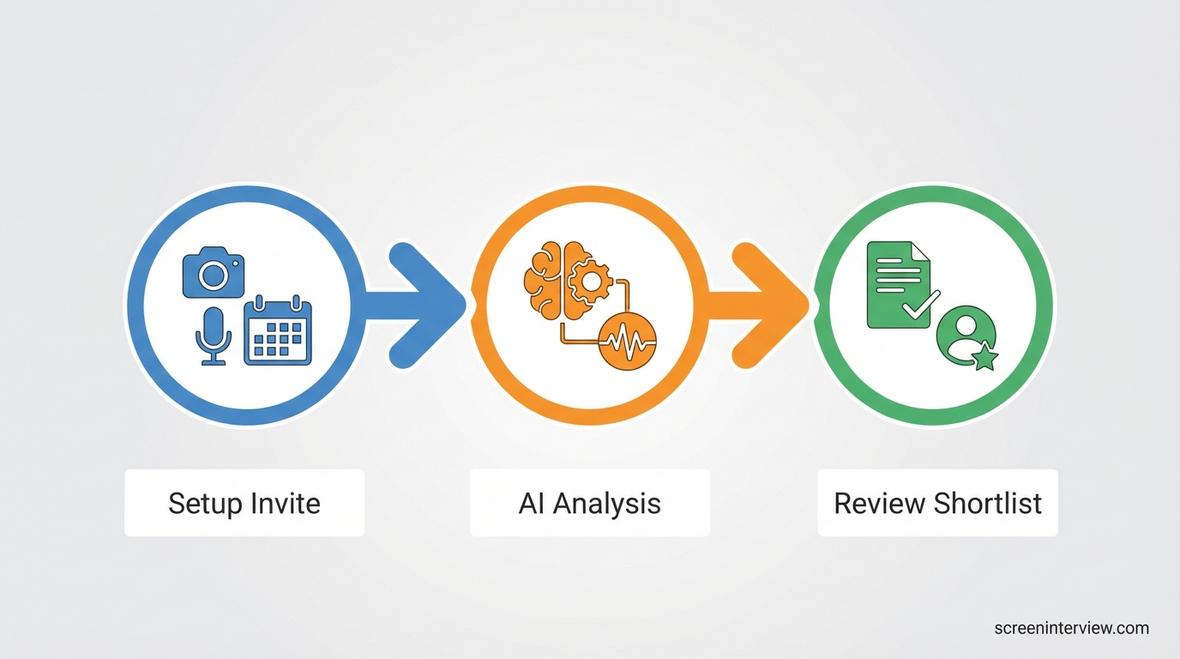
Step 1: Setup and Invitation
The process begins with recruiters configuring interview parameters through an intuitive dashboard. This includes selecting question sets, defining evaluation criteria, and customizing the candidate experience. The interview builder functionality allows teams to create role-specific assessments tailored to their exact requirements.
Candidates receive automated invitations with flexible scheduling options, eliminating the back-and-forth typically associated with interview coordination. The intelligent scheduling system integrates with calendar systems to optimize availability for both parties.
Step 2: AI-Powered Analysis
During the interview, sophisticated algorithms analyze multiple data points simultaneously. The system evaluates verbal responses, facial expressions, speech patterns, confidence levels, and technical accuracy. For technical roles, AI interview software can assess coding abilities, problem-solving approaches, and domain knowledge in real-time.
Natural language processing examines response quality, relevance, and depth of knowledge. The AI interviewer can ask follow-up questions dynamically based on candidate responses, creating a conversational experience that adapts to individual performance levels.
Step 3: Review and Shortlisting
Following analysis, the system generates comprehensive candidate reports with scoring across predefined competencies. Recruiters receive actionable insights through interview insights dashboards that highlight top performers, identify skill gaps, and provide comparison metrics across the candidate pool.
This data-driven approach enables faster, more objective shortlisting decisions. Teams can review recorded interviews using record and review features for candidates who advance to subsequent hiring stages.
Key Benefits of AI Interview Software
Organizations implementing AI interview software report substantial improvements across multiple hiring metrics. These benefits extend beyond simple efficiency gains to fundamentally transform recruitment quality and candidate experience.
Dramatic Time Savings
Traditional interview processes consume significant recruiter bandwidth, particularly for high-volume positions. AI interview software automates initial screening stages, reducing recruiter involvement by 60-80% during early hiring phases. According to research from the Society for Human Resource Management, companies using automated screening tools report reducing time-to-hire from an average of 42 days to just 14 days for many positions.
For organizations conducting hundreds or thousands of interviews monthly, these time savings translate directly to cost reductions and improved recruiter productivity. Teams can redirect their focus toward high-value activities like candidate engagement and final-stage evaluations.
Enhanced Consistency and Reduced Bias
Human interviewers inherently bring unconscious biases into evaluation processes. AI interview software applies identical criteria consistently across all candidates, mitigating concerns around favoritism, demographic bias, or interviewer fatigue affecting outcomes.
The blind screening capabilities of modern platforms enable truly merit-based assessments. By focusing on competencies rather than subjective impressions, organizations build more diverse, high-performing teams while reducing legal risks associated with discriminatory hiring practices.
Improved Candidate Experience
Contrary to concerns about 'impersonal' automated systems, well-implemented AI interview software often enhances candidate satisfaction. The flexibility of on-demand interviews allows candidates to complete assessments at their convenience, eliminating scheduling conflicts and reducing interview-related anxiety.
Faster feedback loops and transparent processes create positive impressions of organizational efficiency. Research from Talent Board indicates that 82% of candidates appreciate the convenience of asynchronous video interviews compared to traditional scheduling constraints.
Superior Data and Predictive Analytics
Traditional interviews generate limited quantifiable data for comparison and optimization. AI interview software captures comprehensive performance metrics that enable data-driven hiring decisions and continuous process improvement.
Predictive analytics capabilities identify which candidate attributes correlate with long-term success in specific roles. Over time, these systems become increasingly accurate at identifying high performers, directly impacting retention rates and employee quality.
Essential Features of Modern AI Interview Software
When evaluating AI interview software solutions, organizations should prioritize platforms offering comprehensive functionality aligned with their specific hiring needs.
Intelligent Video Assessment
Advanced video analysis goes beyond basic recording to evaluate non-verbal communication, enthusiasm, and cultural fit indicators. The technology assesses factors like eye contact, speech clarity, and response confidence while maintaining candidate privacy and compliance standards.
Technical Skill Evaluation
For technical positions, integrated coding environments and problem-solving assessments provide objective skill validation. Platforms supporting software engineer AI interviews, data scientist evaluations, and other technical roles enable comprehensive technical screening without requiring recruiter expertise in these domains.
Security and Proctoring
Maintaining assessment integrity requires robust security measures. The interview proctoring capabilities of leading platforms detect suspicious behavior, prevent unauthorized assistance, and ensure authentic candidate responses through identity verification and environmental monitoring.
ATS and Workflow Integration
Seamless integration with existing applicant tracking systems eliminates data silos and manual transfer processes. Workflow automation ensures candidate information flows smoothly between systems, maintaining comprehensive hiring records and enabling holistic candidate evaluation.
Customization and Branding
White-label capabilities allow organizations to maintain brand consistency throughout the candidate journey. Customizable question libraries, scoring rubrics, and evaluation frameworks ensure the AI interview software aligns precisely with organizational hiring standards and cultural priorities.
Implementing AI Interview Software: Best Practices
Successful deployment of AI interview software requires strategic planning and change management to maximize adoption and effectiveness.
Define Clear Objectives
Begin by identifying specific pain points the technology should address whether reducing time-to-hire, improving candidate quality, enhancing diversity, or scaling interview capacity. Clear objectives enable appropriate platform selection and success measurement.
Start with Pilot Programs
Rather than organization-wide rollouts, begin with pilot programs for specific roles or departments. This approach allows teams to refine processes, address concerns, and demonstrate value before broader implementation.
Train All Stakeholders
Comprehensive training ensures recruiters, hiring managers, and candidates understand how to effectively use the system. Address concerns proactively and highlight benefits to drive adoption and minimize resistance.
Continuously Monitor and Optimize
Regularly review performance metrics, candidate feedback, and hiring outcomes to identify optimization opportunities. The best AI interview software implementations evolve continuously based on data-driven insights and changing organizational needs.
AI Interview Software Use Cases Across Industries
The versatility of AI interview software makes it valuable across diverse sectors and hiring scenarios.
High-Volume Recruitment
Retail, hospitality, and customer service organizations conducting hundreds of interviews monthly benefit enormously from automation. The technology maintains quality standards while processing candidate volumes that would overwhelm traditional approaches.
Technical and Specialized Hiring
Technology companies leverage AI interview software for comprehensive technical assessments across roles from frontend developers to DevOps engineers. The platforms evaluate both technical competencies and soft skills essential for team collaboration.
Remote and Global Hiring
Organizations building distributed teams use AI interview software to standardize evaluation across time zones and geographies. The asynchronous nature eliminates scheduling complexity while ensuring consistent assessment standards worldwide.
Campus and Graduate Recruitment
Universities and employers conducting campus recruitment programs benefit from scalable solutions that handle large applicant volumes during compressed hiring windows while providing candidates with flexible interview options.
Comparing AI Interview Software Platforms
The market offers numerous AI interview software solutions, each with distinct capabilities and positioning. Organizations should evaluate platforms based on specific requirements, integration needs, and budget constraints.
When comparing options, consider factors including assessment quality, candidate experience, security standards, reporting capabilities, and customer support. The platform comparison resources help organizations evaluate solutions systematically against their unique criteria.
Leading platforms differentiate through specialized capabilities some excel in technical assessments, others in behavioral evaluation or multi-language support. Understanding these distinctions ensures selection of the optimal solution for your hiring ecosystem.
Future Trends in AI Interview Software
The AI interview software landscape continues evolving rapidly as technology advances and organizational needs shift.
Enhanced Emotional Intelligence Assessment
Next-generation platforms incorporate sophisticated emotional intelligence evaluation, assessing empathy, adaptability, and interpersonal skills with increasing accuracy. These capabilities prove particularly valuable for customer-facing and leadership positions.
Predictive Success Modeling
Advanced analytics increasingly predict not just candidate suitability but long-term success probability, retention likelihood, and career trajectory. These insights enable more strategic hiring decisions aligned with organizational development goals.
Conversational AI Advancements
Improving natural language capabilities create increasingly human-like interview experiences. Candidates engage in dynamic conversations rather than scripted question sequences, providing richer assessment data while improving experience quality.
Ethical AI and Transparency
Growing regulatory focus on algorithmic fairness drives platform development toward greater transparency, explainability, and bias mitigation. Organizations prioritize solutions demonstrating clear ethical frameworks and compliance with emerging standards.
Addressing Common Challenges and Concerns
While AI interview software offers substantial benefits, organizations must navigate legitimate concerns and implementation challenges.
Algorithmic Bias and Fairness
Critics rightfully question whether AI perpetuates or amplifies existing biases. Responsible platforms undergo rigorous bias testing and provide transparency around evaluation criteria. Organizations should demand evidence of fairness testing and regularly audit outcomes for demographic disparities.
Candidate Acceptance and Experience
Some candidates express discomfort with AI evaluation, preferring human interaction. Addressing this requires clear communication about the process, emphasizing benefits like flexibility and consistency, and ensuring human review remains part of final hiring decisions.
Technical Limitations and Edge Cases
AI systems occasionally struggle with accents, non-standard communication styles, or neurodivergent candidates. Quality platforms acknowledge these limitations and provide accommodation options to ensure fair evaluation for all candidates.
Data Privacy and Security
Interview recordings and analysis data require robust security measures and compliance with privacy regulations. Organizations must verify platform certifications, data handling practices, and candidate consent mechanisms before implementation.
Calculating ROI of AI Interview Software
Justifying AI interview software investment requires clear return-on-investment analysis across multiple dimensions.
Direct Cost Savings
Calculate recruiter time savings by comparing hours spent on traditional screening versus automated approaches. With average recruiter costs between $60,000-$80,000 annually, reducing screening time by 70% generates substantial savings even for modest hiring volumes.
Quality of Hire Improvements
Track performance metrics, retention rates, and time-to-productivity for hires made through AI interview software versus traditional methods. Improvements in these areas often exceed direct cost savings in overall value creation.
Candidate Conversion and Brand Impact
Measure improvements in offer acceptance rates and candidate satisfaction scores. Enhanced employer brand and candidate experience contribute to long-term competitive advantages in talent acquisition.
Frequently Asked Questions About AI Interview Software
How accurate is AI interview software?
Modern AI interview software achieves accuracy rates of 85-95% when properly calibrated and validated for specific roles. Accuracy improves over time as systems learn from hiring outcomes and performance data. However, AI should complement rather than completely replace human judgment in final hiring decisions.
Does AI interview software eliminate bias?
While AI interview software reduces many forms of unconscious bias, it does not eliminate bias entirely. Algorithms reflect patterns in training data, which may contain historical biases. Responsible implementation requires regular bias audits, diverse training datasets, and ongoing monitoring of demographic outcomes to ensure fairness.
What does AI interview software cost?
Pricing varies significantly based on features, interview volumes, and implementation scope. Entry-level platforms start around $200-$500 monthly for small teams, while enterprise solutions range from $2,000-$10,000+ monthly depending on scale. Most providers offer flexible pricing based on interview volumes or per-user models.
How long does implementation take?
Basic AI interview software implementation can occur within 1-2 weeks for organizations with straightforward requirements. Complex deployments involving custom integrations, extensive question library development, and comprehensive training may require 4-8 weeks. Cloud-based solutions generally deploy faster than on-premise alternatives.
What if candidates prefer human interviewers?
Quality AI interview software complements rather than replaces human interaction. Most organizations use AI for initial screening while maintaining human involvement in later stages. Clearly communicating this hybrid approach and emphasizing the benefits of flexible scheduling typically addresses candidate concerns effectively.
Conclusion
The evolution of AI interview software represents a fundamental shift in how organizations identify and evaluate talent. By combining efficiency, consistency, and data-driven insights, these platforms enable recruiters to make better hiring decisions while improving candidate experiences. As technology continues advancing, AI interview software will become increasingly sophisticated, offering enhanced predictive capabilities and deeper assessment insights. Organizations that strategically implement these solutions position themselves competitively in the ongoing war for talent, reducing costs while improving hiring quality. Whether you are managing high-volume recruitment, building technical teams, or scaling globally, the right AI interview software transforms hiring from a resource-intensive challenge into a strategic advantage. Success requires thoughtful platform selection, comprehensive implementation planning, and ongoing optimization based on data and feedback. By embracing this technology while maintaining ethical standards and human oversight, organizations create hiring processes that are faster, fairer, and more effective for the challenges of 2026 and beyond.
Ready to Transform Your Interview Process?
See how ScreenInterview can help you automate phone screens, reduce bias, and hire better candidates faster.