
AI Interview Automation: Complete Guide To Transforming Your Recruitment Process In 2026

Understanding AI Interview Automation
AI interview automation represents a transformative shift in how modern recruiting teams identify and evaluate talent. By leveraging artificial intelligence to conduct, evaluate, and score candidate interviews, organizations can dramatically reduce time-to-hire while improving the quality and consistency of their hiring decisions. For recruiting professionals managing high-volume pipelines, AI interview automation eliminates the manual burden of first-round screenings, allowing teams to focus on building relationships with top candidates.
At its core, AI interview automation combines natural language processing, machine learning algorithms, and structured interview frameworks to simulate human conversations. The technology analyzes candidate responses across multiple dimensions including technical competency, communication skills, problem-solving ability, and cultural alignment generating objective scores that help recruiters make data-driven decisions. According to Grand View Research, the global AI recruitment technology market was valued at $661.6 million in 2023 and is projected to reach $1.12 billion by 2030 at a CAGR of 6.9%, reflecting widespread adoption across industries.
Modern recruiting leaders recognize that traditional interview processes create bottlenecks. When a single role generates hundreds of applications, manually screening each candidate becomes impossible. AI interview automation solves this challenge by conducting initial assessments at scale, ensuring every applicant receives a fair, standardized evaluation regardless of when they apply or which recruiter reviews their profile.
How AI Interview Automation Works
The mechanics of AI interview automation involve several interconnected components working together to deliver seamless candidate experiences. Understanding this workflow helps recruiting teams implement the technology effectively and set appropriate expectations with stakeholders.
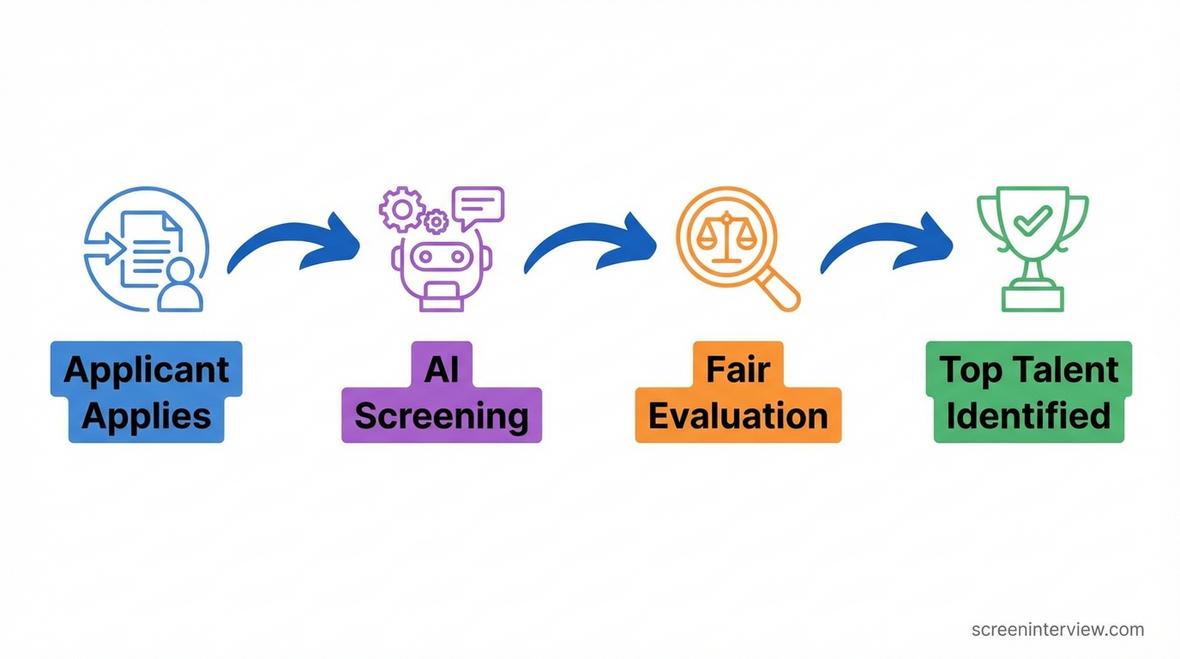
The Automated Screening Workflow
The process begins when candidates apply for positions. Rather than waiting for recruiter availability, applicants immediately receive an invitation to complete an AI interviewer session. These sessions can take multiple formats text-based chat conversations, voice interactions, or asynchronous video responses depending on the role requirements and organizational preferences.
During the interview, the AI system poses role-specific questions that assess both technical capabilities and soft skills. For technical positions like software engineers or data scientists, questions might include coding challenges, system design scenarios, or algorithm explanations. For business roles such as product managers or sales and marketing professionals, the focus shifts to situational judgment, strategic thinking, and communication effectiveness.
As candidates respond, advanced natural language processing algorithms analyze multiple dimensions simultaneously. The system evaluates content relevance, technical accuracy, logical coherence, and communication clarity. Machine learning models trained on thousands of successful candidate profiles generate comparative scores, highlighting individuals who demonstrate the competencies most strongly correlated with job success.
Integration with Existing Systems
Enterprise-grade AI interview automation platforms integrate seamlessly with existing applicant tracking systems and workflow automation tools. This connectivity ensures candidate data flows automatically between systems, eliminating duplicate data entry and maintaining a single source of truth for recruiting teams. When a candidate completes their automated interview, results populate directly into the ATS, triggering notifications for recruiters and updating pipeline reports in real-time.
Key Benefits Driving Adoption
Organizations implementing AI interview automation report measurable improvements across multiple recruiting metrics. These benefits extend beyond simple efficiency gains, fundamentally transforming how teams operate and the quality of talent they attract.
Dramatic Time Savings
Recruiting teams spend an estimated 30-40% of their time conducting phone screens and first-round interviews. AI interview automation eliminates this time burden by handling initial conversations autonomously. A recruiter who previously conducted 15 phone screens weekly can redirect those 10-12 hours toward relationship building, employer branding, and strategic talent mapping activities. Research from Forrester quantifies this impact, demonstrating significant labor hour savings and cost-per-hire reductions for organizations deploying automated interview technology.
Improved Candidate Experience
Candidates increasingly expect immediate engagement when they apply for roles. Traditional processes that involve waiting days or weeks for initial contact create frustration and lead to candidate drop-off. AI interview automation provides instant feedback and next steps, keeping candidates engaged throughout their journey. The technology also offers flexibility applicants can complete interviews on their schedule rather than coordinating calendars with busy recruiters.
Enhanced Quality of Hire
By applying consistent evaluation criteria across all candidates, AI interview automation reduces the variability inherent in human assessments. Every applicant answers the same questions in the same format, eliminating advantages related to interview timing, recruiter mood, or subjective rapport. This standardization ensures hiring decisions reflect actual candidate capabilities rather than interviewer preferences or unconscious biases.
Scalability for High-Volume Roles
Organizations hiring for seasonal positions, customer service teams, or rapidly growing departments face unique challenges managing application volume. High-volume recruiting scenarios that would traditionally require expanding recruiting teams can now be managed with existing headcount. The technology scales infinitely whether evaluating 50 or 5,000 candidates, the process remains consistent and efficient.
Addressing Bias and Fairness Concerns
One of the most compelling advantages of AI interview automation is its potential to reduce hiring bias. However, recruiting leaders must understand both the opportunities and risks associated with algorithmic decision-making.
How AI Reduces Unconscious Bias
Human interviewers, despite best intentions, carry unconscious biases that influence hiring decisions. These biases relate to candidate appearance, educational pedigree, communication style, and numerous other factors unrelated to job performance. AI systems, when properly designed, focus exclusively on job-relevant criteria, ignoring demographic characteristics and other protected attributes.
Platforms like screeninterview.com implement blind screening methodologies that remove identifying information from candidate profiles during evaluation. This approach, combined with standardized questioning, creates a more equitable assessment process. Organizations report increased diversity in candidate pipelines after implementing automated screening tools, as the technology surfaces qualified candidates who might have been overlooked in traditional processes.
Ensuring Algorithmic Fairness
While AI reduces human bias, it introduces new considerations around algorithmic fairness. Machine learning models trained on historical hiring data can inadvertently perpetuate past biases if not carefully monitored. Responsible AI interview automation platforms conduct regular bias audits, analyzing outcomes across demographic groups to ensure equitable treatment.
Transparency represents another critical dimension. Candidates and regulatory bodies increasingly demand explanations for automated decisions. Leading platforms provide detailed scoring rationale, allowing recruiters to understand why specific candidates received particular evaluations. This explainability builds trust and supports compliance with emerging AI regulations.
Implementation Best Practices
Successfully deploying AI interview automation requires thoughtful planning and change management. Organizations that follow structured implementation approaches realize benefits faster and encounter fewer adoption challenges.
Start with Clearly Defined Use Cases
Rather than attempting to automate all interviews simultaneously, begin with specific roles or scenarios where automation delivers maximum impact. High-volume positions with well-defined qualification criteria represent ideal starting points. Technical roles with objective skill requirements also lend themselves well to automated assessment.
Design Role-Specific Interview Frameworks
Generic interview questions produce generic results. Invest time developing comprehensive question libraries tailored to each role family. For frontend developers, this might include CSS architecture questions and responsive design scenarios. For leadership roles, focus on situational judgment and people management philosophy.
Platforms offering an interview builder tool enable recruiting teams to customize question flows without technical expertise. These interfaces allow stakeholders to preview the candidate experience, adjust difficulty levels, and incorporate company-specific scenarios that assess cultural fit alongside capability.
Train Recruiters and Hiring Managers
Technology adoption requires human buy-in. Conduct training sessions that demonstrate how to interpret AI-generated insights, when to trust automated recommendations, and how to use the technology as a decision support tool rather than a replacement for human judgment. Address concerns transparently and create feedback channels where team members can report issues or suggest improvements.
Monitor Performance Metrics
Establish baseline metrics before implementation time-to-hire, cost-per-hire, candidate satisfaction scores, and quality-of-hire indicators. Track these metrics continuously after deployment, identifying areas where the technology delivers expected benefits and where adjustments might be needed. Regular performance reviews ensure the AI interview automation system continues meeting organizational needs as those needs evolve.
Integration with Comprehensive Hiring Platforms
While standalone AI interview automation tools provide value, maximum impact comes from integrated platforms that address the entire candidate evaluation lifecycle. Modern recruiting teams benefit from solutions that combine automated interviews with complementary capabilities.
Intelligent Scheduling Coordination
After automated screening identifies promising candidates, the next step involves coordinating panel interviews with hiring managers and team members. Intelligent scheduling systems that integrate with calendar applications automatically find optimal times, send invitations, and handle rescheduling requests eliminating the administrative burden of interview coordination.
Proctoring and Assessment Integrity
For roles requiring technical assessments or knowledge verification, ensuring test integrity becomes critical. Interview proctoring capabilities that monitor candidate behavior during assessments prevent cheating while maintaining a positive candidate experience. These systems balance security with respect for candidate privacy, using behavioral analysis rather than intrusive monitoring.
Comprehensive Interview Insights
The true power of AI interview automation emerges when interview data connects with broader talent analytics. Interview insights dashboards that aggregate data across candidates, roles, and time periods reveal patterns that inform strategic decisions. Recruiting leaders can identify which competencies most strongly predict success, which interview questions effectively differentiate candidates, and where process bottlenecks occur.
Real-World Applications Across Industries
Organizations across diverse sectors leverage AI interview automation to address specific recruiting challenges unique to their industries.
Technology Companies
Fast-growing technology companies face constant pressure to hire engineering talent quickly while maintaining high quality bars. Automated technical screening for roles like DevOps engineers, machine learning engineers, and mobile developers allows these organizations to evaluate coding skills, system design thinking, and problem-solving approaches at scale. Candidates complete technical challenges and explain their solutions, with AI systems evaluating both the correctness of implementations and the clarity of explanations.
Healthcare Organizations
Healthcare providers hiring clinical and administrative staff use AI interview automation to assess communication skills, patient empathy, and scenario-based judgment. The technology helps organizations maintain quality standards while rapidly building teams to meet patient care demands. Specialized applications like AI nurse screening address the unique requirements of healthcare recruiting.
Retail and Hospitality
Seasonal hiring surges in retail and hospitality create extreme recruiting pressure. AI interview automation enables these organizations to screen thousands of candidates efficiently, identifying individuals with appropriate customer service orientation, reliability indicators, and schedule flexibility. The technology maintains consistent evaluation standards across distributed hiring teams and multiple locations.
Measuring ROI and Business Impact
Justifying technology investments requires demonstrating tangible business value. Organizations measuring AI interview automation impact focus on several key metrics.
Time-to-Hire Reduction
The most immediate benefit appears in reduced time-to-hire. By eliminating scheduling delays and accelerating initial screening, companies typically see 30-50% reductions in time from application to offer. This speed advantage translates directly to competitive advantage in tight talent markets where top candidates receive multiple offers.
Cost-Per-Hire Optimization
Automated screening reduces the labor costs associated with recruiting. When recruiters spend less time on administrative tasks and low-value activities, organizations can either manage larger requisition loads with existing teams or redirect recruiting resources toward strategic initiatives like employer branding and talent community development.
Quality and Retention Improvements
The ultimate measure of recruiting success is hire quality and retention. Organizations implementing structured, AI-powered evaluation processes report improved quality-of-hire scores and reduced early-tenure attrition. By ensuring candidates possess the competencies required for success and fit well with organizational culture, automated screening contributes to longer-term employee satisfaction and productivity.
Future Trends in AI Interview Automation
The field of AI interview automation continues evolving rapidly. Recruiting leaders should monitor several emerging trends that will shape the technology's future capabilities.
Conversational AI Advances
Next-generation systems will feature more natural conversational capabilities, conducting dynamic interviews that adapt based on candidate responses. Rather than following rigid question sequences, these conversational AI systems will engage in genuine dialogue, asking follow-up questions and exploring interesting responses more deeply much like experienced human interviewers.
Multimodal Assessment Integration
Future platforms will analyze multiple data streams simultaneously verbal responses, facial expressions, tone of voice, and typing patterns creating richer candidate profiles. These multimodal assessments will provide more comprehensive evaluation while maintaining appropriate privacy boundaries and bias safeguards.
Predictive Analytics and Success Modeling
As organizations accumulate interview data over time, machine learning models will identify increasingly sophisticated patterns linking interview performance to job success. These predictive capabilities will help recruiting teams forecast which candidates will excel, enabling more confident hiring decisions and better talent outcomes.
Choosing the Right AI Interview Automation Platform
With numerous vendors offering AI interview automation solutions, selecting the right platform requires careful evaluation across multiple dimensions.
Evaluation Criteria
Consider technical capabilities including question customization flexibility, supported interview formats, integration options with existing systems, and reporting functionality. Equally important are vendor attributes like implementation support, ongoing customer success resources, and commitment to bias mitigation and fairness.
Request demonstrations that showcase the actual candidate experience rather than just administrative interfaces. Involve hiring managers and even sample candidates in the evaluation process to ensure the solution meets needs across all stakeholders.
Comparative Analysis
Organizations often benefit from structured comparison processes that evaluate multiple vendors against consistent criteria. Platforms like screeninterview.com offer comparison resources that highlight differentiating features, helping recruiting teams make informed decisions aligned with their specific requirements and constraints.
Frequently Asked Questions About AI Interview Automation
How accurate are AI interview assessments compared to human interviewers?
AI interview automation systems demonstrate comparable or superior accuracy to human interviewers when properly calibrated. The technology eliminates variability caused by interviewer fatigue, mood, or unconscious bias, applying consistent evaluation criteria across all candidates. Organizations should validate AI recommendations against performance data to ensure models accurately predict job success in their specific context.
Do candidates respond positively to automated interviews?
Research indicates mixed but generally positive candidate reactions. Many applicants appreciate the flexibility and immediate engagement automated interviews provide. However, some candidates, particularly senior professionals, prefer human interaction during initial screening. Organizations can address this by clearly communicating the process, offering alternative options when appropriate, and ensuring human recruiters engage meaningfully after automated screening.
How long does it take to implement AI interview automation?
Implementation timelines vary based on organizational complexity and customization requirements. Basic deployments for single roles can launch within 2-3 weeks. Enterprise implementations involving multiple role families, extensive question library development, and complex system integrations typically require 2-3 months. Most organizations see measurable impact within the first month of deployment.
What about regulatory compliance and legal considerations?
AI interview automation platforms must comply with employment laws and emerging AI regulations. Reputable vendors conduct regular bias audits, provide transparency into decision-making processes, and support EEOC compliance requirements. Organizations should work with legal counsel to ensure their implementation meets all applicable regulations and maintains appropriate human oversight of hiring decisions.
Conclusion
AI interview automation represents a fundamental evolution in talent acquisition, enabling recruiting teams to identify top candidates faster, more fairly, and more efficiently than traditional methods allow. As the technology matures and adoption accelerates, organizations that implement thoughtful, candidate-centric automation strategies will gain significant competitive advantages in attracting and hiring exceptional talent. The key to success lies in viewing AI as a powerful tool that augments human judgment rather than replacing it combining technological efficiency with the empathy, intuition, and relationship-building capabilities that define great recruiting. By embracing this balanced approach, modern recruiting professionals can transform their hiring processes and deliver measurable business impact.
Ready to Transform Your Interview Process?
See how ScreenInterview can help you automate phone screens, reduce bias, and hire better candidates faster.