
AI Call Screening: Complete Guide To Automated Recruitment Phone Screening In 2026

What Is AI Call Screening and Why It Matters for Modern Recruitment
AI call screening represents a transformative shift in how recruiting professionals manage candidate evaluation at scale. At its core, AI call screening leverages artificial intelligence, natural language processing, and machine learning algorithms to automate initial phone conversations with job applicants, replacing the traditional manual screening process that has historically consumed countless hours of recruiter time.
For today's Heads of Talent, Recruiting Leads, and People Operations Managers, the challenge is clear: high-volume hiring demands efficient processes without sacrificing candidate quality or experience. Telephone screening has traditionally been the bottleneck in recruitment pipelines, with recruiters spending 30-40% of their time on initial candidate conversations that yield limited insight. AI call screening solves this by conducting structured, consistent, and bias-reduced phone interviews at scale, dramatically reducing time-to-hire while improving candidate assessment accuracy.
The technology has matured significantly, with research from University of Toronto demonstrating 98% sensitivity in AI screening applications. When applied to recruitment contexts, these systems can evaluate candidate responses, assess communication skills, verify qualifications, and flag top performers for human review all while maintaining a conversational, candidate-friendly experience.
How AI Call Screening Technology Works
Understanding the mechanics behind ai call screening helps recruiting professionals make informed decisions about implementation. The technology operates through several interconnected components that work seamlessly to deliver consistent candidate evaluations.
Natural Language Processing and Conversational AI
Modern AI interviewer platforms utilize advanced natural language processing (NLP) to understand candidate responses in real-time. These systems parse spoken language, identify key information, and generate contextually appropriate follow-up questions based on predetermined criteria and adaptive learning algorithms.
The conversational AI component ensures that interactions feel natural rather than robotic. Candidates respond to questions via phone or voice interface, and the system analyzes not just what they say, but how they communicate assessing factors like clarity, confidence, and relevance without the unconscious biases that can affect human interviewers.
Structured Evaluation Framework
AI call screening platforms implement standardized evaluation rubrics that ensure every candidate is assessed against the same criteria. This structured approach addresses one of the most significant challenges in traditional phone screening: inconsistency between different interviewers and interview sessions.
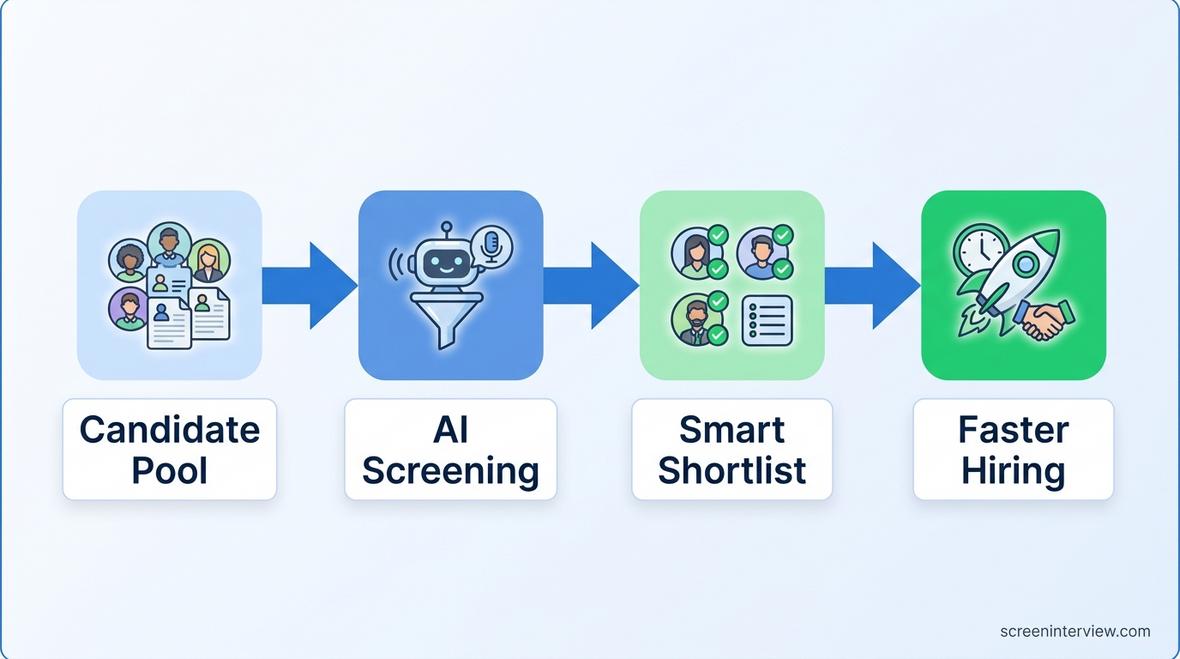
The platform creates scoring frameworks based on job-specific competencies, automatically documenting responses and generating candidate profiles that highlight strengths, potential concerns, and overall fit. This data-driven approach enables recruiters to make faster, more objective decisions about which candidates advance to the next stage.
Integration with ATS and Recruitment Ecosystems
Leading ai call screening solutions integrate seamlessly with existing Applicant Tracking Systems, enabling automatic candidate scheduling, result synchronization, and workflow automation. When a candidate completes their application, the system can automatically trigger a screening call invitation, conduct the interview, score responses, and update the candidate's record in the ATS all without manual intervention.
This workflow automation represents a fundamental shift in how talent acquisition teams operate, freeing recruiters from administrative tasks and allowing them to focus on strategic activities like candidate engagement and hiring manager collaboration.
Proven Benefits of AI Call Screening for Recruiting Teams
The adoption of ai call screening delivers measurable improvements across multiple dimensions of the recruitment process. Organizations implementing these solutions report significant gains in efficiency, quality, and candidate experience.
Dramatic Time Savings and Increased Productivity
Time-to-hire remains one of the most critical metrics for recruiting teams, particularly in competitive talent markets. Traditional phone screening requires scheduling coordination, dedicated interviewer time, and manual documentation processes that can extend hiring timelines by weeks. According to research published on PMC, AI-assisted prescreening efficiency demonstrates significantly faster throughput compared to manual methods, with some implementations reducing screening time from months to under a day.
For recruiting professionals managing candidate-to-recruiter ratios that often exceed 100:1, this efficiency gain is transformative. AI call screening enables simultaneous interviews with dozens or hundreds of candidates, compressing what would traditionally take weeks into hours. This acceleration doesn't just improve metrics it enhances competitive positioning by ensuring top candidates receive rapid feedback and engagement.
Enhanced Candidate Experience Through Consistency
Candidate experience has emerged as a critical differentiator in talent acquisition. Modern job seekers expect responsive, transparent, and respectful interactions throughout the hiring process. AI call screening enhances this experience by providing immediate engagement opportunities, flexible scheduling options, and consistent evaluation standards.
Unlike traditional screening where candidates might wait days or weeks for a phone call, AI phone screening platforms enable on-demand interviews that candidates can complete at their convenience. This flexibility is particularly valuable for passive candidates who may be interviewing while employed, as well as for global recruitment efforts spanning multiple time zones.
Bias Reduction and Fair Evaluation
Unconscious bias represents one of the most persistent challenges in recruitment. Human interviewers, despite best intentions, can be influenced by factors unrelated to job performance including appearance, accent, educational background, or even name. Research from Forrester demonstrates that AI cuts bias by 35% compared to traditional human-led screening processes.
AI call screening systems evaluate candidates based solely on predetermined, job-relevant criteria. By removing visual cues and standardizing evaluation frameworks, these platforms support diversity and inclusion initiatives while ensuring compliance with fair hiring practices. This objectivity not only improves hiring quality but also reduces legal risk associated with discriminatory practices.
Best Practices for Implementing AI Call Screening
Successful implementation of ai call screening requires strategic planning, stakeholder alignment, and continuous optimization. Organizations that approach deployment methodically achieve faster adoption and superior outcomes.
Defining Clear Evaluation Criteria
The foundation of effective AI call screening lies in well-defined competency frameworks. Before deployment, recruiting teams must collaborate with hiring managers to identify the specific skills, experiences, and attributes that predict success in each role. These criteria become the basis for interview questions and scoring algorithms.
Leading platforms like ScreenInterview provide customizable interview builder tools that enable recruiters to design role-specific screening protocols. This customization ensures that the AI evaluates candidates against relevant benchmarks rather than generic standards that may not align with organizational needs.
Candidate Communication and Transparency
Transparency about the use of AI in the screening process is both an ethical imperative and a practical necessity. Candidates should be informed that they'll be participating in an AI-conducted interview, with clear explanations of how the technology works and how their responses will be evaluated.
Best-in-class implementations provide candidates with preparation resources, including sample questions and guidance on technical requirements. This preparation reduces anxiety and ensures that technical issues don't unfairly disadvantage qualified applicants. Additionally, organizations should maintain human oversight, with recruiters reviewing AI recommendations before making final decisions about candidate advancement.
Continuous Monitoring and Optimization
AI call screening systems improve over time through machine learning, but this improvement requires active management. Recruiting teams should regularly review system performance, analyzing metrics such as candidate progression rates, hiring manager satisfaction, and diversity outcomes to identify opportunities for refinement.
Platforms offering interview insights and analytics capabilities enable data-driven optimization. By tracking which questions generate the most predictive responses and which evaluation criteria correlate most strongly with on-the-job success, organizations can continuously enhance their screening effectiveness.
Key Use Cases Across Different Hiring Scenarios
AI call screening delivers value across diverse recruitment contexts, from high-volume hourly hiring to specialized technical roles. Understanding these use cases helps recruiting professionals identify optimal deployment strategies.
High-Volume Recruitment for Hourly and Entry-Level Positions
Organizations hiring for customer service, retail, hospitality, and other high-volume positions face the challenge of screening hundreds or thousands of applicants for relatively similar roles. Manual screening is simply not scalable at this volume, leading to either inadequate evaluation or unsustainable recruiter workloads.
AI call screening excels in these scenarios by conducting consistent, thorough evaluations of every applicant regardless of volume. The technology can assess basic qualifications, availability, communication skills, and cultural fit the core requirements for most entry-level positions while automatically advancing top candidates and respectfully declining those who don't meet minimum criteria.
Technical Role Screening and Skills Verification
For technical positions ranging from software engineers to data scientists, AI call screening can conduct preliminary skills assessments before candidates advance to more resource-intensive technical interviews. These systems can ask coding questions, discuss technical concepts, and evaluate problem-solving approaches through conversational interfaces.
Advanced platforms incorporate specialized interview protocols for roles like machine learning engineers, DevOps professionals, and cybersecurity specialists. This specialization ensures that initial screening effectively identifies candidates with genuine technical competence rather than merely strong interviewing skills.
Remote and Global Hiring Initiatives
The shift to remote work has expanded talent pools globally, but it has also complicated coordination and scheduling. AI call screening removes geographical and temporal barriers by enabling asynchronous interviews that candidates can complete from anywhere, at any time.
For organizations building distributed teams, this capability is transformative. Recruiters can simultaneously evaluate candidates across multiple continents without the logistical complexity of scheduling across time zones or the expense of international phone calls. The intelligent scheduling capabilities ensure that qualified candidates progress quickly regardless of location.
Addressing Common Concerns About AI Call Screening
Despite proven benefits, some recruiting professionals and candidates express reservations about AI call screening. Addressing these concerns transparently helps build confidence in the technology.
Will Candidates Accept AI Interviews?
Research indicates that candidate acceptance of AI screening depends heavily on implementation quality and transparency. When candidates receive clear communication about the process, understand how their responses will be evaluated, and experience technically smooth interactions, acceptance rates are high often comparable to or exceeding traditional phone screening.
The key is ensuring that the AI interaction feels respectful and conversational rather than interrogative. Modern systems using advanced natural language processing create experiences that many candidates find less stressful than traditional interviews, as they can complete screening at their convenience without the pressure of real-time human judgment.
How Accurate Are AI Screening Decisions?
Accuracy in ai call screening depends on proper configuration and ongoing validation. When systems are trained on job-specific success criteria and regularly calibrated against actual hiring outcomes, they demonstrate prediction accuracy that meets or exceeds human screening particularly for high-volume roles where human interviewers may experience fatigue or inconsistency.
Organizations should implement validation protocols that track the performance of candidates who pass AI screening, comparing outcomes against traditional screening methods. This data-driven approach ensures that the technology delivers on its promise of improved hiring quality while identifying areas for refinement.
Doesn't This Remove the Human Element?
AI call screening doesn't eliminate human involvement it refocuses it on higher-value activities. Rather than spending hours on repetitive initial screening calls, recruiters can invest time in building relationships with qualified candidates, consulting with hiring managers, and developing strategic talent pipelines.
The technology handles the administrative and evaluative components of initial screening, but human judgment remains central to final hiring decisions. Most implementations use AI as a recommendation engine that surfaces top candidates for human review rather than making autonomous hiring decisions. This human-in-the-loop approach combines the efficiency of automation with the nuanced judgment that only people can provide.
Future Trends in AI Call Screening Technology
The ai call screening landscape continues to evolve rapidly, with emerging capabilities poised to further transform recruitment practices over the coming years.
Multimodal Assessment Capabilities
Next-generation platforms are incorporating multimodal assessment that combines voice analysis with video, text, and behavioral data. These systems can evaluate not just what candidates say but also communication patterns, emotional intelligence indicators, and engagement levels creating more comprehensive candidate profiles.
Advanced Predictive Analytics
Machine learning models are becoming increasingly sophisticated at predicting long-term candidate success based on screening interactions. By analyzing patterns across thousands of interviews and correlating responses with subsequent job performance, these systems can identify subtle indicators that human interviewers might miss.
Enhanced Conversational Sophistication
As natural language processing capabilities advance, AI interviewers are becoming more contextually aware and conversationally fluid. Future systems will conduct truly dynamic conversations that adapt in real-time to candidate responses, pursuing relevant follow-up questions and adjusting difficulty based on demonstrated competence much like an experienced human interviewer.
Selecting the Right AI Call Screening Platform
With numerous vendors offering ai call screening solutions, selecting the right platform requires careful evaluation of capabilities, integration options, and vendor support.
Essential Capabilities to Evaluate
When assessing platforms, recruiting professionals should prioritize several core capabilities: customizable interview protocols that align with specific role requirements, seamless ATS integration that minimizes manual data entry, robust analytics that provide actionable insights into screening effectiveness, and candidate-friendly interfaces that support positive experience.
Additionally, consider AI proctoring and security features that ensure interview integrity, particularly for remote screening scenarios where identity verification and response authenticity matter.
Implementation Support and Training
Technology adoption succeeds or fails based on implementation quality. Leading vendors provide comprehensive onboarding, training resources for recruiting teams, and ongoing support to address technical issues or optimization opportunities. When evaluating platforms, assess not just the technology but the partnership model and support infrastructure.
Compliance and Ethical Considerations
AI screening platforms must comply with employment law and data privacy regulations, which vary by jurisdiction. Ensure that any platform under consideration provides appropriate data handling, candidate consent mechanisms, and audit trails that demonstrate fair evaluation practices. Platforms should also offer transparency tools that enable candidates to understand how they were evaluated and provide mechanisms for human review of AI recommendations.
Measuring Success: Key Metrics for AI Call Screening
Implementing ai call screening represents a significant investment in recruitment infrastructure. Measuring return on that investment requires tracking specific metrics that demonstrate value across efficiency, quality, and experience dimensions.
Efficiency Metrics
Track time-to-screen (the duration between application and completed screening), screening capacity (number of candidates screened per recruiter per week), and cost-per-screen. These metrics should show dramatic improvements post-implementation, with time-to-screen reducing by 60-80% in typical deployments.
Quality Metrics
Monitor interview-to-offer ratios, offer acceptance rates, and 90-day retention rates for candidates hired after AI screening. These indicators reveal whether the technology is effectively identifying qualified candidates who succeed in their roles. Quality metrics may show gradual improvement over time as machine learning models refine predictions.
Experience Metrics
Survey candidates about their screening experience, tracking metrics like satisfaction scores, likelihood to recommend, and perceived fairness. High experience scores indicate that the technology is delivering on the promise of respectful, candidate-friendly evaluation. Low scores may signal technical issues, poor communication, or configuration problems that require attention.
Conclusion
AI call screening represents a fundamental evolution in recruitment technology, enabling talent acquisition teams to screen candidates at unprecedented scale while maintaining consistency, reducing bias, and enhancing candidate experience. For modern recruiting professionals managing high-volume hiring in competitive markets, these platforms deliver measurable improvements in efficiency, quality, and operational capacity. The technology has matured beyond experimental implementations to become a mainstream component of sophisticated talent acquisition strategies. Organizations that embrace ai call screening position themselves to attract and identify top talent faster than competitors still relying on manual processes, while freeing recruiters to focus on strategic relationship-building and candidate engagement activities that truly require human expertise.
Ready to Transform Your Interview Process?
See how ScreenInterview can help you automate phone screens, reduce bias, and hire better candidates faster.