
8fold AI: Complete Guide To AI-Powered Recruitment Transformation

Introduction to 8fold AI and Modern Recruitment
The recruitment landscape has undergone a dramatic transformation in recent years, with artificial intelligence emerging as the cornerstone of modern talent acquisition. Among the platforms leading this revolution, 8fold has positioned itself as a comprehensive AI-powered recruitment solution designed to address the multifaceted challenges facing today's hiring professionals.
For recruiting leaders, Heads of Talent, and People Operations Managers navigating high-volume hiring environments, the promise of 8fold centers on leveraging artificial intelligence to streamline candidate screening, reduce time-to-hire, and eliminate unconscious bias from the evaluation process. As organizations compete for top talent in increasingly competitive markets, understanding how platforms like 8fold function and how they compare to alternatives has become essential for building efficient, scalable recruitment operations.
This comprehensive guide examines 8fold AI from the perspective of modern recruiting professionals, exploring its capabilities, implementation considerations, and how it fits within the broader ecosystem of AI-powered hiring technology available in 2026.
What Is 8fold AI?
8fold is an AI-powered talent intelligence platform that aims to transform how organizations discover, assess, and develop talent throughout the employee lifecycle. Unlike traditional applicant tracking systems that primarily manage workflow, 8fold positions itself as an end-to-end talent platform that applies artificial intelligence across multiple recruitment and talent management functions.
Core Capabilities of 8fold
The 8fold platform integrates several key functional areas designed to address different stages of the talent acquisition and management process:
- AI-Powered Candidate Screening: Automated evaluation of candidate profiles against job requirements using natural language processing and machine learning algorithms
- Talent Matching: Intelligent recommendation systems that connect candidates with suitable roles based on skills, experience, and career trajectories
- Bias Mitigation: Built-in fairness algorithms designed to reduce unconscious bias in hiring decisions
- Skills Assessment: Automated evaluation of candidate competencies through various assessment methodologies
- Internal Mobility: Tools for identifying internal candidates for new opportunities based on skills and career development paths
- Workforce Analytics: Data-driven insights into talent pipelines, hiring metrics, and organizational skill gaps
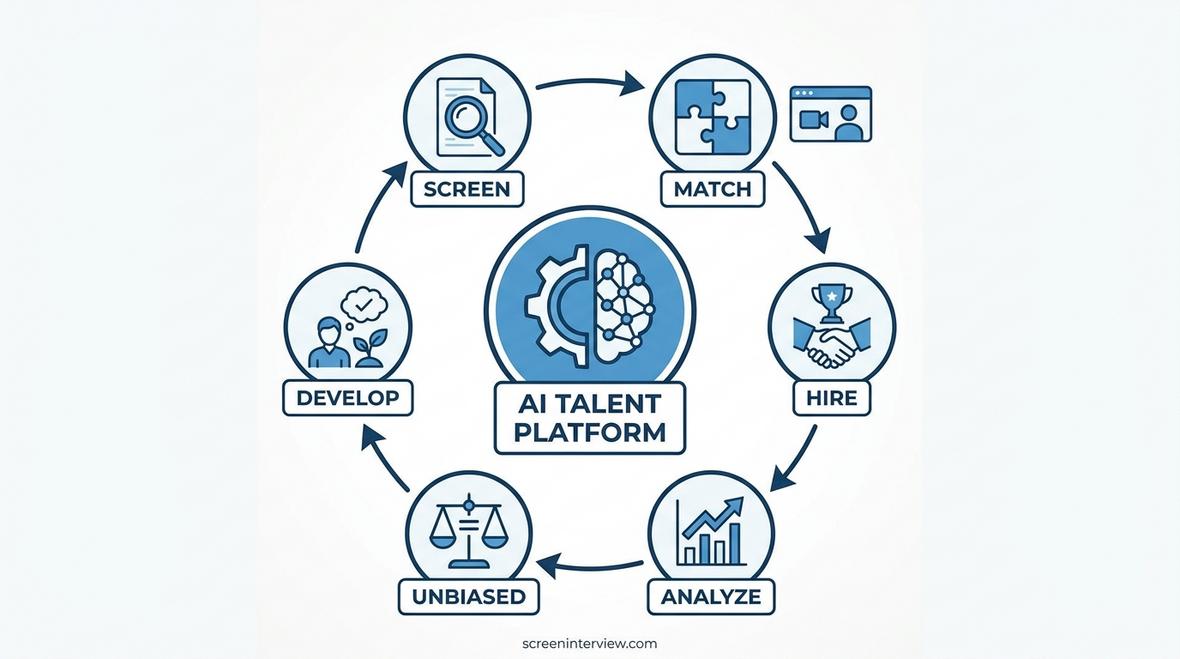
The platform's architecture reflects a circular talent lifecycle approach, continuously screening, matching, hiring, analyzing, ensuring unbiased practices, and developing talent within organizations. This comprehensive methodology distinguishes 8fold from point solutions that address only screening or assessment in isolation.
How 8fold AI Works: The Technology Behind the Platform
Understanding the technical foundation of 8fold helps recruiting professionals evaluate its potential impact on their hiring processes. The platform employs several interconnected AI technologies to deliver its talent intelligence capabilities.
Natural Language Processing for Resume Analysis
At its core, 8fold utilizes advanced natural language processing (NLP) to parse and understand unstructured data from resumes, job descriptions, and candidate profiles. This technology enables the platform to extract meaningful insights about candidate qualifications, work history, and skills without requiring standardized formatting or manual data entry.
The NLP engine analyzes contextual information beyond simple keyword matching, understanding synonyms, related skills, and industry-specific terminology. For example, when evaluating a software engineering candidate, 8fold recognizes that experience with 'React' relates to frontend development capabilities, even if a job description mentions 'modern JavaScript frameworks' without naming specific technologies.
Machine Learning for Candidate-Job Matching
8fold employs supervised machine learning models trained on historical hiring data to predict candidate success and fit for specific roles. These models continuously learn from outcomes, refining their recommendations based on which candidates ultimately receive offers and succeed in their positions.
According to Forrester's HR Tech State Report, 55% of recruiting leaders using AI report a 45% reduction in manual screening time and 32% cost savings. This data underscores the tangible efficiency gains that platforms like 8fold can deliver when properly implemented.
Bias Detection and Mitigation Algorithms
One of 8fold's differentiating features is its focus on fairness and bias reduction. The platform implements several technical approaches to identify and mitigate potential bias in hiring decisions, including demographic-blind screening options, adverse impact monitoring, and fairness-aware machine learning algorithms that test for discriminatory patterns across protected categories.
For organizations concerned about bias in hiring, understanding how 8fold addresses these challenges technically is crucial for compliance and ethical hiring practices.
Key Features for Recruiting Professionals
From the perspective of talent acquisition leaders managing high-volume recruiting operations, 8fold offers several features designed to address common pain points in modern hiring workflows.
Automated Candidate Screening at Scale
For recruiters reviewing hundreds or thousands of applications per role, manual screening represents a significant bottleneck. 8fold automates this initial evaluation, scoring candidates against job requirements and surfacing the most qualified individuals for human review.
The platform's screening capabilities extend beyond simple qualification matching to include predictive analytics about candidate success probability, retention likelihood, and cultural fit indicators. This multi-dimensional evaluation provides recruiters with richer context for decision-making compared to traditional resume review.
Organizations seeking similar capabilities might also explore AI interview solutions that complement screening with conversational assessment technologies.
Intelligent Job Matching and Recommendations
8fold's matching engine works bidirectionally, recommending candidates to recruiters while simultaneously suggesting relevant opportunities to job seekers. This creates a marketplace dynamic where both sides receive intelligent recommendations based on fit criteria.
For internal talent mobility initiatives, the platform identifies existing employees whose skills and career trajectories align with open positions, helping organizations retain talent by facilitating internal movement before external recruitment.
Interview Scheduling and Coordination
Beyond candidate identification, 8fold includes workflow automation features for interview scheduling, communication, and coordination. These capabilities reduce administrative burden on recruiting teams and improve candidate experience through faster response times and streamlined scheduling processes.
Platforms specializing in this area, such as intelligent scheduling solutions, offer additional depth in calendar management and interview logistics for teams prioritizing coordination efficiency.
Comprehensive Analytics and Reporting
Data-driven recruiting requires visibility into pipeline metrics, conversion rates, time-to-fill, source effectiveness, and diversity indicators. 8fold provides analytics dashboards that aggregate these metrics, enabling recruiting leaders to identify bottlenecks, optimize processes, and demonstrate ROI to organizational stakeholders.
The platform's reporting capabilities extend to skills gap analysis, helping workforce planning teams understand current organizational capabilities versus future needs a strategic advantage for proactive talent acquisition planning.
Implementation Considerations for 8fold AI
Adopting any enterprise talent platform requires careful planning and change management. For organizations evaluating 8fold, several implementation factors warrant consideration before commitment.
Integration with Existing HR Technology Stack
Most organizations already utilize applicant tracking systems, HRIS platforms, and other HR technologies. 8fold's value proposition depends partly on its ability to integrate seamlessly with these existing systems rather than requiring complete replacement.
Recruiting professionals should evaluate 8fold's API capabilities, pre-built integrations with common ATS platforms, and data migration support during the evaluation process. Understanding technical requirements upfront prevents implementation delays and integration challenges later.
Data Requirements and Model Training
Machine learning platforms like 8fold require substantial historical data to train their matching and prediction models effectively. Organizations with limited hiring history or those in specialized industries may experience less accurate recommendations initially until sufficient data accumulates.
Understanding the platform's data requirements, initial training period, and expected accuracy improvements over time helps set realistic expectations for stakeholders and ensures appropriate resource allocation during implementation.
User Adoption and Change Management
Technology adoption ultimately depends on user acceptance. Recruiting teams accustomed to traditional workflows may resist AI-powered platforms without proper training, communication, and change management support.
Successful 8fold implementations typically include comprehensive user training, clear communication about how the platform augments rather than replaces human judgment, and phased rollout strategies that allow teams to build confidence with the technology gradually.
8fold Alternatives: Comparing AI Recruitment Platforms
While 8fold offers a comprehensive talent intelligence platform, the AI recruitment technology landscape includes numerous alternatives, each with distinct strengths and focus areas. Understanding these options helps recruiting professionals select the solution best aligned with their specific needs and organizational context.
Screening-Focused Platforms
For organizations primarily seeking to improve candidate screening efficiency without requiring full talent management capabilities, specialized screening platforms offer focused functionality. ScreenInterview.com provides AI-powered interview and screening solutions specifically designed for high-volume recruiting environments, with particular strength in conversational AI assessment and automated candidate evaluation.
Unlike 8fold's broad talent lifecycle approach, screening-focused platforms typically integrate with existing ATS systems as complementary tools rather than comprehensive replacements, making them lower-risk implementations for organizations seeking incremental improvement.
Conversational AI Interview Platforms
Conversational AI represents a growing category within recruitment technology, using natural language interfaces to conduct structured interviews at scale. Platforms like AI interviewer solutions enable automated candidate conversations that assess qualifications, cultural fit, and role-specific competencies through dynamic question flows.
Compared to 8fold's resume-based matching approach, conversational AI platforms gather information directly from candidates through interview interactions, potentially capturing nuanced information not evident from written application materials.
Assessment-Specialized Solutions
For technical hiring, assessment platforms offering coding challenges, skill tests, and domain-specific evaluations provide depth in candidate evaluation that generalist platforms may not match. Organizations hiring software engineers, data scientists, or other technical roles often combine talent intelligence platforms like 8fold with specialized software engineer AI interview assessments for comprehensive evaluation.
Enterprise Talent Management Suites
Large organizations with comprehensive talent management needs may evaluate 8fold alongside broader enterprise HR suites from providers like Workday, SAP SuccessFactors, or Oracle HCM. These platforms offer recruitment functionality within integrated systems covering performance management, learning and development, compensation, and other HR processes.
The trade-off typically involves breadth versus depth enterprise suites provide organizational integration across all HR functions, while specialized AI platforms like 8fold often deliver more advanced recruitment-specific capabilities.
Measuring ROI and Success Metrics for 8fold Implementation
Demonstrating return on investment for recruitment technology requires establishing clear metrics and measurement frameworks before implementation. For 8fold deployments, several key performance indicators help quantify platform impact.
Time-to-Hire Reduction
One of the most tangible benefits of AI-powered screening is faster candidate identification and evaluation. Organizations should measure average time-to-hire before and after 8fold implementation, segmented by role type, department, and seniority level to understand where the platform delivers greatest impact.
Complementary technologies like workflow automation can further reduce time-to-hire by streamlining coordination and communication processes beyond initial screening.
Screening Efficiency Gains
Quantifying recruiter time savings from automated screening provides direct cost-benefit analysis. Tracking hours spent on resume review per role before and after platform adoption demonstrates efficiency gains, which can then be translated into cost savings or capacity for higher-value recruiting activities.
Quality of Hire Metrics
Beyond efficiency, 8fold should improve hiring quality by better matching candidates to role requirements. Measuring new hire performance ratings, retention rates at 90 days and one year, and hiring manager satisfaction scores provides insight into whether the platform successfully identifies higher-quality candidates.
Diversity and Inclusion Impact
For organizations with diversity hiring goals, monitoring demographic representation throughout the hiring funnel before and after 8fold implementation reveals whether the platform's bias mitigation features translate into measurable diversity improvements. Tracking adverse impact ratios across protected categories ensures the platform supports rather than hinders inclusion objectives.
Organizations focused on this area should also explore candidate screening without bias best practices to complement technology solutions with process improvements.
Future Trends: The Evolution of AI Recruitment Beyond 8fold
The AI recruitment technology landscape continues evolving rapidly, with emerging capabilities that will shape platforms like 8fold and their alternatives in coming years.
Multimodal Assessment Capabilities
Future recruitment platforms will likely integrate multiple data sources beyond resumes and interviews, including video analysis, work samples, portfolio evaluation, and behavioral assessments. This multimodal approach provides richer candidate profiles and more accurate predictions of job performance and cultural fit.
Generative AI Integration
Large language models and generative AI capabilities are beginning to enhance recruitment platforms with features like automated job description creation, personalized candidate outreach, interview question generation, and feedback summarization. As these technologies mature, platforms like 8fold will likely incorporate generative capabilities to further reduce administrative burden on recruiting teams.
Tools like job description generators and interview question generators already demonstrate practical applications of generative AI in recruitment workflows.
Continuous Skills Intelligence
Rather than point-in-time assessments during hiring, emerging platforms will track skills continuously throughout employee tenure, creating dynamic skill profiles that inform both internal mobility and external recruitment. This evolution transforms recruitment platforms into broader talent intelligence systems that support workforce planning and development beyond initial hiring.
Regulatory Compliance and Algorithmic Transparency
As AI adoption in hiring increases, regulatory frameworks around algorithmic fairness, transparency, and candidate rights continue developing. Future platforms will need robust explainability features, audit trails, and compliance reporting to meet emerging legal requirements in various jurisdictions.
Organizations should stay informed about AI recruiter regulatory developments to ensure their technology choices support long-term compliance requirements.
Making the Decision: Is 8fold Right for Your Organization?
Evaluating whether 8fold aligns with your organization's recruitment needs requires honest assessment of current challenges, technical requirements, and strategic priorities.
Ideal Use Cases for 8fold
8fold typically delivers strongest value for organizations with several characteristics:
- High-volume hiring: Organizations filling hundreds or thousands of positions annually benefit most from automated screening efficiency
- Internal mobility focus: Companies prioritizing career development and internal talent movement gain value from skills-based matching and opportunity recommendations
- Diversity objectives: Organizations with specific diversity hiring goals benefit from bias mitigation features and demographic analytics
- Skills-based hiring: Companies transitioning from credential-based to skills-based hiring align well with 8fold's competency-focused approach
- Enterprise scale: Larger organizations with resources for comprehensive platform implementation and integration realize fuller value from the broad feature set
When Alternatives May Be Better Fits
Conversely, some organizational profiles may find alternative solutions more appropriate:
- Small recruiting teams: Organizations with limited hiring volume may find comprehensive platforms like 8fold over-engineered for their needs, preferring simpler point solutions
- Technical-specific hiring: Companies primarily hiring technical roles may benefit more from assessment-focused platforms with deeper technical evaluation capabilities
- Budget constraints: Smaller organizations with limited budgets might find better ROI from more affordable screening solutions like on-demand interview platforms
- Existing integrated systems: Organizations deeply invested in existing enterprise HR suites may prefer recruitment modules within those platforms over standalone solutions requiring separate integration
Evaluation Process Recommendations
For recruiting professionals considering 8fold or alternatives, a structured evaluation approach helps ensure thorough assessment:
- Define requirements: Document specific pain points, must-have features, integration needs, and success metrics before vendor evaluation
- Pilot testing: Request pilot programs with real candidate data to evaluate platform accuracy, user experience, and workflow fit
- Reference checks: Speak with current customers in similar industries and organizational sizes about implementation experiences and realized benefits
- Total cost analysis: Calculate comprehensive costs including licensing, implementation, integration, training, and ongoing maintenance
- Vendor roadmap review: Understand platform development direction to ensure future capabilities align with evolving organizational needs
Frequently Asked Questions About 8fold AI
How does 8fold differ from traditional applicant tracking systems?
While traditional ATS platforms primarily manage workflow and candidate data, 8fold applies artificial intelligence to actively evaluate candidates, recommend matches, and provide predictive insights about hiring outcomes. It functions as a talent intelligence layer that can complement or, in some cases, replace traditional ATS functionality.
Can 8fold integrate with existing HR systems?
Yes, 8fold offers integration capabilities with common HRIS and ATS platforms through APIs and pre-built connectors. The extent and ease of integration vary depending on your existing system architecture, so technical evaluation during the sales process is recommended.
How does 8fold address bias in hiring?
8fold implements several bias mitigation approaches, including demographic-blind screening options, adverse impact monitoring across protected categories, and fairness-aware algorithms designed to prevent discriminatory patterns. However, no AI system completely eliminates bias, so human oversight and regular auditing remain important.
What data does 8fold require to function effectively?
The platform requires candidate profile data (resumes, applications), job descriptions, and ideally historical hiring outcome data to train its matching algorithms. Organizations with richer historical data typically see more accurate recommendations initially, though the system improves over time as it accumulates data.
How long does 8fold implementation typically take?
Implementation timelines vary based on organizational size, integration complexity, and data migration requirements. Typical deployments range from several weeks for small implementations to several months for large enterprises with complex integration needs and extensive historical data migration.
Conclusion
As recruitment technology continues evolving, platforms like 8fold represent the growing sophistication of AI applications in talent acquisition. For modern recruiting professionals managing high-volume hiring in competitive talent markets, understanding how comprehensive talent intelligence platforms function and how they compare to specialized alternatives is essential for making informed technology decisions.
While 8fold offers broad functionality across the talent lifecycle, organizations should carefully evaluate whether its comprehensive approach aligns with their specific needs, or whether focused solutions like AI interview automation platforms deliver better value for their particular challenges. Regardless of platform choice, the fundamental shift toward AI-powered recruitment represents an irreversible transformation that will continue reshaping how organizations discover, evaluate, and hire talent in the years ahead.
Ready to Transform Your Interview Process?
See how ScreenInterview can help you automate phone screens, reduce bias, and hire better candidates faster.