
8 Fold AI: Complete Guide To AI-Powered Recruitment Transformation In 2026

Understanding 8 Fold AI in Modern Recruitment
The recruitment landscape has undergone a dramatic transformation with the emergence of advanced artificial intelligence technologies. The concept of 8 fold ai represents a comprehensive, multi-dimensional approach to leveraging AI across eight critical facets of the hiring process. This methodology isn't about implementing a single AI tool, but rather orchestrating an intelligent ecosystem that addresses every stage of talent acquisition from initial candidate sourcing to final onboarding and performance prediction.
Modern recruiting professionals face unprecedented challenges: high-volume hiring demands, tight time-to-hire constraints, and the critical need to eliminate bias while identifying top-tier talent. The 8 fold ai framework provides a systematic answer to these challenges by integrating intelligent automation, predictive analytics, natural language processing, and machine learning across the entire recruitment workflow.
According to Statista AI Market Adoption and Growth Statistics, the global artificial intelligence market continues to experience exponential growth, with talent intelligence platforms seeing year-over-year adoption increases exceeding 40% across multiple industries. This surge reflects the urgent need for scalable, efficient hiring solutions that maintain quality while accelerating processes.
The Eight Dimensions of AI-Powered Recruitment
1. Automated Candidate Screening and Assessment
The first dimension of 8 fold ai focuses on intelligent candidate screening a process that traditionally consumed 60-70% of recruiter time. Advanced AI interviewer systems now analyze resumes, cover letters, and application data with superhuman accuracy, identifying qualified candidates based on skills, experience, and cultural fit indicators.
These systems utilize natural language processing to understand context beyond simple keyword matching. They evaluate semantic meaning, recognize transferable skills, and assess candidate potential rather than just historical qualifications. The result is a dramatically reduced screening burden while simultaneously improving candidate quality and diversity.
Platforms implementing this dimension can process thousands of applications in minutes, providing recruiters with ranked candidate lists based on customizable criteria. This efficiency gain allows talent acquisition teams to redirect their focus toward high-value activities like relationship building and strategic workforce planning.
2. Intelligent Interview Scheduling and Coordination
Scheduling complexity multiplies exponentially with candidate volume and interviewer availability. The second dimension addresses this through intelligent scheduling systems that autonomously coordinate between multiple stakeholders, respecting time zones, preferences, and availability constraints.
These AI systems integrate with calendar applications, automatically propose optimal meeting times, send confirmations, handle rescheduling requests, and even prepare pre-interview briefing materials. What once required dozens of email exchanges and manual calendar checks now happens automatically, reducing time-to-interview by an average of 3-5 days.
3. Conversational AI Interviews and On-Demand Assessments
The third dimension revolutionizes the interview experience itself through on-demand interviews powered by conversational AI. These systems conduct structured interviews at scale, asking role-specific questions, analyzing responses in real-time, and adapting follow-up questions based on candidate answers.
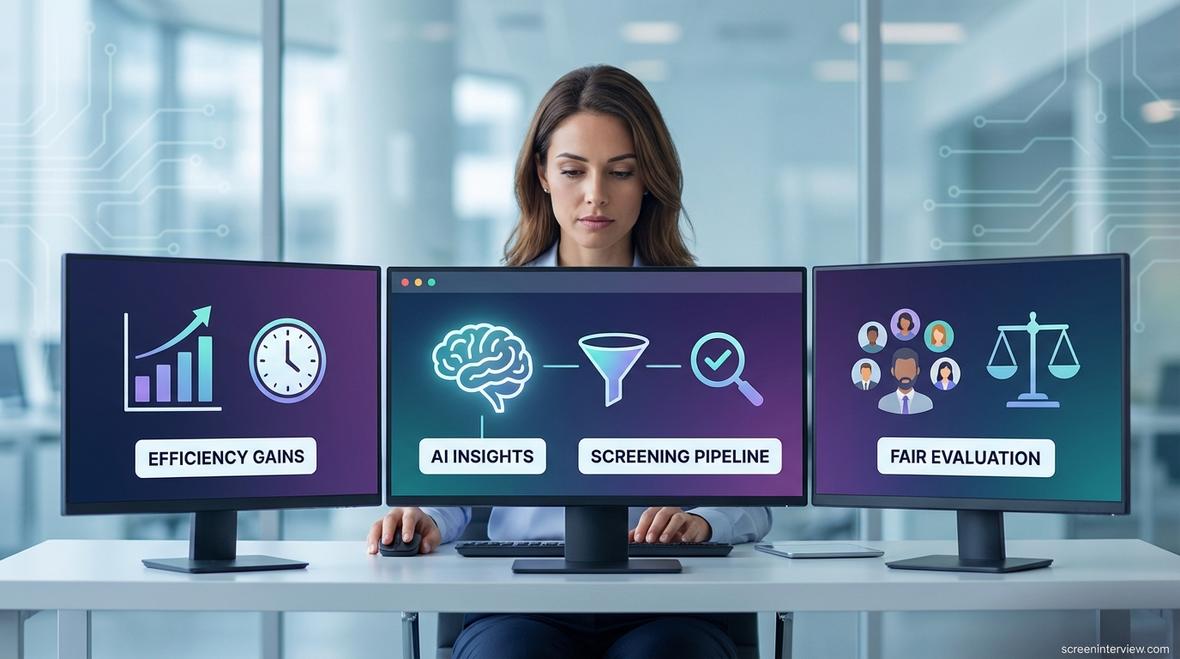
Modern conversational AI platforms evaluate not just the content of responses but also communication patterns, problem-solving approaches, and behavioral indicators. They provide candidates with flexibility to complete interviews on their schedule while ensuring standardized evaluation criteria across all applicants. This dimension of 8 fold ai dramatically improves candidate experience while generating rich, comparable assessment data.
4. Bias Detection and Fair Evaluation Systems
Perhaps the most critical dimension addresses the persistent challenge of unconscious bias in hiring. Research from Deloitte Global Talent Trends and Workforce Analytics demonstrates that AI-powered screening can significantly reduce interviewer bias when properly implemented, with some organizations reporting up to 35% improvement in diversity metrics within the first year of adoption.
The 8 fold ai approach incorporates bias detection algorithms that continuously monitor evaluation patterns, flag potential discrimination indicators, and ensure consistent assessment standards. These systems anonymize candidate information during initial screening stages, removing demographic identifiers that might trigger unconscious bias.
Advanced platforms utilize bias elimination technology that analyzes historical hiring data to identify and correct systematic preferences that may disadvantage certain candidate groups. This creates truly merit-based selection processes aligned with diversity, equity, and inclusion objectives.
5. Predictive Analytics for Hiring Success
The fifth dimension leverages machine learning to predict candidate success probability based on historical performance data. These predictive models analyze thousands of data points skills assessments, interview performance, cultural alignment indicators, and career trajectory patterns to forecast which candidates are most likely to excel in specific roles.
Unlike traditional gut-feel decisions, predictive analytics provide evidence-based recommendations with quantifiable confidence levels. Recruiters receive actionable insights such as 'This candidate has an 87% probability of exceeding performance expectations in the first year' along with detailed reasoning explaining the prediction.
This dimension transforms hiring from a largely subjective process into a data-driven discipline, significantly reducing costly mis-hires while accelerating identification of high-potential candidates who might otherwise be overlooked.
6. Workflow Automation and ATS Integration
The sixth dimension focuses on seamless workflow automation that eliminates administrative friction throughout the recruitment lifecycle. Modern 8 fold ai platforms integrate deeply with existing Applicant Tracking Systems, automatically updating candidate status, triggering appropriate communications, and managing pipeline progression.
These systems handle routine tasks like sending rejection emails, scheduling follow-ups, requesting references, and generating offer letters all without manual intervention. They also provide intelligent routing, ensuring candidates progress to the appropriate next step based on their assessment results and role requirements.
By automating these time-consuming administrative tasks, recruiting teams recover 15-20 hours per week per recruiter, time that can be reinvested in strategic activities like employer branding, talent relationship management, and workforce planning.
7. Interview Insights and Performance Analytics
The seventh dimension provides deep interview insights through advanced analytics dashboards that reveal patterns invisible to individual recruiters. These systems track metrics like question effectiveness, interviewer calibration, time-to-decision, conversion rates at each funnel stage, and candidate quality indicators.
Analytics platforms identify which interview questions best predict job performance, which assessment methods yield the highest quality hires, and where bottlenecks exist in the recruitment pipeline. This continuous feedback loop enables constant process optimization and evidence-based decision making.
Recruiting leaders gain visibility into team performance, can benchmark against industry standards, and make strategic investments based on data rather than assumptions. The result is measurably improved hiring outcomes quarter over quarter.
8. Secure Proctoring and Identity Verification
The final dimension addresses the critical need for assessment integrity through interview proctoring and secure verification technologies. As remote hiring becomes standard practice, ensuring candidates complete assessments independently and honestly has become paramount.
Advanced proctoring systems utilize computer vision, behavioral analysis, and environmental monitoring to detect potential cheating indicators without creating an oppressive candidate experience. They verify identity through multi-factor authentication, monitor for unauthorized assistance, and flag suspicious activities for human review.
This dimension maintains assessment validity and organizational risk management while supporting the flexibility that modern candidates expect from the hiring process.
Implementing 8 Fold AI in Your Organization
Assessment and Readiness Evaluation
Successfully implementing the 8 fold ai framework begins with honest assessment of your organization's current state. Evaluate your existing technology stack, recruitment team capabilities, data quality, and process maturity. Identify which of the eight dimensions offer the greatest immediate value based on your specific pain points.
Organizations experiencing high-volume hiring challenges might prioritize automated screening and scheduling first, while those focused on quality-of-hire improvements might emphasize predictive analytics and bias detection. There is no universal implementation sequence the optimal approach depends on your unique context and objectives.
Technology Selection and Integration
Selecting the right platform is crucial to 8 fold ai success. Evaluate vendors based on integration capabilities with your existing ATS, customization flexibility, user experience for both recruiters and candidates, data security protocols, and demonstrated ROI from similar organizations.
Platforms like ScreenInterview offer comprehensive solutions covering multiple dimensions of the 8 fold ai framework, from AI interview capabilities to advanced analytics and workflow automation. Consolidated platforms typically provide better integration, lower total cost of ownership, and simpler administration compared to stitching together point solutions.
Change Management and Team Training
Technology alone doesn't transform recruitment people do. Successful 8 fold ai implementation requires comprehensive change management that addresses concerns, builds capabilities, and creates champions within your recruiting team.
Invest in thorough training that goes beyond technical operation to help recruiters understand how AI augments rather than replaces their expertise. Share early wins, celebrate improvements, and continuously gather feedback to refine your implementation approach.
Measuring ROI and Success Metrics
Quantifying the impact of 8 fold ai implementation requires tracking specific metrics before and after deployment. Key performance indicators include:
- Time-to-Hire: Average days from requisition opening to offer acceptance
- Cost-per-Hire: Total recruitment expenses divided by number of hires
- Quality-of-Hire: New employee performance ratings, retention rates, and hiring manager satisfaction
- Recruiter Efficiency: Candidates screened per recruiter, interviews conducted, requisitions managed
- Candidate Experience Scores: Survey feedback from applicants throughout the process
- Diversity Metrics: Demographic representation at each funnel stage and in final hires
- Offer Acceptance Rate: Percentage of offers accepted versus declined
Organizations implementing comprehensive 8 fold ai frameworks typically report 40-60% reduction in time-to-hire, 30-50% decrease in cost-per-hire, and 25-35% improvement in quality-of-hire metrics within the first year. These improvements compound over time as systems learn from accumulating data and processes continue optimizing.
The Future of 8 Fold AI in Recruitment
The evolution of 8 fold ai continues accelerating as technologies mature and adoption spreads. Emerging capabilities on the horizon include:
Hyper-Personalized Candidate Experiences: AI systems will increasingly tailor every interaction to individual candidate preferences, communication styles, and career aspirations, creating recruitment experiences that feel bespoke rather than automated.
Continuous Learning and Adaptation: Next-generation platforms will automatically adjust screening criteria, interview questions, and evaluation standards based on ongoing performance data, creating truly adaptive hiring systems that improve without manual intervention.
Predictive Workforce Planning: Advanced analytics will extend beyond individual hiring decisions to predict future talent needs, skill gaps, and optimal recruitment strategies months or years in advance, enabling proactive rather than reactive talent acquisition.
Ethical AI Governance: As regulatory frameworks emerge around AI in hiring, platforms will incorporate compliance monitoring, transparency reporting, and ethical guardrails as core features rather than afterthoughts.
The 8 fold ai framework represents not a destination but a journey toward increasingly intelligent, efficient, and equitable talent acquisition. Organizations that embrace this comprehensive approach position themselves to compete effectively for talent in an increasingly competitive marketplace while building diverse, high-performing teams that drive business success.
Frequently Asked Questions
What is 8 fold ai in recruitment?
8 fold ai refers to a comprehensive approach that leverages artificial intelligence across eight critical dimensions of recruitment: automated screening, intelligent scheduling, conversational interviews, bias detection, predictive analytics, workflow automation, interview insights, and secure proctoring. This holistic framework transforms the entire hiring lifecycle rather than addressing isolated pain points.
How does 8 fold ai improve candidate quality?
The framework improves candidate quality through predictive analytics that identify high-potential applicants, bias detection that ensures merit-based evaluation, standardized assessments that enable fair comparisons, and data-driven insights that continuously refine selection criteria based on actual performance outcomes.
Is 8 fold ai suitable for small businesses?
While originally adopted by enterprise organizations, 8 fold ai solutions are increasingly accessible to smaller businesses through cloud-based platforms with flexible pricing models. Companies hiring even 20-30 people annually can realize significant ROI from implementing selected dimensions of the framework based on their specific needs.
How long does 8 fold ai implementation take?
Implementation timelines vary based on organizational complexity and scope. Basic configurations can be operational within 2-4 weeks, while comprehensive deployments integrating all eight dimensions across multiple departments might require 3-6 months including customization, integration, testing, and training.
Conclusion
The 8 fold ai framework represents the future of strategic talent acquisition a comprehensive approach that addresses every dimension of modern recruitment challenges. By integrating intelligent automation, predictive analytics, bias detection, and workflow optimization, organizations transform hiring from a time-intensive, subjective process into a data-driven competitive advantage. The evidence is compelling: dramatic reductions in time-to-hire and cost-per-hire, measurable improvements in candidate quality and diversity, and enhanced experiences for both recruiters and applicants. As AI technologies continue evolving and adoption accelerates, the question facing recruiting professionals is not whether to embrace this transformation, but how quickly they can implement it to remain competitive in the war for talent.
Ready to Transform Your Interview Process?
See how ScreenInterview can help you automate phone screens, reduce bias, and hire better candidates faster.